
Raisin Jelly
A rich, amber-colored jelly made from dried raisins or currants, extracting their concentrated sweetness and flavor through a slow reduction process. This traditional preserve transforms simple dried fruit into an elegant, clear spread with a deep, complex taste balanced by a touch of fresh lemon juice. Originally set with isinglass, this modernized version uses gelatin to achieve a firm, sliceable consistency perfect for toast or desserts.
Ingredients
- 3 pounds Raisins or dried black currants (Originally '1.5 seer' (approx 3 lbs). Use Amburi, Kishmish, or black currants.)
- 10 cups Water (Originally '2.5 seer' (approx 10 cups) for boiling the fruit.)
- 1 cup Granulated sugar (Originally '1 pasher' (approx 1 cup).)
- 2 1/2 tablespoons Unflavored gelatin powder (Originally '2 tolas isinglass'. Substituted with gelatin for modern convenience.)
- 1 cup Water (for gelatin) (Originally '2.5 seer' was used to boil raw isinglass. Reduced to 1 cup for modern gelatin.)
- 4 teaspoons Lemon juice (Divided use.)
More recipes using Raisins

RAISIN WINE, No. 1
This simple raisin wine recipe offers a taste of history, perfect for those interested in traditional winemaking. The recipe uses readily available ingredients and a straightforward method, resulting in a subtly sweet and flavorful wine. The process involves simmering or boiling raisins with water, allowing the flavors to meld, and then straining the mixture for a refreshing homemade beverage.

RAISIN WINE, No. 2
This recipe offers a taste of history with a simple, homemade raisin wine. The sweet and fruity wine is made with just a few ingredients, including raisins, sugar, and lemon, and requires minimal effort. The result is a refreshing and slightly tangy beverage, perfect for a warm day or as a unique addition to your home bar. The recipe is easy to follow and yields a satisfying, homemade wine.

RAISIN BREAD
This classic Raisin Bread recipe offers a comforting and satisfying treat, perfect for breakfast or a snack. The bread features a tender crumb studded with sweet raisins, creating a delightful contrast of textures and flavors. Made with a simple dough, this recipe is easy to follow and results in a delicious, homemade bread that's sure to please.
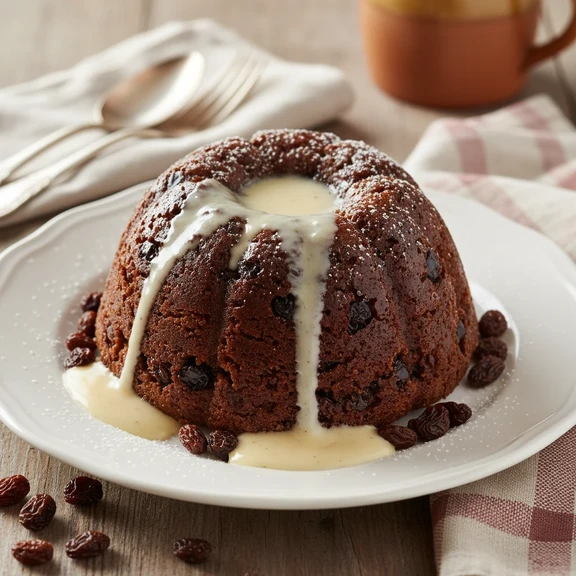
Steamed Raisin Pudding
A classic steamed pudding with raisins, molasses, and a hint of spice, served with a creamy sauce.
Instructions
- 1Clean the raisins or dried currants thoroughly. Wash them well in water and break them into small pieces by hand.
- 2Place the prepared raisins in a tin-lined or non-reactive pot. Add 10 cups of cold water, cover, and place over high heat (originally hot coals). Boil until the raisins become very soft and mushy.
- 3Remove from heat. Mash the raisins thoroughly with a wooden spoon to release all pulp and flavor. Return the mashed mixture to the pot and simmer again, stirring occasionally, until the liquid reduces to approximately 2 cups (1 seer). Remove from heat.
- 4Strain the mixture through a clean cloth, squeezing the raisins tightly to extract every bit of juice. Discard the dry pulp. In the extracted juice, dissolve the sugar. Strain this sweetened juice again through a thick cloth that has been dipped in hot water and wrung out.
- 5Dissolve the gelatin in 1 cup of water (warm or prepare according to package instructions). Add 2 teaspoons of lemon juice to this mixture. (Note: The original recipe boiled isinglass in water to dissolve and clarify it; modern gelatin dissolves easily).
- 6Combine the gelatin water with the strained raisin juice in the pot. Place over heat. After about 15 minutes of simmering, add the remaining 2 teaspoons of lemon juice. Continue to boil and skim off any scum that rises to the top. Reduce the mixture until you have exactly 1 pint (2 cups) of liquid remaining.
- 7Immediately pour the hot liquid into a mold or glass jar. Let it cool completely, then cover. The jelly will set firmly by the second or third day.
You Might Also Like

RASPBERRY JELLY
This vibrant raspberry jelly is a delightful way to preserve the fresh, sweet flavor of summer raspberries. Following the traditional method, this recipe creates a clear, shimmering jelly perfect for spreading on toast, scones, or using as a glaze. The process involves extracting the juice, adding sugar, and achieving the perfect set for a classic, homemade treat.

Raspberry Jelly No. 2
A classic Victorian-era preservation method that transforms fresh raspberries into a crystal-clear, ruby-red jelly. This traditional recipe emphasizes a precise reduction technique, simmering the pure fruit juice to concentrate the flavor before adding sugar, ensuring a perfect set and intense berry taste. The result is a smooth, spreadable preserve that captures the bright, tart essence of summer berries, perfect for toast, scones, or pastry fillings.

Currant Jelly
This classic Currant Jelly recipe from 1900 offers a taste of traditional preserving techniques, creating a sweet and tangy jelly perfect for spreading on toast or pairing with cheese. The recipe uses simple ingredients like currants and sugar, resulting in a vibrant and flavorful jelly. The process involves mashing the currants, simmering them, and straining the juice to achieve the perfect texture.

Raspberry Jelly
A crystal-clear, ruby-red preserve made using a gentle steam-extraction method that captures the pure essence of fresh raspberries. Unlike boiled jellies, this technique uses a stoneware jar in a water bath to draw out the juice without crushing the fruit, resulting in a brilliant, cloud-free finish. Sweetened with sugar and boiled to a perfect set, this Victorian-era delicacy offers a concentrated berry flavor that is perfect for spreading on scones or glazing tarts.