
Cramberry Tart
A word wholly unknown to English cookery writers — cramberry — appeared in print for the first time in a cookbook, and the woman who wrote it identified herself only as 'an American Orphan.'
Ingredients
- 2 cups all-purpose flour (Period would have used bolted wheat flour; unbleached all-purpose is the closest modern equivalent)
- 0.5 tsp fine salt
- 0.75 cup (1.5 sticks) cold unsalted butter, cut into small pieces (Original 'Paste No. 9' calls for butter or lard; lard produces a more historically accurate, flakier crust)
- 4 –6 tbsp ice water (Added gradually; stop when dough just comes together)
- 3 cups (12 oz) fresh or frozen cranberries (Simmons would have used wild-harvested bog cranberries; cultivated varieties are acceptable)
- 0.75 cup granulated sugar (Adjust to taste — period cooks sweetened by judgment, not measure; original would have used loaf sugar, grated)
- 2 tbsp water (To start the stewing process)
- 0.25 tsp ground cinnamon (One of the spices most commonly paired with tart fruits in 18th-century New England baking)
- 0.125 tsp ground mace (Mace was more common than nutmeg in 18th-century American spice use; nutmeg may be substituted [VERIFY: regional variation])
- 0.125 tsp ground ginger (Optional but supported by period spice-use patterns in similar fruit tarts from the era)
- 1 egg, beaten (For egg-washing the crust top; optional — period recipes rarely specify this step explicitly)
- 1 tsp sugar (For dusting the finished crust if desired)
Instructions
- 1Make the Short Crust Paste. Combine flour and salt in a large bowl. Cut the cold butter into the flour using your fingertips or a pastry cutter until the mixture resembles coarse crumbs with some pea-sized pieces of butter remaining. Add ice water one tablespoon at a time, mixing gently with a fork until the dough just comes together — do not overwork it. Divide the dough into two equal discs, wrap in cloth or parchment, and refrigerate for at least 30 minutes. Period instruction would have called for working quickly on a cold stone surface, which achieves the same end.
- 2Stew the Cramberries. Combine the cranberries and water in a medium saucepan over medium heat. Cook, stirring occasionally, until the cranberries begin to pop and break down, approximately 8–10 minutes. Add the sugar and continue cooking for another 5 minutes until the mixture thickens to a loose jam. This is what Simmons means by 'stewed, strained and sweetened.' Remove from heat.
- 3Strain and Season. Pass the stewed cranberries through a sieve or food mill, pressing firmly to extract a smooth, thick purée, discarding or reserving the skins as you prefer. (Simmons says 'strained,' which in period usage typically means passing through a sieve for a smooth filling.) Stir in the cinnamon, mace, and ginger. Taste and adjust sugar and spice until the filling is 'grateful' — pleasing, balanced, neither aggressively tart nor cloying. Allow to cool to room temperature.
- 4Line the Tart and Fill. Preheat your oven to 375°F (190°C). Roll out one disc of pastry on a lightly floured surface to roughly 1/8-inch thickness and line a 9-inch tart pan or pie dish, pressing gently into the corners and trimming the excess. Spoon the cooled cranberry filling evenly into the lined shell. Roll out the second disc and lay it over the top, crimping the edges to seal, or cut it into strips for a lattice. Cut small vents in the top crust if using a full lid.
- 5Bake Gently. Brush the top crust with beaten egg and dust lightly with sugar if desired. Bake at 375°F for 35–40 minutes, until the crust is golden and the filling is just visible bubbling at the vents. Simmons instructs 'baked gently,' which in a wood-fired hearth oven of 1796 meant moderate, even heat — a modern conventional oven at 375°F approximates this well. Allow the tart to cool for at least 20 minutes before cutting; the filling firms as it cools.
You Might Also Like

Cranberry Pie (Four portions)
This classic Cranberry Pie recipe from 1900 offers a delightful combination of tart cranberries and sweet filling, encased in a flaky, homemade crust. The recipe features a simple cranberry mixture with sugar, egg yolk, and almond extract, creating a comforting and satisfying dessert. The pie is baked to golden perfection, offering a delightful balance of textures and flavors.
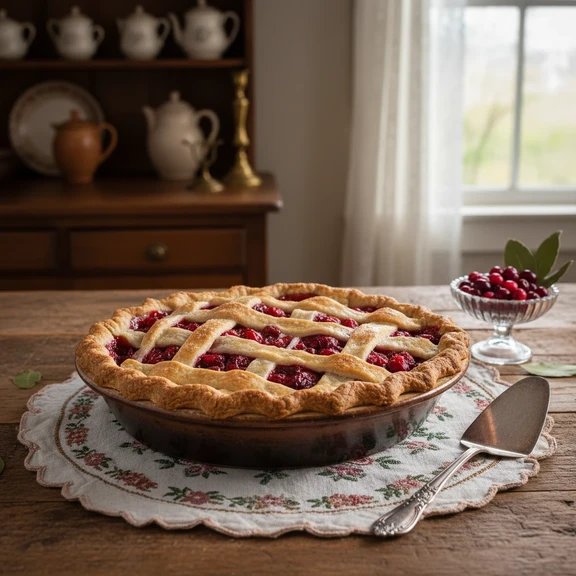
Cranberry Pie
A classic cranberry pie recipe.

MOCK CHERRY PIE
This Mock Cherry Pie offers a delightful twist on a classic, using cranberries and raisins to create a sweet and tangy filling. The recipe, originating from a historical cookbook, provides a comforting and satisfying dessert. The combination of cranberries, raisins, and a buttery crust delivers a rich and flavorful experience, perfect for a cozy afternoon or a special occasion.

Blueberry Tarts
These delightful blueberry tarts offer a taste of classic baking with a burst of fresh, sweet flavor. The combination of a buttery pastry crust, a juicy blueberry filling, and a hint of cinnamon creates a comforting and satisfying treat. Perfect for a summer afternoon tea or a special dessert.