
Puff Pastry
This historical method for making puff pastry creates an exceptionally flaky and light crust through a unique layering technique. By lightly roasting the flour to remove moisture and stacking buttered layers of dough rather than just folding them, this recipe achieves a professional, airy texture perfect for patties, tarts, or jam puffs. The addition of fresh lime juice to the dough ensures the pastry remains tender and melts in the mouth.
Ingredients
- 1 pound Wheat flour (All-purpose flour) (Sieved well.)
- 14 ounces Butter (Originally listed as '3/4 pound plus 5 tolas'. Divided use: 2 oz for dough, 12 oz for layering. Ensure it is cold and water-free.)
- 1 whole Lime (Juice only, strained.)
- 1 cup Ice cold water (Quantity estimated. Use enough to bind the dough.)
- 1/4 cup Flour for dusting (Quantity estimated for dusting the board.)
More recipes using Flour

Puff Pastry (Puff Paste)
A classic colonial-era puff pastry recipe that yields an incredibly flaky and rich crust through a unique lamination technique. This method combines layers of dough with both suet (or shortening) and butter, resulting in distinct, airy layers perfect for savory pies or sweet pastries. The addition of lemon juice and egg yolks to the dough ensures a tender texture and a beautiful golden finish when baked.

Excellent Puff Pastry for Pie
This traditional puff pastry recipe creates a spectacularly flaky and buttery crust through the classic technique of lamination. By folding firm, cold butter into a dough enriched with egg yolks, hundreds of delicate layers are formed that puff and separate beautifully when baked. The result is a rich, golden-brown pastry that serves as an exceptional foundation for both sweet and savory pies.

Iced Puff Pastry
This historical recipe utilizes a unique cooling technique where the dough rests on crushed ice between turns, ensuring the butter remains perfectly solid for maximum flakiness. It yields a classic, high-rise puff pastry with distinct, airy layers and a rich, buttery flavor superior to standard methods. Ideal for savory pies, vol-au-vents, or sweet tarts, this dough creates a delicate, golden-brown crust that shatters beautifully upon biting.
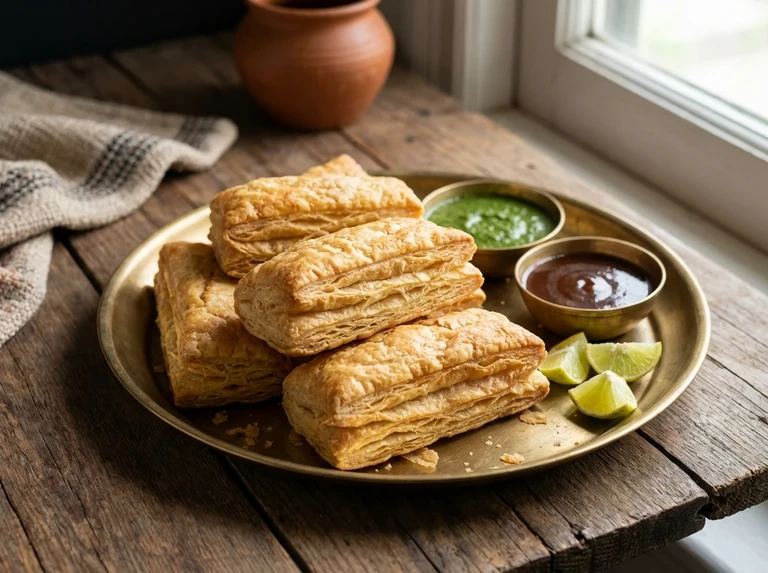
Puff Pastry
A classic puff pastry recipe using equal parts butter and flour, with a touch of lemon juice for acidity.
Instructions
- 1Heat a tinned baking sheet or flat pan on the stove. Reduce heat to low embers. Place the flour on the warm pan and stir constantly with a spoon to dry out any moisture. The goal is to dry the flour completely without changing its color or scorching it. Once dried, sieve the flour through a fine mesh.
- 2If the butter is hard, soften it slightly in a pan over low heat (do not boil). Allow any water or buttermilk to settle at the bottom, then pour off the fat so you are left with completely dry butter. Separate 2 ounces (approx. 5 tolas) for the dough and keep the remaining 12 ounces for layering.
- 3Place the dried flour on a clean pasteboard. Rub in the 2 ounces of reserved butter thoroughly. Strain the juice of one lime into cold water. Use this acidic water to bind the flour into a dough that is pliable and soft, not hard. Knead well.
- 4Place the dough on a sturdy wooden board. Using a clean, heavy wooden mallet or rolling pin, beat and pound the dough while turning it over by hand repeatedly. Continue this process for about 25 minutes. This extensive working of the dough ensures the final crust will be very light.
- 5Dust the board with dry flour. Roll out the dough into a thin, even square. Spread half of the remaining butter evenly over the surface and dust with flour. Fold the dough in half. Roll it out again carefully. Spread the remaining half of the butter, dust with flour, and cut the dough into 12 equal square pieces. Stack these pieces on top of one another, placing the final piece upside down. This creates a pile of layers.
- 6Press the stack of dough down and roll it out to the desired thickness for your specific use (jam puffs, patties, etc.). When rolling, be careful to turn the pastry occasionally to ensure even thickness, but handle gently so the layers do not merge. Rolling on a cold marble slab will yield the best results.
You Might Also Like
Puff Pastry (Puff Paste)
A classic colonial-era puff pastry recipe that yields an incredibly flaky and rich crust through a unique lamination technique. This method combines layers of dough with both suet (or shortening) and butter, resulting in distinct, airy layers perfect for savory pies or sweet pastries. The addition of lemon juice and egg yolks to the dough ensures a tender texture and a beautiful golden finish when baked.
Excellent Puff Pastry for Pie
This traditional puff pastry recipe creates a spectacularly flaky and buttery crust through the classic technique of lamination. By folding firm, cold butter into a dough enriched with egg yolks, hundreds of delicate layers are formed that puff and separate beautifully when baked. The result is a rich, golden-brown pastry that serves as an exceptional foundation for both sweet and savory pies.

Puff Paste Crust Patties
This traditional recipe creates flaky, buttery patties using a unique lamination technique where the dough is cut into strips, stacked, and rolled into a spiral log before shaping. The resulting pastry shells are incredibly crisp and multi-layered, perfect for holding savory meat or vegetable fillings. These golden-brown treats are baked in individual molds, making them an elegant appetizer or satisfying snack.
Iced Puff Pastry
This historical recipe utilizes a unique cooling technique where the dough rests on crushed ice between turns, ensuring the butter remains perfectly solid for maximum flakiness. It yields a classic, high-rise puff pastry with distinct, airy layers and a rich, buttery flavor superior to standard methods. Ideal for savory pies, vol-au-vents, or sweet tarts, this dough creates a delicate, golden-brown crust that shatters beautifully upon biting.