
Excellent Puff Pastry for Pie
This traditional puff pastry recipe creates a spectacularly flaky and buttery crust through the classic technique of lamination. By folding firm, cold butter into a dough enriched with egg yolks, hundreds of delicate layers are formed that puff and separate beautifully when baked. The result is a rich, golden-brown pastry that serves as an exceptional foundation for both sweet and savory pies.
Ingredients
- 1 pound All-purpose flour (Sifted.)
- 2 yolks Egg yolks (Use fresh eggs.)
- 1 teaspoon Salt (Heaping teaspoon.)
- 3/4 cup Cold water (Quantity estimated (originally 'less than a quarter seer'). Use enough to bind the dough.)
- 3/4 pound Unsalted butter (Must be very firm and cold. If using homemade butter, ensure all water is squeezed out.)
- 1/4 cup Flour for dusting (Estimated for rolling.)
More recipes using Flour

Puff Pastry (Puff Paste)
A classic colonial-era puff pastry recipe that yields an incredibly flaky and rich crust through a unique lamination technique. This method combines layers of dough with both suet (or shortening) and butter, resulting in distinct, airy layers perfect for savory pies or sweet pastries. The addition of lemon juice and egg yolks to the dough ensures a tender texture and a beautiful golden finish when baked.

Puff Pastry
This historical method for making puff pastry creates an exceptionally flaky and light crust through a unique layering technique. By lightly roasting the flour to remove moisture and stacking buttered layers of dough rather than just folding them, this recipe achieves a professional, airy texture perfect for patties, tarts, or jam puffs. The addition of fresh lime juice to the dough ensures the pastry remains tender and melts in the mouth.

Iced Puff Pastry
This historical recipe utilizes a unique cooling technique where the dough rests on crushed ice between turns, ensuring the butter remains perfectly solid for maximum flakiness. It yields a classic, high-rise puff pastry with distinct, airy layers and a rich, buttery flavor superior to standard methods. Ideal for savory pies, vol-au-vents, or sweet tarts, this dough creates a delicate, golden-brown crust that shatters beautifully upon biting.
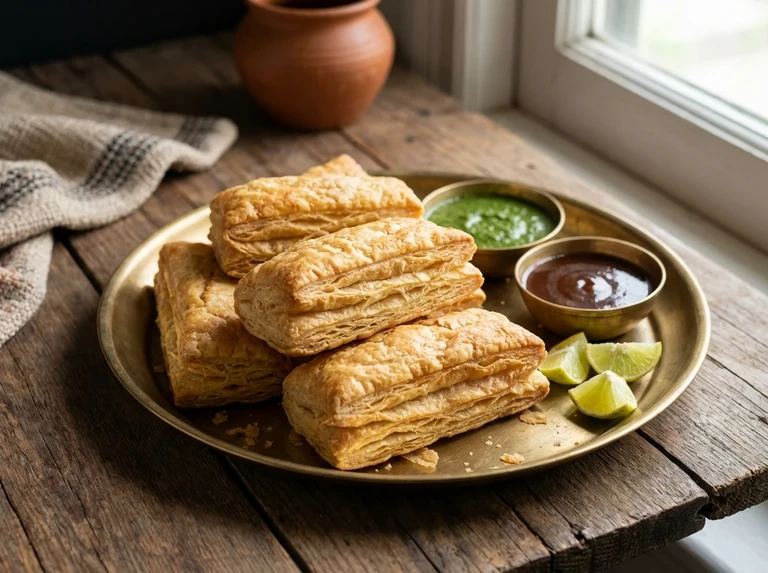
Puff Pastry
A classic puff pastry recipe using equal parts butter and flour, with a touch of lemon juice for acidity.
Instructions
- 1Sift the flour onto a marble slab, slate, or clean work surface. Make a well in the center and add the egg yolks and heaping teaspoon of salt. Gradually pour in the cold water into the well. Using a clean knife, mix the ingredients gently—do not work the dough too hard or keep it too soft. Knead lightly with your hands until the dough forms a smooth ball that no longer sticks to your hands or the board.
- 2Dust the work surface and the dough ball with flour. Roll the dough out to an even thickness of about 1 inch. Let it rest for 2 minutes. Prepare the butter: it must be firm and free of water (if using fresh butter, squeeze out any liquid; if the weather is hot, chill the butter on ice to harden it). Form the cold butter into a ball or block and place it in the center of the rolled dough. Fold the edges of the dough over the butter, sealing it completely so the butter cannot escape.
- 3Let the dough rest for another 2-3 minutes. Dust the board and the top of the pastry with flour. Carefully roll the dough out into a long strip about 3 feet in length, ensuring the butter does not break through the dough. Fold the strip into thirds (like a letter). Let it rest for 10 minutes.
- 4After resting, repeat the process: roll the dough out and fold it in thirds again. Repeat this rolling and folding process two times in succession. Let the dough rest for another 10 minutes. Finally, perform the rolling and folding process two more times. Always ensure there is enough flour dusted underneath and on top so the pastry does not stick to the board or rolling pin.
You Might Also Like
Puff Pastry (Puff Paste)
A classic colonial-era puff pastry recipe that yields an incredibly flaky and rich crust through a unique lamination technique. This method combines layers of dough with both suet (or shortening) and butter, resulting in distinct, airy layers perfect for savory pies or sweet pastries. The addition of lemon juice and egg yolks to the dough ensures a tender texture and a beautiful golden finish when baked.
Puff Pastry
This historical method for making puff pastry creates an exceptionally flaky and light crust through a unique layering technique. By lightly roasting the flour to remove moisture and stacking buttered layers of dough rather than just folding them, this recipe achieves a professional, airy texture perfect for patties, tarts, or jam puffs. The addition of fresh lime juice to the dough ensures the pastry remains tender and melts in the mouth.
Iced Puff Pastry
This historical recipe utilizes a unique cooling technique where the dough rests on crushed ice between turns, ensuring the butter remains perfectly solid for maximum flakiness. It yields a classic, high-rise puff pastry with distinct, airy layers and a rich, buttery flavor superior to standard methods. Ideal for savory pies, vol-au-vents, or sweet tarts, this dough creates a delicate, golden-brown crust that shatters beautifully upon biting.
Puff Pastry
A classic puff pastry recipe using equal parts butter and flour, with a touch of lemon juice for acidity.