
Puff Paste Crust Patties
This traditional recipe creates flaky, buttery patties using a unique lamination technique where the dough is cut into strips, stacked, and rolled into a spiral log before shaping. The resulting pastry shells are incredibly crisp and multi-layered, perfect for holding savory meat or vegetable fillings. These golden-brown treats are baked in individual molds, making them an elegant appetizer or satisfying snack.
Ingredients
- 2 cups All-purpose flour (Quantity estimated for dough base.)
- 1 cup Butter (cold) (For the dough and lamination. Can use ghee, but butter is preferred.)
- 1/2 teaspoon Salt (Quantity estimated.)
- 1/2 cup Ice water (Quantity estimated; add gradually to bind dough.)
- 1 1/2 cups Prepared filling (meat or vegetable) (Any cooked savory filling (mince, potato, etc.) as per preference.)
- 2 tablespoons Melted butter (For brushing the tops.)
- 1/4 cup Flour (for dusting) (Called 'saat' in the original text.)
More recipes using Flour

Puff Pastry (Puff Paste)
A classic colonial-era puff pastry recipe that yields an incredibly flaky and rich crust through a unique lamination technique. This method combines layers of dough with both suet (or shortening) and butter, resulting in distinct, airy layers perfect for savory pies or sweet pastries. The addition of lemon juice and egg yolks to the dough ensures a tender texture and a beautiful golden finish when baked.

Puff Paste Cheese Cakes
These elegant open-faced pastries feature a classic puff paste foundation that bakes up into light, buttery, and incredibly flaky layers. Unlike enclosed patties, these tartlets are left uncovered, allowing the savory cheese or sweet custard filling to brown beautifully while the crust rises around it. The recipe strictly advises using cold butter instead of ghee to achieve the distinct lamination and crisp texture essential for a perfect puff pastry.

Puff Pastry
This historical method for making puff pastry creates an exceptionally flaky and light crust through a unique layering technique. By lightly roasting the flour to remove moisture and stacking buttered layers of dough rather than just folding them, this recipe achieves a professional, airy texture perfect for patties, tarts, or jam puffs. The addition of fresh lime juice to the dough ensures the pastry remains tender and melts in the mouth.

Puff Paste for Tarts
A rich, sweet shortcrust pastry historically designed for creating decadent tarts and tartlets. This dough combines equal parts of refined flour, butter, and sugar bound with cream to produce a sturdy, cookie-like crust with a melt-in-the-mouth texture similar to shortbread. It serves as an excellent, sweet foundation for fruit preserves, custards, or creamy fillings.
Instructions
- 1Prepare a standard puff pastry dough by mixing the flour, salt, and enough ice water to form a stiff dough. Knead well until smooth.
- 2On a pasteboard or table dusted with flour (saat), roll the dough out as thin as paper. Spread the cold butter over the entire surface of the sheet and dust lightly with more flour.
- 3Trim the uneven edges of the rolled dough. Cut the entire sheet into strips approximately 2 inches wide. Stack these strips one on top of another, running from one end of the dough to the other, creating a tall stack of layered dough.
- 4Take the stack of strips and roll it up tightly into a cylinder (spiral log), ensuring the layers are wrapped securely inside.
- 5Cut slices from the log corresponding to the size of your patty tins (kediya). Dust a slice with flour, place it cut-side down (spiral facing up), and roll it out to fit the tin. Grease the tins with butter, then press the rolled dough into the bottom and up the sides of the tin. Trim any dough extending beyond the rim with a knife.
- 6Fill the lined tins with your prepared filling up to the rim. To make the lids, cut slightly smaller slices from the dough log. If needed, join two thin slices with a little water to make a thicker lid. Roll out the lid to cover the tin. Wet the rim of the bottom crust with water, place the lid on top, and press the edges to seal. Trim excess dough cleanly with a knife.
- 7Preheat oven to 400°F (200°C). Use leftover dough scraps to cut small decorative shapes (like a cross or flower) and stick them to the center of the lids with a little water. Brush the tops generously with melted butter. Bake for 20-25 minutes until the pastry is puffed and golden brown.
You Might Also Like
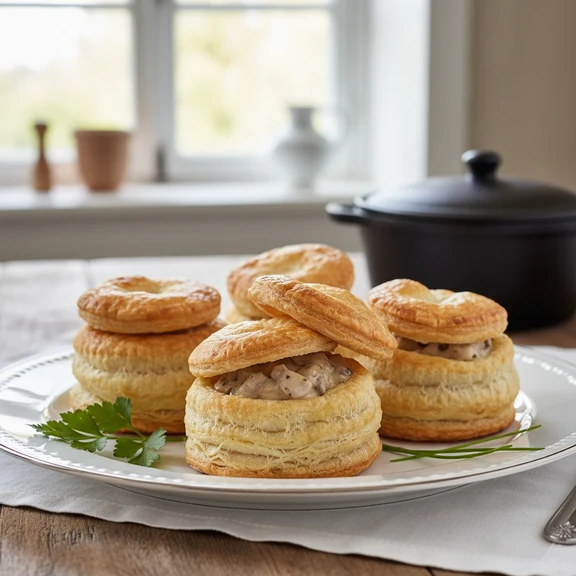
Patty Shells
Classic puff pastry patty shells, perfect for savory fillings.
Puff Paste Cheese Cakes
These elegant open-faced pastries feature a classic puff paste foundation that bakes up into light, buttery, and incredibly flaky layers. Unlike enclosed patties, these tartlets are left uncovered, allowing the savory cheese or sweet custard filling to brown beautifully while the crust rises around it. The recipe strictly advises using cold butter instead of ghee to achieve the distinct lamination and crisp texture essential for a perfect puff pastry.
Puff Pastry (Puff Paste)
A classic colonial-era puff pastry recipe that yields an incredibly flaky and rich crust through a unique lamination technique. This method combines layers of dough with both suet (or shortening) and butter, resulting in distinct, airy layers perfect for savory pies or sweet pastries. The addition of lemon juice and egg yolks to the dough ensures a tender texture and a beautiful golden finish when baked.
Puff Pastry
This historical method for making puff pastry creates an exceptionally flaky and light crust through a unique layering technique. By lightly roasting the flour to remove moisture and stacking buttered layers of dough rather than just folding them, this recipe achieves a professional, airy texture perfect for patties, tarts, or jam puffs. The addition of fresh lime juice to the dough ensures the pastry remains tender and melts in the mouth.