
Peach Jelly
This clear, ruby-hued peach jelly captures the essence of ripe, fragrant peaches in a shimmering preserve. Whole peaches are gently simmered in a sugar syrup until their flavor infuses the liquid, creating a delicate spread with a beautiful red tint derived from the fruit's core. The process yields both a refined jelly and tender, sweet poached peaches that can be enjoyed separately or turned into a rustic jam.
Ingredients
- 3 pounds Peaches (Select firm but ripe peaches that are red near the pit for the best color. Originally '3 sher'.)
- 4 cups Granulated sugar (Originally '2 sher'. Converted to approx 2 lbs/4 cups.)
- 4 cups Water (Originally '2 sher' or '2 bottles'.)
- 2 teaspoons Lemon juice
More recipes using Peaches

Peach Jam
This traditional Parsi-style peach preserve captures the essence of ripe summer fruit by cooking the peaches with their pits to impart a subtle, almond-like depth of flavor. The slow maceration process draws out natural juices, creating a rich, golden syrup that suspends tender chunks of fruit in a glossy spread. Perfect for enjoying on buttered toast or as a sophisticated topping for desserts, this jam balances sweetness with the authentic taste of fresh peaches.

PRESERVED PEACHES
These preserved peaches offer a taste of history, capturing the sweet essence of summer in a jar. The peaches are gently cooked in a sugar syrup, creating a rich and flavorful preserve. This classic method results in tender, juicy peaches perfect for enjoying on their own, over ice cream, or as a delightful addition to desserts.

SWEET ENTRÉE OF RIPE PEACHES
This elegant dessert showcases the simple beauty of ripe peaches, transformed into a refreshing and satisfying treat. The peaches are gently poached in a sweet syrup, creating a tender texture and enhancing their natural sweetness. Served with a touch of raspberry jelly and crunchy nuts, this dish is perfect for a light dessert or a special occasion.
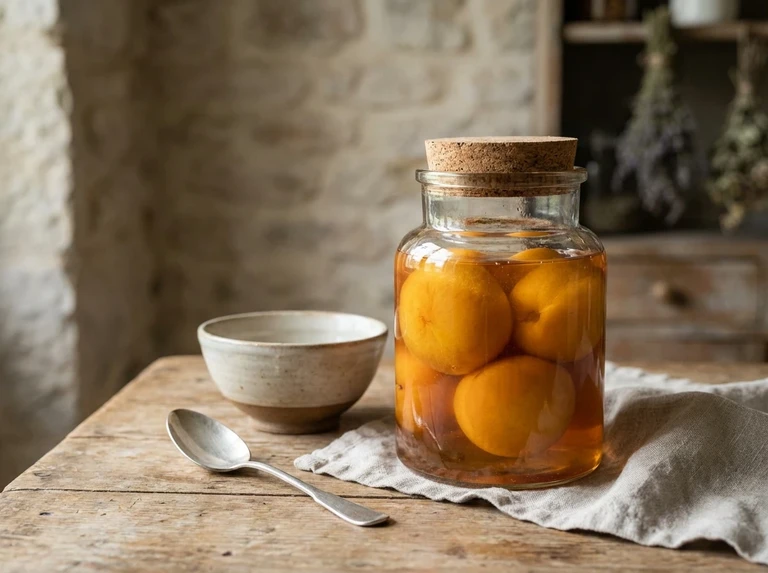
Preserved Peaches
A classic recipe for preserving peaches.
Instructions
- 1Select high-quality, fragrant peaches that are red near the pit but still firm. Wash them thoroughly. Using a fork, prick each peach deeply so the tines touch the pit. Prick large peaches 12-15 times and smaller ones 4-5 times.
- 2In a clean pot, combine the sugar and water. Bring to a boil over high heat. As it boils, skim off any scum or foam that rises to the top to ensure a clear jelly. (Note: The original recipe used a crushed egg to clarify the syrup, but modern refined sugar typically only requires skimming).
- 3Strain the syrup through a clean cloth into a wide, tinned (or non-reactive) pan. Add the prepared peaches. Bring to a boil once, then reduce heat to a gentle simmer. Cook uncovered, turning the peaches occasionally with a wooden spoon so they cook evenly without breaking. Continue to skim any foam that rises, being careful not to remove the jelly itself.
- 4When the liquid has reduced by about half, add the lemon juice. Continue cooking until the liquid reduces to approximately 1 pint (or slightly more). Carefully remove the peaches with a slotted spoon, ensuring the jelly drains back into the pot. Strain the remaining liquid through a fine muslin cloth. Return the strained jelly to a clean pot and simmer briefly, skimming any final foam, until it reaches the setting point.
- 5Pour the hot jelly into sterilized glass jars or bowls. Cover with a thin cloth. Once a skin forms on top, remove it carefully. Allow to cool completely before sealing. The jelly should be a bright, clear red color. (Note: The leftover cooked peaches can be peeled, pitted, mixed with additional sugar, and cooked down to make jam, or eaten as is).
You Might Also Like
Peach Jam
This traditional Parsi-style peach preserve captures the essence of ripe summer fruit by cooking the peaches with their pits to impart a subtle, almond-like depth of flavor. The slow maceration process draws out natural juices, creating a rich, golden syrup that suspends tender chunks of fruit in a glossy spread. Perfect for enjoying on buttered toast or as a sophisticated topping for desserts, this jam balances sweetness with the authentic taste of fresh peaches.

Plum Jelly
A clear, ruby-red jelly made from ripe plums simmered to extract their tart, pectin-rich juices. This traditional recipe balances the natural acidity of the fruit with sugar to create a firm, translucent preserve that is perfect for spreading on toast or scones. The inclusion of plum stones during the initial boiling adds depth of flavor and helps the jelly set naturally.

Pear Jelly
This brilliant golden jelly captures the essence of ripe, late-season pears in a shimmering, translucent preserve. By slowly simmering the fruit to extract its natural pectin and juices before adding sugar and lime, the result is a firm, deeply flavorful spread with a jewel-like clarity. The addition of fresh lime juice balances the sweetness of the pears, creating a sophisticated preserve perfect for spreading on morning toast or serving alongside sharp cheeses.

Mango Jelly
This clear, amber-hued mango jelly captures the pure essence of Alphonso or Pairi mangoes in a delicate, spreadable form. By simmering ripe mango pieces and reducing the strained nectar with sugar and a touch of lemon, the fruit's natural sweetness is concentrated into a glistening preserve. Perfect for spreading on toast or serving as an elegant accompaniment to afternoon tea, this historical recipe offers a refined way to enjoy the King of Fruits.