
Plum Jelly
A clear, ruby-red jelly made from ripe plums simmered to extract their tart, pectin-rich juices. This traditional recipe balances the natural acidity of the fruit with sugar to create a firm, translucent preserve that is perfect for spreading on toast or scones. The inclusion of plum stones during the initial boiling adds depth of flavor and helps the jelly set naturally.
Ingredients
- 2 1/2 pounds Plums (ripe, red or purple) (Originally 'hadi ratal' (2.5 lbs) of Alucha/Vilayati Alu.)
- 5 cups Water (Originally 'savasher' (1.25 sher). Calculated based on 1 sher = 4 cups (1 quart).)
- 1 cup Sugar (Originally 'addhe ratal' (0.5 lb).)
- 1 teaspoon Lemon juice
More recipes using Plums
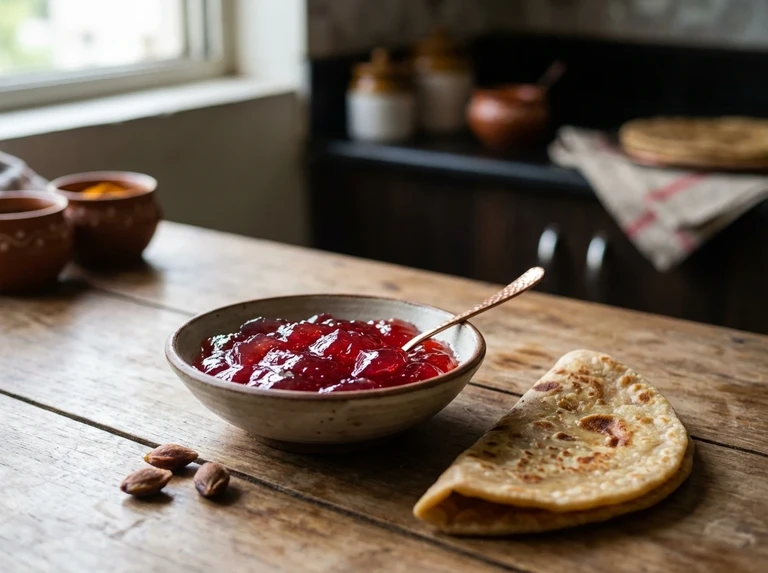
Plum Jelly
A classic plum jelly recipe.

Plum Jam
This traditional Parsi preserve transforms tart plums into a rich, glossy jam with a perfect balance of sweetness and acidity. The fruit is macerated in sugar for a full day to extract natural juices before being slow-cooked to a jewel-like consistency. While the original 1900 recipe calls for plum kernels, this modern version uses slivered almonds to provide a safe, nutty crunch that complements the soft fruit texture.
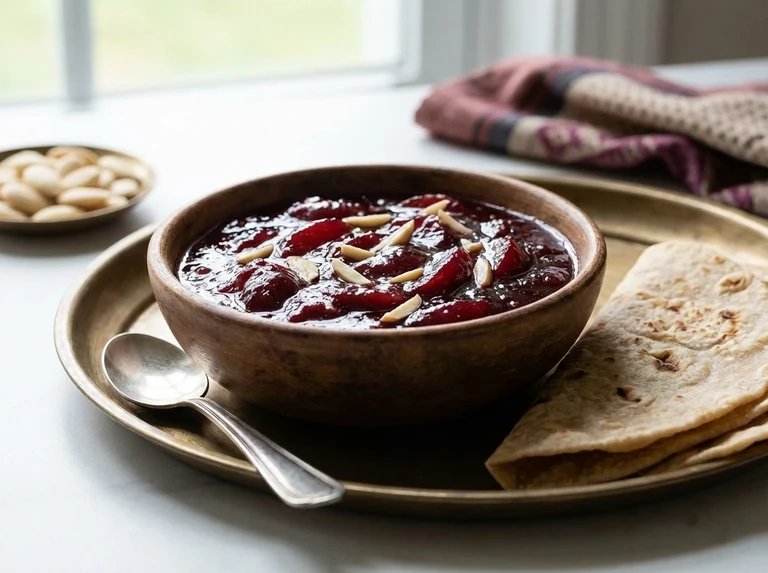
Plum Jam
A simple and delicious plum jam recipe.

Alucha Jam (Plum Jam)
This traditional preserve captures the vibrant flavor of fresh Alucha plums, known for their deep red or purple hue and firm texture. The fruit is carefully peeled and sliced to create a smooth yet textured jam, cooked slowly with sugar to achieve a perfect gel. Ideal for spreading on warm buttered toast or serving as a sweet accompaniment to savory dishes.
Instructions
- 1Wash the plums thoroughly and remove any stems. Cut the flesh from the sides of the fruit, but keep the center parts containing the stones (pits) as well. Do not discard the stones yet as they help with pectin.
- 2Place the plum flesh and stones into a tinned or enamel pot (non-reactive). Pour in the water. Cover the pot and simmer over low heat until the plums are completely soft and mushy. Watch carefully to ensure it does not boil over.
- 3Remove from heat. Wet a strong muslin cloth or jelly bag with water and wring it out. Pour the fruit mixture into the cloth suspended over a clean bowl. Allow the juice to drain, then squeeze the cloth gently to extract any remaining juice. Discard the skins and stones.
- 4Rinse the pot and pour the strained juice back into it. Add the sugar. Place over low heat and bring to a boil, leaving the pot uncovered. Do not let it boil over.
- 5When the liquid has reduced to about 3 cups, stir in the lemon juice. Skim off any scum that rises to the surface with a wooden spoon. Continue boiling until the jelly reduces to exactly 1 pint (2 cups). Remove from heat.
- 6Cover the pot with a cloth and let it cool slightly. If a film forms on top, carefully remove it with a spoon. Pour the jelly into sterilized jars. Allow to stand for 2 to 2.5 days to fully set before sealing.
You Might Also Like
Plum Jelly
A classic plum jelly recipe.
Plum Jam
This traditional Parsi preserve transforms tart plums into a rich, glossy jam with a perfect balance of sweetness and acidity. The fruit is macerated in sugar for a full day to extract natural juices before being slow-cooked to a jewel-like consistency. While the original 1900 recipe calls for plum kernels, this modern version uses slivered almonds to provide a safe, nutty crunch that complements the soft fruit texture.

Jamun Jelly (Java Plum Jelly)
This exquisite preserve captures the unique, astringent-sweet flavor of ripe Java Plums (Jamun) in a dense, jewel-toned jelly. The deep purple fruit is simmered to extract its rich essence, then reduced with sugar and a hint of lemon to create a firm, glossy spread with a distinctively tart profile. A historical Parsi delicacy, it pairs beautifully with buttered toast or as an elegant condiment for cheese boards.
Plum Jam
A simple and delicious plum jam recipe.