
Mashed Potatoes
A simple colonial-era recipe for smooth mashed potatoes, achieved by thoroughly mashing and then pressing the cooked potatoes through a wire sieve for an ultra-fine, lump-free texture.
Ingredients
- 4 medium potatoes (Choose starchy potatoes such as Russet or Maris Piper for the best texture. Peel and cut into even chunks before boiling so they cook at the same rate.)
More recipes using Potatoes
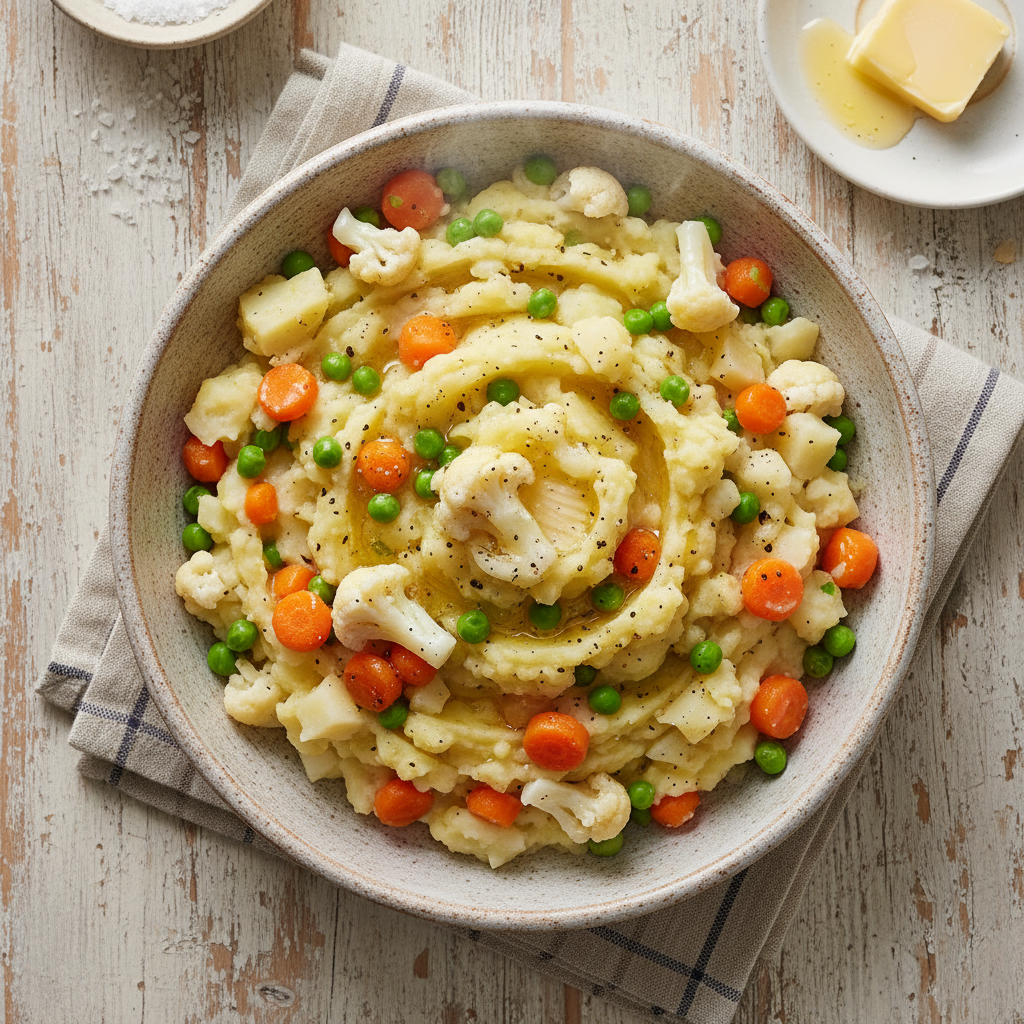
Vegetable Mash
A hearty mixed vegetable mash combining buttery mashed potatoes with minced cauliflower, carrots, turnips, and green peas. A comforting side dish that transforms simple boiled vegetables into a flavorful accompaniment.
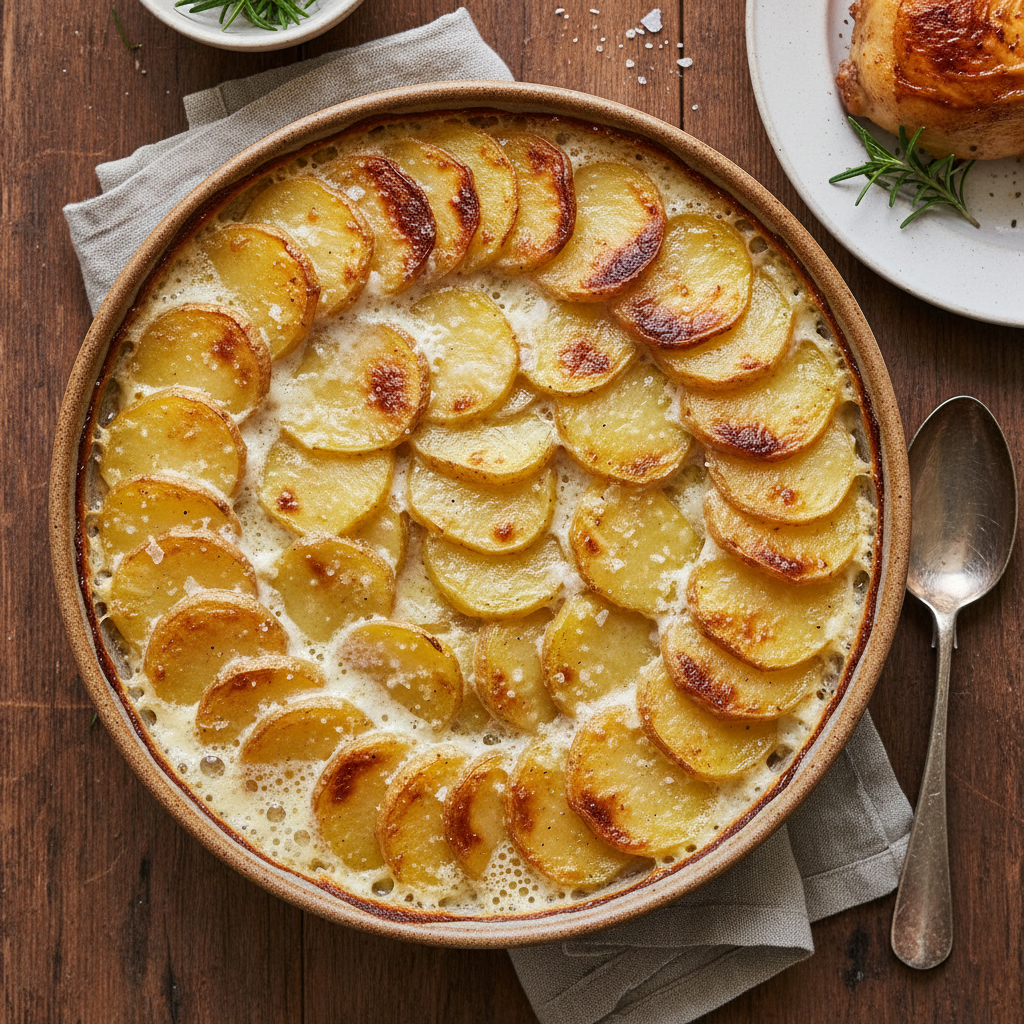
Casserole of Potatoes
A classic potato casserole formed into a ring or nest shape, baked until golden, and filled with your choice of ragout, fricassee, cutlets, or macaroni. This elegant presentation makes an impressive side dish or main course.

Potato Burta
A traditional Indian mashed potato dish with onions, green chilies, and lime juice, seasoned with mustard oil. A flavorful side dish or accompaniment.

Roasted Potatoes Under Meat
A traditional method for browning boiled potatoes in the dripping pan under roasting meat, creating flavorful, crispy potatoes basted with meat drippings.
Instructions
- 1Peel the potatoes and cut them into evenly sized chunks, roughly 4–5 cm each, so they cook at the same rate. Place them in a large saucepan and cover with cold water. Bring to the boil over medium-high heat, then reduce to a steady simmer. Cook for 15–20 minutes, or until a fork slides into the centre of a chunk with no resistance. Drain thoroughly in a colander and allow the steam to escape for 1–2 minutes — this helps dry them out and gives a fluffier result.
- 2Return the drained potatoes to the warm saucepan. Using a potato masher, mash them thoroughly and firmly, pressing down and working through every piece until no large lumps remain. Work across the entire pan to make sure every chunk is broken down completely. The goal at this stage is to break down the bulk of the potato before the next sieving step — the more thorough you are here, the easier the sieve step will be.
- 3Set a large wire sieve or drum sieve over a clean bowl or saucepan. Spoon the mashed potato into the sieve in batches. Using the back of a large spoon or a flexible spatula, press and work the potato firmly through the mesh in circular motions. Continue until all of the potato has been pushed through and the bowl below contains a uniformly smooth, fluffy mash. Scrape any potato clinging to the underside of the sieve into the bowl. The sieving step removes any remaining fibrous lumps and gives the finished mash a very fine, even texture. Serve immediately while hot.
You Might Also Like

Mashed Potato (Purée de Pommes de Terre)
A classic French-style mashed potato enriched with butter, milk, and a ladleful of stock, subtly flavoured with garlic, pepper, and nutmeg. Unlike the stiffer British version, this purée is served softer and more loosely mounded at the table.

MASHED POTATOES
Creamy, comforting mashed potatoes are a classic side dish, perfect for any meal. This recipe uses simple ingredients and techniques to create a smooth, buttery texture with a rich, savory flavor. Garnish with fresh parsley for an elegant touch, making this a satisfying and versatile dish.

Mashed Potatoes
This classic mashed potatoes recipe from 1900 offers a comforting and satisfying side dish. The creamy texture and buttery flavor make it a perfect accompaniment to any meal. Simple ingredients and straightforward instructions ensure a delicious result every time, offering a taste of history with a modern touch.
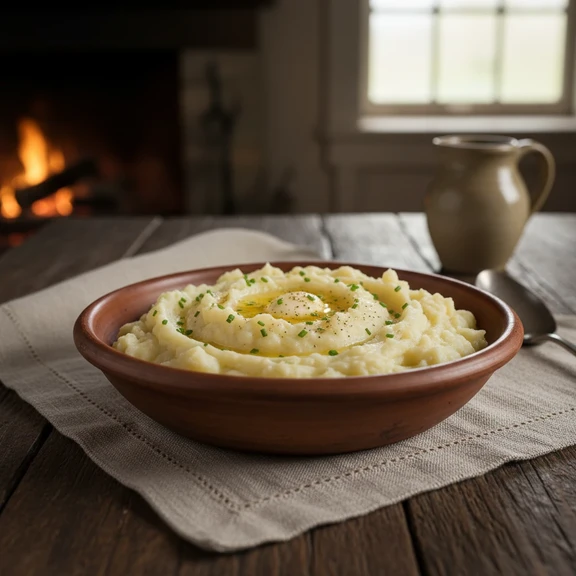
To Mash Potatoes
A simple recipe for mashed potatoes.