
Orange Marmalade (Jam Santani)
This traditional Gujarati-style orange marmalade transforms fresh, juicy oranges into a translucent, golden preserve with a perfect balance of sweet and citrus notes. The recipe uses a meticulous method of preparing the fruit pulp and tenderizing the peel separately to ensure a smooth texture without bitterness. Ideally served on buttered toast or used as a glaze, this jam thickens naturally as it cools for a delightful spreadable consistency.
Ingredients
- 6 medium Sweet Oranges (Choose juicy, sweet oranges. Yields approx. 1 pound of pulp.)
- 1 1/4 pounds Granulated Sugar (Originally '1.25 sher'. Adjust to 1 pound if oranges are very sweet.)
- 2 cups Water (Estimated quantity for boiling the peels.)
More recipes using Oranges

Orange Jelly
This traditional Parsi-style orange jelly is crafted by slowly simmering whole oranges with sugar to extract their natural pectin and vibrant citrus essence. The result is a clear, amber-hued preserve with a sophisticated, slightly bittersweet flavor profile that pairs exceptionally well with buttered toast or fresh bread. Unlike modern jellies, this recipe relies on a slow reduction process to achieve a firm, natural set without commercial gelatin.

Orange Jelly No. 2
This traditional Orange Jelly recipe captures the pure essence of ripe oranges, meticulously prepared by slow-cooking the pulp to extract every drop of flavor. The addition of fresh lemon juice adds a bright tartness that balances the sweetness, resulting in a crystal-clear, amber preserve. Perfect for spreading on morning toast or serving as a classic accompaniment to afternoon tea.

Modern Orange Marmalade
A modernized version of classic orange marmalade, featuring a balance of sweet and citrus flavors. This recipe uses a combination of oranges and lemons for a complex taste.
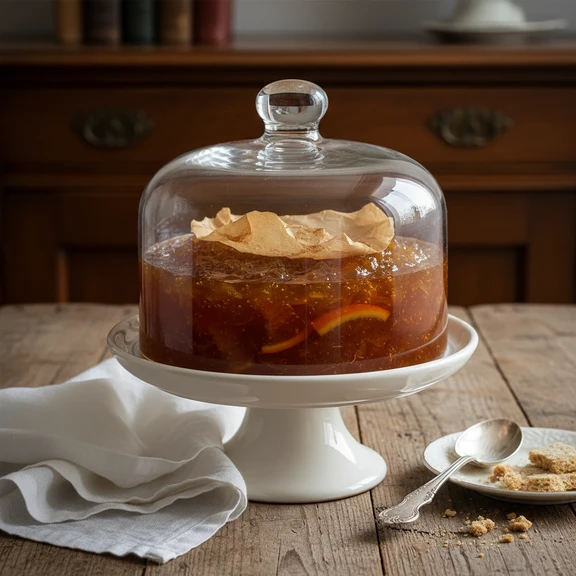
Orange Marmalade
A classic marmalade recipe using oranges, sugar, and water.
Instructions
- 1Wash the oranges thoroughly. Using a fine grater or nutmeg grater, lightly grate the outer red surface of the peel to remove the bitter oils. Peel the oranges.
- 2Cut the orange peel into very fine shreds. Measure out approximately 0.6 ounces (originally 1.5 tolas) of these shreds. Boil them in water until tender to remove bitterness, then drain.
- 3Remove the thin white skin (membrane) and seeds from the orange segments. Collect all the pulp and any juice that drips out. Weigh this mixture; you should have approximately 1 pound of pulp.
- 4In a heavy-bottomed, non-reactive pot (stainless steel or enamel), combine the orange pulp, the boiled peel shreds, and the sugar. Cover and place over low heat (simmer).
- 5Uncover occasionally and stir with a wooden spoon to prevent sticking. Continue cooking until the jam thickens slightly. Test by taking a drop between your fingers; if it feels sticky and forms a slight thread, or if it sheets from the spoon, it is ready. Remove from heat while it is still somewhat thin, as it will thicken significantly upon cooling.
You Might Also Like
Orange Jelly
This traditional Parsi-style orange jelly is crafted by slowly simmering whole oranges with sugar to extract their natural pectin and vibrant citrus essence. The result is a clear, amber-hued preserve with a sophisticated, slightly bittersweet flavor profile that pairs exceptionally well with buttered toast or fresh bread. Unlike modern jellies, this recipe relies on a slow reduction process to achieve a firm, natural set without commercial gelatin.

Mango Jam
This traditional Gujarati mango jam captures the intense, floral sweetness of Alphonso or Pairi mangoes in a rich, golden preserve. Slow-cooked with a generous amount of sugar until thick and glossy, it transforms fresh fruit into a decadent spread with a smooth, luscious texture. Perfect for enjoying on toast, mixing into yogurt, or serving alongside savory Indian breads like thepla or paratha.
Orange Marmalade
A classic marmalade recipe using oranges, sugar, and water.
Orange Jelly No. 2
This traditional Orange Jelly recipe captures the pure essence of ripe oranges, meticulously prepared by slow-cooking the pulp to extract every drop of flavor. The addition of fresh lemon juice adds a bright tartness that balances the sweetness, resulting in a crystal-clear, amber preserve. Perfect for spreading on morning toast or serving as a classic accompaniment to afternoon tea.