
Orange Jelly No. 2
This traditional Orange Jelly recipe captures the pure essence of ripe oranges, meticulously prepared by slow-cooking the pulp to extract every drop of flavor. The addition of fresh lemon juice adds a bright tartness that balances the sweetness, resulting in a crystal-clear, amber preserve. Perfect for spreading on morning toast or serving as a classic accompaniment to afternoon tea.
Ingredients
- 4 pounds Oranges (sweet and ripe) (Select oranges with firm pulp where the skin peels easily.)
- 1 cup Water (Originally '1.5 pasher' (approx 6-8 oz).)
- 1 1/2 cups Sugar (Originally '3/4 sher' (approx 12 oz or 3/4 lb).)
- 1 whole Lemon (Juiced.)
More recipes using Oranges

Orange Jelly
This traditional Parsi-style orange jelly is crafted by slowly simmering whole oranges with sugar to extract their natural pectin and vibrant citrus essence. The result is a clear, amber-hued preserve with a sophisticated, slightly bittersweet flavor profile that pairs exceptionally well with buttered toast or fresh bread. Unlike modern jellies, this recipe relies on a slow reduction process to achieve a firm, natural set without commercial gelatin.

Orange Marmalade (Jam Santani)
This traditional Gujarati-style orange marmalade transforms fresh, juicy oranges into a translucent, golden preserve with a perfect balance of sweet and citrus notes. The recipe uses a meticulous method of preparing the fruit pulp and tenderizing the peel separately to ensure a smooth texture without bitterness. Ideally served on buttered toast or used as a glaze, this jam thickens naturally as it cools for a delightful spreadable consistency.

Modern Orange Marmalade
A modernized version of classic orange marmalade, featuring a balance of sweet and citrus flavors. This recipe uses a combination of oranges and lemons for a complex taste.
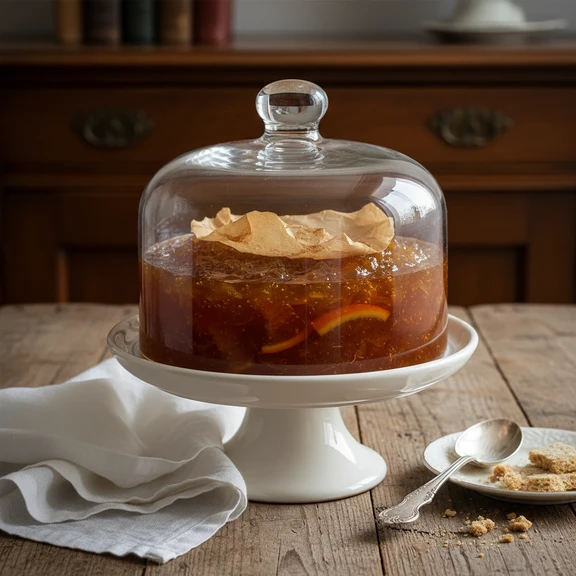
Orange Marmalade
A classic marmalade recipe using oranges, sugar, and water.
Instructions
- 1Select sweet, ripe oranges with firm pulp. Peel them and carefully remove all seeds and the thin white membrane (pith) from the segments, keeping only the inner pulp.
- 2Place the prepared orange pulp in a tinned pot or an enamel vessel. Add the water, cover with a lid, and place over a slow fire. Stir occasionally with a wooden spoon to break down the pulp until it becomes completely soft and mashed.
- 3Remove from heat. Wet a thick white cloth in water, wring it out, and use it to strain the pulp into a bowl. Squeeze the cloth tightly to extract all the juice from the pulp. Discard the dry residue.
- 4Dissolve the sugar in the extracted orange juice. Add the juice of one sour lemon. Strain this mixture again through a wet muslin cloth into a clean tinned or enamel pot.
- 5Place the pot on a slow fire, uncovered. As it cooks, carefully skim off any scum that rises to the top with a wooden spoon, taking care not to remove the clear jelly. When the jelly is nearing completion, foam will start to appear; settle it with the spoon and do not let it boil over.
- 6When the mixture has reduced significantly (to about 2 pasher/cups in volume) and reached the setting point, remove from heat. Immediately pour into glass jars. Let it cool slightly; if a film forms on top, remove it. Cover the jars with a fine cloth and let stand until completely cold. The jelly will set firmly in 24 to 30 hours.
You Might Also Like
Orange Jelly
This traditional Parsi-style orange jelly is crafted by slowly simmering whole oranges with sugar to extract their natural pectin and vibrant citrus essence. The result is a clear, amber-hued preserve with a sophisticated, slightly bittersweet flavor profile that pairs exceptionally well with buttered toast or fresh bread. Unlike modern jellies, this recipe relies on a slow reduction process to achieve a firm, natural set without commercial gelatin.
Orange Marmalade (Jam Santani)
This traditional Gujarati-style orange marmalade transforms fresh, juicy oranges into a translucent, golden preserve with a perfect balance of sweet and citrus notes. The recipe uses a meticulous method of preparing the fruit pulp and tenderizing the peel separately to ensure a smooth texture without bitterness. Ideally served on buttered toast or used as a glaze, this jam thickens naturally as it cools for a delightful spreadable consistency.
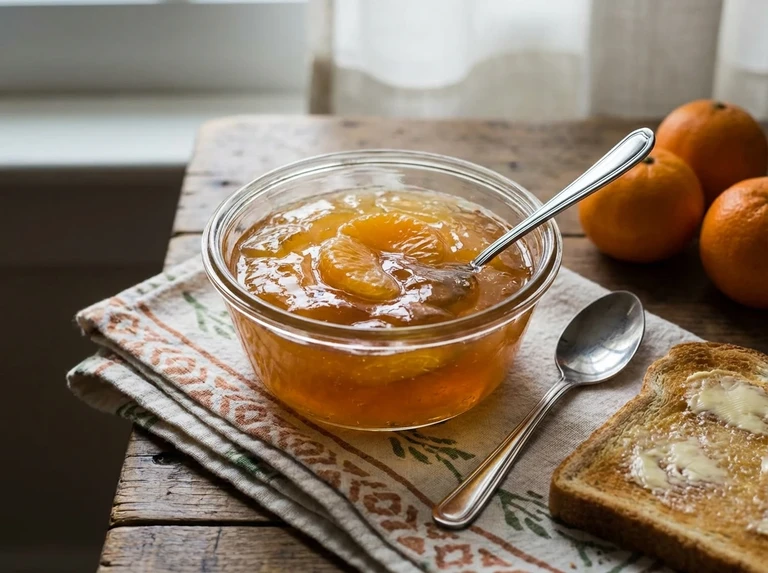
Orange Jelly
A refreshing and flavorful orange jelly, perfect as a light dessert or snack.

Mango Jelly
This clear, amber-hued mango jelly captures the pure essence of Alphonso or Pairi mangoes in a delicate, spreadable form. By simmering ripe mango pieces and reducing the strained nectar with sugar and a touch of lemon, the fruit's natural sweetness is concentrated into a glistening preserve. Perfect for spreading on toast or serving as an elegant accompaniment to afternoon tea, this historical recipe offers a refined way to enjoy the King of Fruits.