
Boiled Eggs
This traditional Parsi method for preparing boiled eggs offers precise timing for both soft and firm results, ensuring the whites are tender and the yolks are cooked to your preference. By introducing the eggs to vigorously boiling water and finishing with a cold water shock, the shells become easy to peel while preserving the delicate texture of the egg. A fundamental technique from the Vividh Vani kitchen that transforms a simple ingredient into a perfect breakfast or snack.
Ingredients
- 4 whole Eggs (Quantity estimated for a standard batch. Ensure eggs are whole and uncracked.)
- 8 cups Water (Quantity estimated. Enough to cover eggs by 'four fingers' (approx. 3-4 inches).)
- 4 cups Cold water (For shocking the eggs to stop the cooking process.)
More recipes using Eggs

Soft Boiled Eggs (Half Boiled)
Achieve the perfect soft-boiled egg with this traditional gentle cooking method that yields tender whites and a warm, runny yolk. By allowing fresh eggs to steep in hot water off the heat rather than boiling them vigorously, the texture remains delicate and creamy without becoming rubbery. This simple yet precise technique creates a comforting breakfast dish, best enjoyed with buttered toast or a light seasoning of salt and pepper.
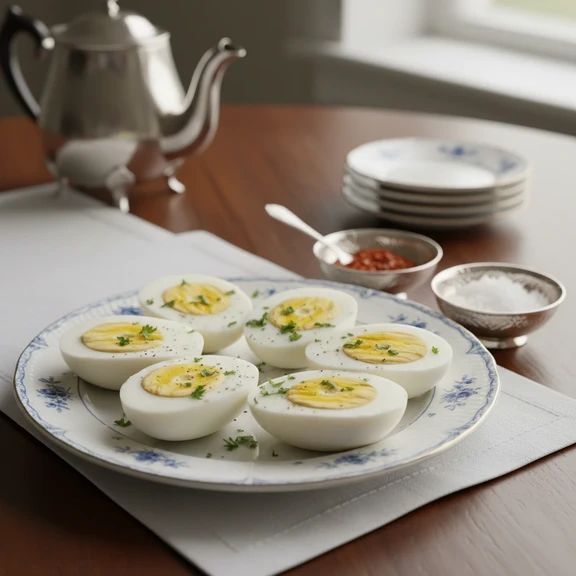
Hard-boiled Eggs
A classic method for preparing hard-boiled eggs, offering specific techniques for serving them either hot or cold to preserve the quality and appearance of the yolk.

BOILED EGGS
Learn how to make perfect boiled eggs, from soft-boiled to hard-boiled, with this simple and classic recipe. Whether you prefer a runny yolk or a firm one, this guide provides easy-to-follow instructions for achieving your desired egg consistency. Enjoy these versatile eggs for breakfast, lunch, or as a protein-packed snack.

Eggs, Plain Boiled
A classic method for boiling eggs by plunging them into boiling water. This recipe advocates for the hot-water start method over the cold-water start, specifying precise timings for soft to well-set yolks.
Instructions
- 1Fill a deep pot with enough water so that the eggs will be submerged with approximately four fingers (about 3-4 inches) of water above them. Cover the pot and place it on the stove over high heat.
- 2When the water is boiling vigorously and bubbling, carefully lower the eggs into the water using a spoon or ladle to prevent them from cracking. Cover the pot again immediately.
- 3For firm boiled eggs, cook for exactly 6 minutes. For 'half-boiled' (soft/medium) eggs, cook for exactly 4 minutes. While the eggs are cooking, prepare a separate vessel with cold water.
- 4As soon as the time is up, remove the lid. Pour the prepared cold water into the pot to stop the cooking process immediately, or transfer the eggs to the cold water bath. Remove the pot from the stove and take the eggs out.
You Might Also Like
Soft Boiled Eggs (Half Boiled)
Achieve the perfect soft-boiled egg with this traditional gentle cooking method that yields tender whites and a warm, runny yolk. By allowing fresh eggs to steep in hot water off the heat rather than boiling them vigorously, the texture remains delicate and creamy without becoming rubbery. This simple yet precise technique creates a comforting breakfast dish, best enjoyed with buttered toast or a light seasoning of salt and pepper.
Eggs, Plain Boiled
A classic method for boiling eggs by plunging them into boiling water. This recipe advocates for the hot-water start method over the cold-water start, specifying precise timings for soft to well-set yolks.
Hard-boiled Eggs
A classic method for preparing hard-boiled eggs, offering specific techniques for serving them either hot or cold to preserve the quality and appearance of the yolk.

Poached Eggs
Delicate and tender poached eggs prepared in the traditional Parsi style, offering a light and digestible meal perfect for breakfast or convalescence. Fresh eggs are gently simmered in salted water until the whites are firm and the yolks remain soft and creamy. This simple yet elegant preparation highlights the natural flavor of the eggs without the need for oil or heavy fats.