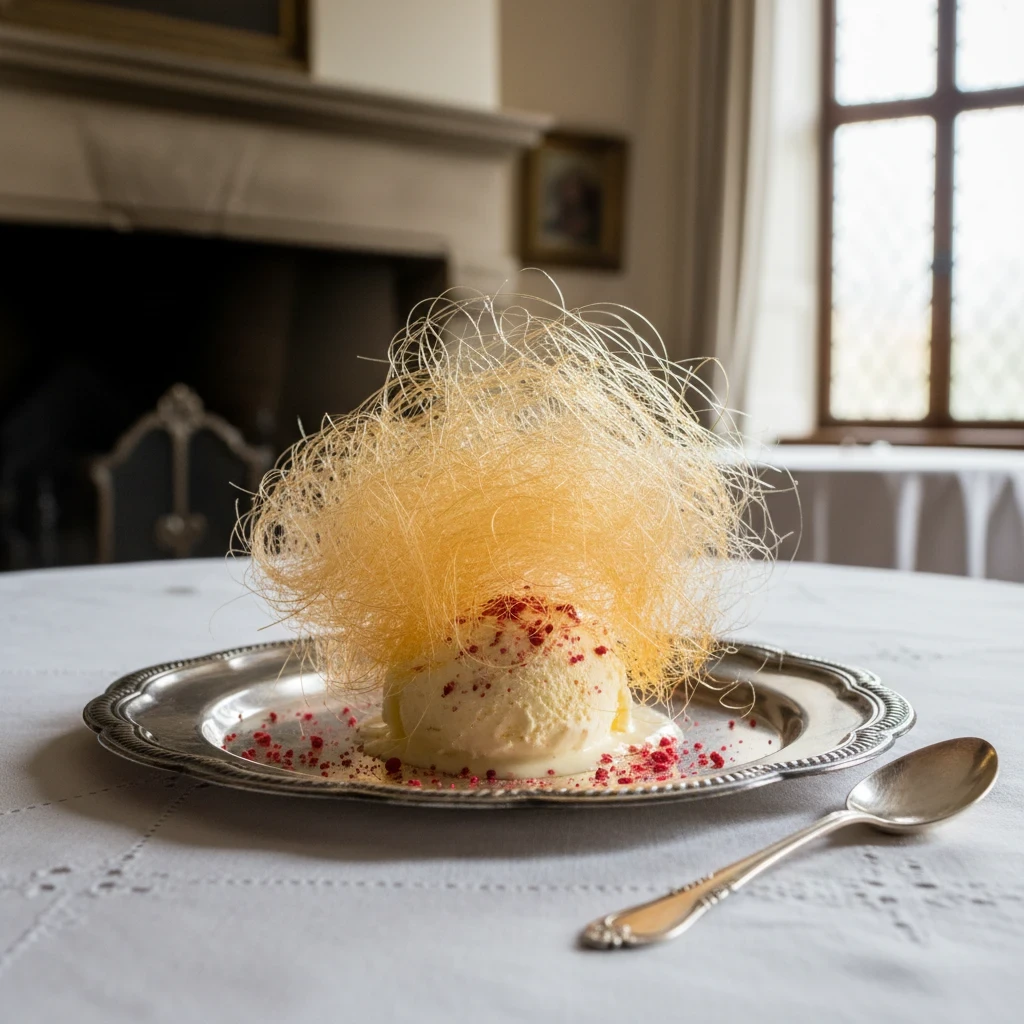
Spun Sugar
Learn the classic confectionery art of making delicate spun sugar. This recipe guides you through creating a perfect hard crack sugar syrup and then transforming it into beautiful, airy sugar threads, ideal for garnishing desserts like frozen creams and ices.
Ingredients
- 4 cups Granulated sugar (Inferred quantity based on typical sugar syrup ratios for spun sugar (2 parts sugar to 1 part water).)
- 2 cups Water (Original recipe specifies 'boiling water', but it will be boiled with the sugar.)
- 0.25 teaspoon Cream of tartar (Helps prevent crystallization of the sugar syrup.)
- 0 drops Food coloring (Optional, for colored spun sugar.)
More recipes using Sugar
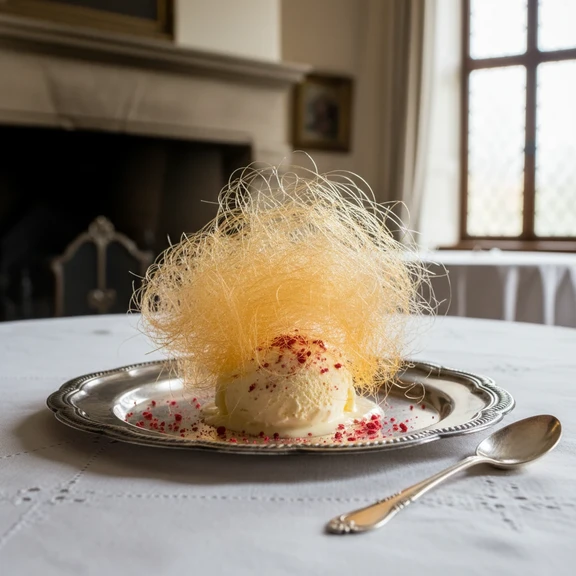
Spun Sugar
A delicate and airy confectionery made from caramelized sugar, spun into fine, hair-like threads. Perfect for garnishing desserts, cakes, and pastries, adding an elegant and sweet touch. This recipe is scaled down for home use and includes corn syrup to help prevent crystallization, making it beginner-friendly.

Glacé Nuts and Fruits (Hard Crack Sugar Syrup)
This classic confectionery recipe guides you through making a hard crack sugar syrup (310°F) to create a beautiful, crisp glaze for nuts and fruits. The process involves careful boiling, preventing crystallization, and quick dipping to achieve a professional glacé finish. Perfect for special occasions, though glacé fruits are best enjoyed the day they are made.

Colored Sugar
Transform simple granulated sugar into a vibrant, decorative topping with this traditional technique for making custom colored sugar. By rubbing food coloring, saffron, or cocoa powder into coarse sugar crystals, you can create sparkling garnishes in pink, yellow, blue, or brown hues. This versatile decoration adds a festive visual appeal and a delightful crunch to Indian sweets (mithai), cakes, and confections.
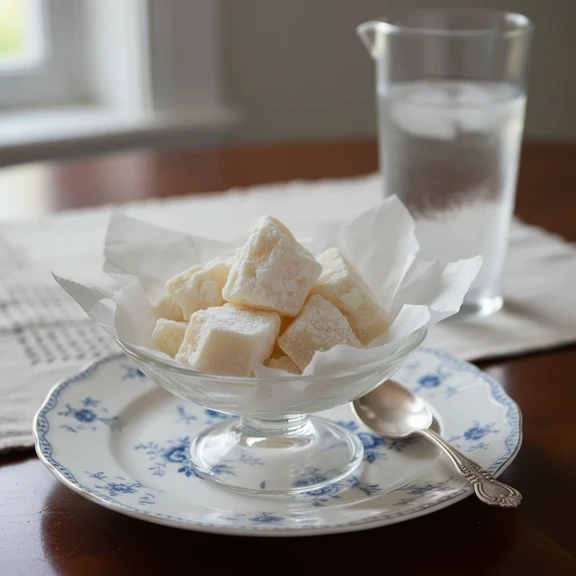
Ice Cream Candy
A simple recipe for making hard candy that resembles ice cream in texture.
Instructions
- 1Set up your spinning station by placing two broomstick handles over the backs of two chairs, ensuring they are stable and parallel. Spread paper on the floor directly underneath the broomsticks to catch any sugar drips. Prepare a large pan of cold water (an ice bath is ideal) and a separate saucepan of hot water. Gather your tools, including a candy thermometer, a pastry brush, and a coarse wire dipper (a whisk or fork can be used as a substitute).
- 2In a smooth, heavy-bottomed saucepan (preferably stainless steel), combine the granulated sugar, water, and cream of tartar. If desired, add a few drops of food coloring at this stage for colored spun sugar. Stir gently with a clean spoon or whisk just enough to moisten all the sugar.
- 3Place the saucepan over medium-high heat. Insert a candy thermometer, ensuring it does not touch the bottom of the pan. Boil the syrup without stirring until it reaches 300°F (149°C), which is the 'hard crack' stage. The syrup may begin to discolor slightly, turning a very light amber.
- 4While the syrup is boiling, occasionally dip a clean pastry brush in hot water and gently brush down any sugar crystals that adhere to the sides of the saucepan. This prevents the syrup from crystallizing and becoming grainy.
- 5As soon as the syrup reaches 300°F (149°C), immediately remove the saucepan from the heat. Carefully place the bottom of the saucepan into the larger pan of cold water (the ice bath) to instantly stop the cooking process and prevent further caramelization.
- 6Remove the saucepan from the cold water bath. Immediately place it into the saucepan of hot water. This will keep the syrup warm and fluid enough for spinning without continuing to cook it.
- 7Allow the syrup to cool slightly in the hot water bath for about 3-5 minutes. It should thicken enough to form fine threads when dipped, but still be fluid enough to drip easily. Test by dipping your dipper and seeing if it forms thin strands.
- 8Dip your coarse wire dipper (or whisk/fork) into the slightly cooled syrup. Lift it out and quickly shake it back and forth over the broomstick handles. Fine, delicate threads of spun sugar will form and drape over the handles. Continue dipping and shaking, moving along the broomsticks to build up layers of spun sugar.
- 9Carefully take off the spun sugar as soon as it is formed on the broomsticks. Gently gather and shape it into delicate nests, or pile it lightly on a cold dish. Work quickly as spun sugar is very delicate and can melt or become sticky with humidity. Spun sugar is traditionally served around bricks or molds of frozen creams and ices, adding an elegant and sweet garnish.
You Might Also Like
Spun Sugar
A delicate and airy confectionery made from caramelized sugar, spun into fine, hair-like threads. Perfect for garnishing desserts, cakes, and pastries, adding an elegant and sweet touch. This recipe is scaled down for home use and includes corn syrup to help prevent crystallization, making it beginner-friendly.
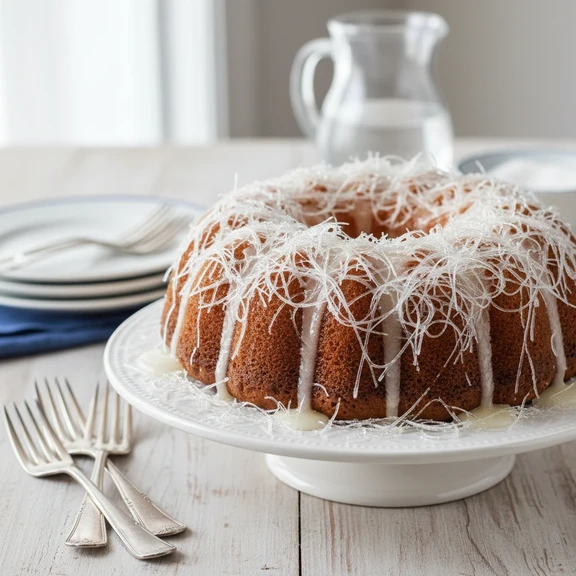
Threaded Syrup Icing
A simple threaded syrup icing, perfect for cakes and cookies.
Glacé Nuts and Fruits (Hard Crack Sugar Syrup)
This classic confectionery recipe guides you through making a hard crack sugar syrup (310°F) to create a beautiful, crisp glaze for nuts and fruits. The process involves careful boiling, preventing crystallization, and quick dipping to achieve a professional glacé finish. Perfect for special occasions, though glacé fruits are best enjoyed the day they are made.

Rose Sugar Twists
A fascinating historical confection that transforms simple sugar syrup into glistening, satin-like hard candy through the traditional art of sugar pulling. Known as Golab Chhari, these sweet treats are created by repeatedly stretching and folding hot sugar syrup over a hook until it turns opaque white and develops a delicate, airy crunch. The pulled sugar is then fashioned into twisted rings or rods, offering a nostalgic taste of Parsi culinary heritage.