Classifying Soups Without Stock
A guide to understanding different types of soups made without stock, including cream soups, purées, and bisques.
More recipes using Vegetables
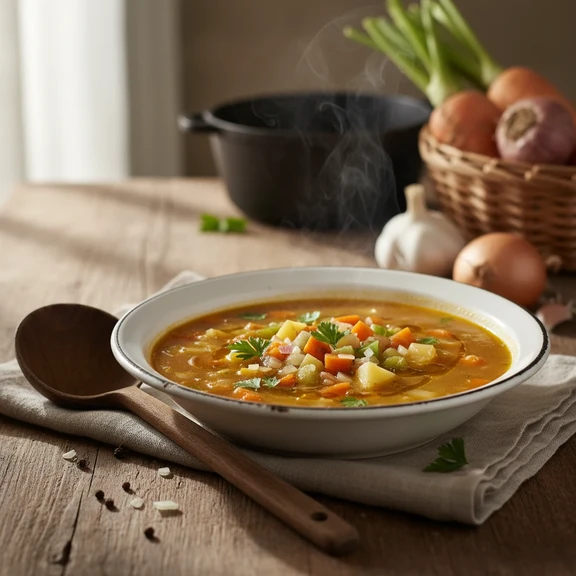
Soups Without Stock
A basic guide to making soups without the need for pre-made stock, focusing on fresh ingredients and simple techniques.

Soup
This simple soup recipe from 1900 offers a comforting and classic taste. The soup features strained vegetables, a flavorful stock, and a touch of water, creating a light yet satisfying broth. Serve it hot with croutons or salted wafers for a delightful and easy meal.
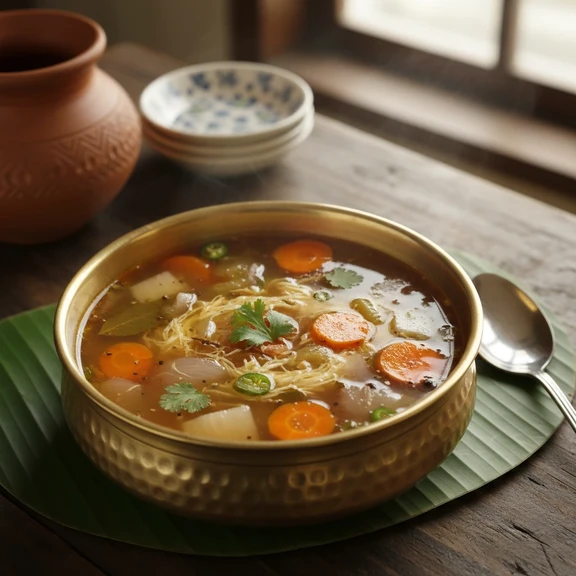
Clear Soup
A traditional clear vegetable consommé (stock) that is clarified with egg whites for brilliance, enriched with mushroom ketchup, and given a very light body with corn-flour. This recipe produces a rich, amber-colored soup.
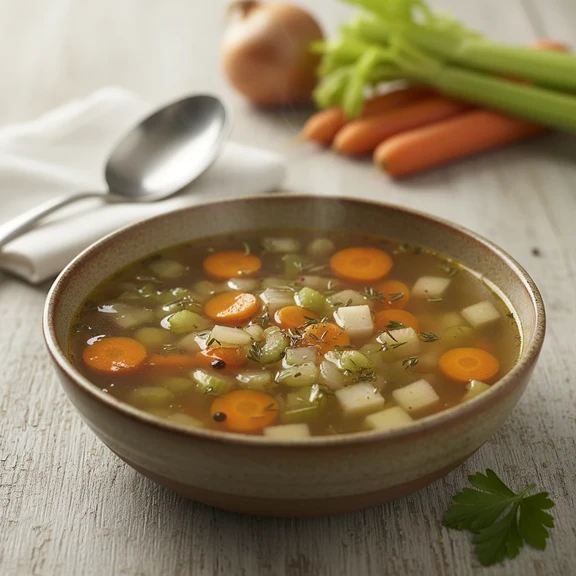
Vegetable Stock
A simple and versatile vegetable stock made from common vegetables, herbs, and seasonings. Can be used as a base for soups, sauces, and other dishes.
Instructions
- 1Cream soups are made of vegetables or fish, with milk, and a small amount of cream and seasonings. They are always thickened. To make a basic cream soup, start by sautéing your chosen vegetables (e.g., onions, carrots, celery) in butter until softened. Add vegetable or fish broth (if using), milk, and seasonings. Simmer until the vegetables are tender. Thicken with a roux (butter and flour) or cornstarch slurry. Finish with a swirl of cream before serving.
- 2Purées are made from vegetables or fish, forced through a strainer, and retained in soup, milk, and seasonings. They are generally thicker than cream soup. Sometimes White Stock is added. To make a purée, cook your chosen vegetables or fish until very tender. Blend the cooked ingredients with milk or broth until smooth. Pass the mixture through a fine-mesh strainer or food mill to remove any lumps or skins. Season to taste and add white stock if desired.
- 3Bisques are generally made from shell-fish, milk, and seasonings, and served with fish dice; made similarly to purées. They may be made of meat, game, or vegetables, with small dice of the same. To make a bisque, start by sautéing aromatics like onions, celery, and carrots in butter. Add your chosen shellfish (e.g., shrimp, lobster, crab) and cook until pink. Deglaze the pot with wine or sherry. Add broth or stock and simmer until the shellfish is cooked through. Remove the shellfish and set aside. Blend the soup until smooth and strain it through a fine-mesh strainer. Return the soup to the pot and add milk or cream. Season to taste. Dice the reserved shellfish meat and add it back to the soup before serving.
- 4Various names have been given to soups, according to their flavorings, chief ingredients, the people who use them, etc. To the Scotch belongs Scotch Broth; to the French, Pot-au-feu; to the Indo, Mulligatawny; and to the Spanish, Olla Podrida.
You Might Also Like
Soups Without Stock
A basic guide to making soups without the need for pre-made stock, focusing on fresh ingredients and simple techniques.
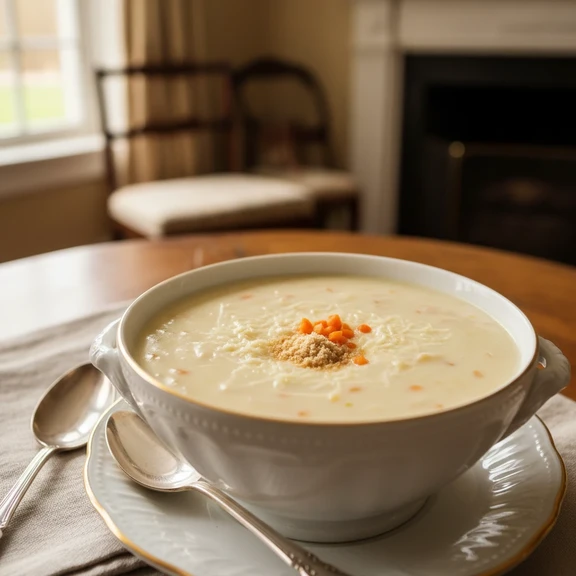
Duchess Soup
A creamy and elegant soup featuring a delicate blend of white stock, vegetables, and cheese.

SOUP STOCK
This classic soup stock recipe from the early 1900s provides a rich and flavorful base for any soup. The slow simmering of meat, bones, and vegetables extracts maximum flavor, creating a deeply savory broth. This recipe uses a bouquet garni of herbs and spices to enhance the taste, resulting in a comforting and aromatic soup stock perfect for various culinary creations.
Soup
This simple soup recipe from 1900 offers a comforting and classic taste. The soup features strained vegetables, a flavorful stock, and a touch of water, creating a light yet satisfying broth. Serve it hot with croutons or salted wafers for a delightful and easy meal.