
CHHANA POLAO
A fragrant layered rice and meat dish from colonial-era Indian cuisine, slow-cooked with aromatic spices, curd, and saffron. The meat is first boiled to create a flavourful stock (akhni water) used to cook the rice, building deep, complex layers of flavour.
Ingredients
- 900 g Rice (1 seer converted to approximately 900 g. Use a long-grain variety such as basmati for best results. Rinse thoroughly before use.)
- 900 g Tender meat (1 seer converted to approximately 900 g. Cut into medium pieces suitable for slow cooking, such as bone-in lamb or goat. The tenderness is important — avoid tough braising cuts.)
- 233 g Ghee (1 powa converted to approximately 233 g (roughly 250 ml). Divided across steps: approximately 30 g (1 chhatak) for browning the meat, a small amount for heating the pot and layering, and the remainder for frying whole spices with the curd.)
- 233 g Curd (1 powa converted to approximately 233 g. Use plain, full-fat yoghurt. Added whole (unstrained) midway through cooking.)
- 1 whole Lemon (Juice only is used in the spice paste.)
- 23 g Ginger (2 tolas converted to approximately 23 g. Fresh ginger, peeled and ground into a paste.)
- 23 g Coriander seeds (2 tolas converted to approximately 23 g. Ground or crushed to a paste along with the other spices.)
- 2.9 g Pepper (¼ tola converted to approximately 2.9 g (about ½ teaspoon). Black pepper, ground into the spice paste.)
- 2.9 g Saffron (¼ tola converted to approximately 2.9 g (a generous pinch). Ground or steeped and incorporated into the spice paste.)
- 46 g Salt (4 tolas converted to approximately 46 g. This seasons the entire dish including the meat, stock, and layers. Adjust to taste if needed.)
- 2.9 g Cinnamon (¼ tola converted to approximately 2.9 g (1 small stick or equivalent). Used whole, fried in ghee before adding to the rice midway through cooking.)
- 2.9 g Cardamom (¼ tola converted to approximately 2.9 g (roughly 3–4 pods). Used whole, fried in ghee before adding to the rice midway through cooking.)
- 2.9 g Cloves (¼ tola converted to approximately 2.9 g (roughly 5–6 cloves). Used whole, fried in ghee before adding to the rice midway through cooking.)
- 23 g Cassia leaves (2 tolas converted to approximately 23 g. Also known as tej patta (Indian bay leaves). Used to form the base and middle layers in the pot.)
- 5.8 g Black cumin seeds (½ tola converted to approximately 5.8 g (about 1 teaspoon). Also known as shahi jeera. Used in the layering of the pot.)
- 4275 ml Water (4½ seers converted to approximately 4275 ml. Used first to boil the meat; the resulting stock (akhni water) is then poured over the layered rice and meat to cook the polao.)
More recipes using Rice
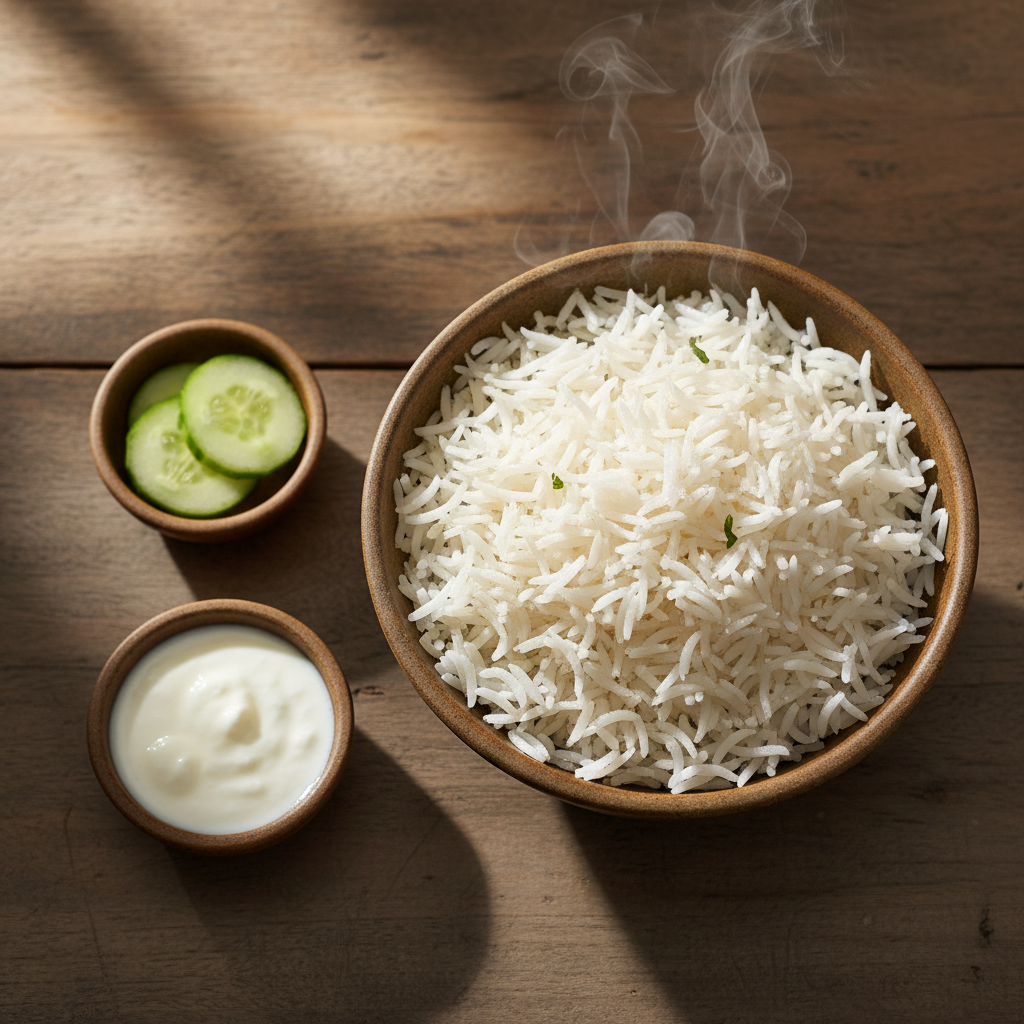
Boiled Rice (Bhath)
Traditional Indian method for cooking perfect boiled rice, suitable for breakfast, lunch, or dinner. This recipe uses high-quality long-grain rice varieties and produces fluffy, separate grains ideal for serving with curries and other dishes.
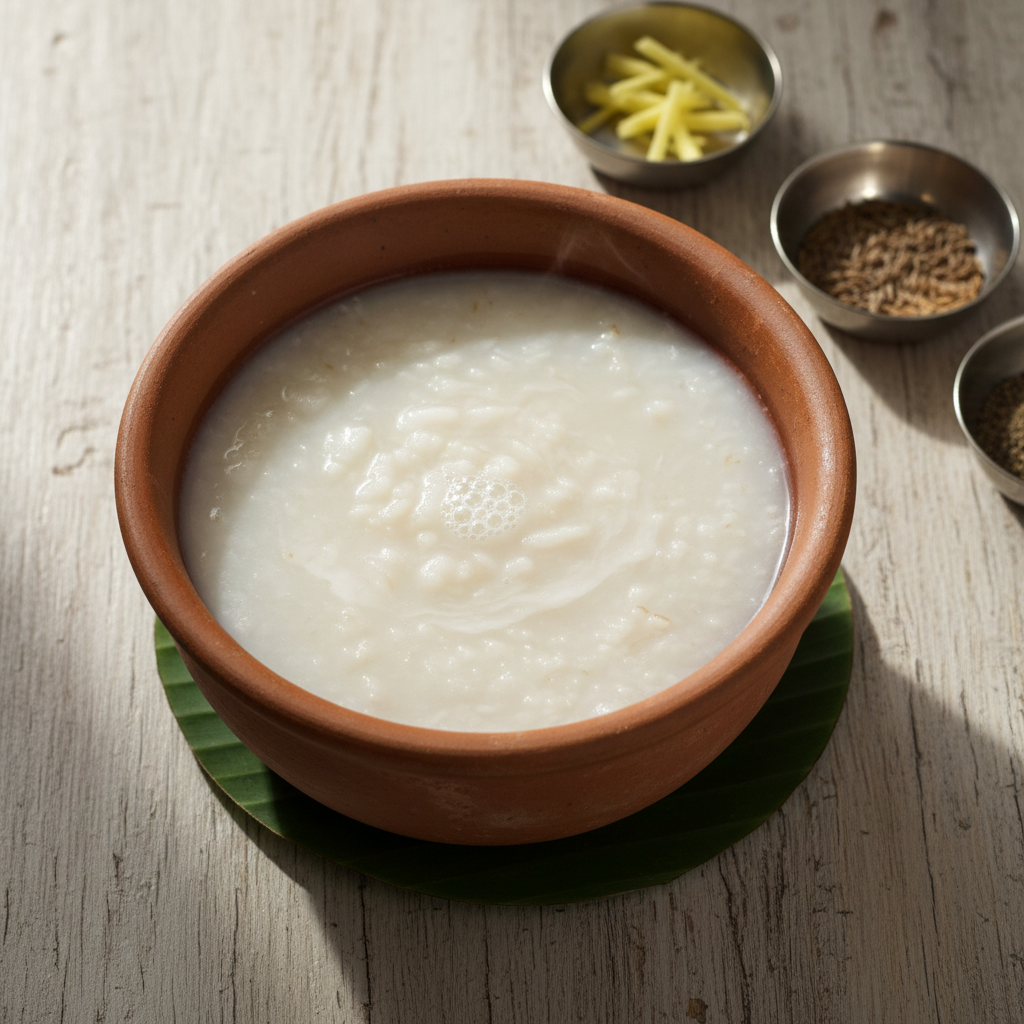
Rice Conjee (Rice Cooking Water)
A nutritious, starchy liquid produced when boiling rice. This traditional byproduct is rich in nutrients and can be used as animal feed or consumed as a light, digestible drink. The conjee is drained from properly cooked rice and should never be discarded.
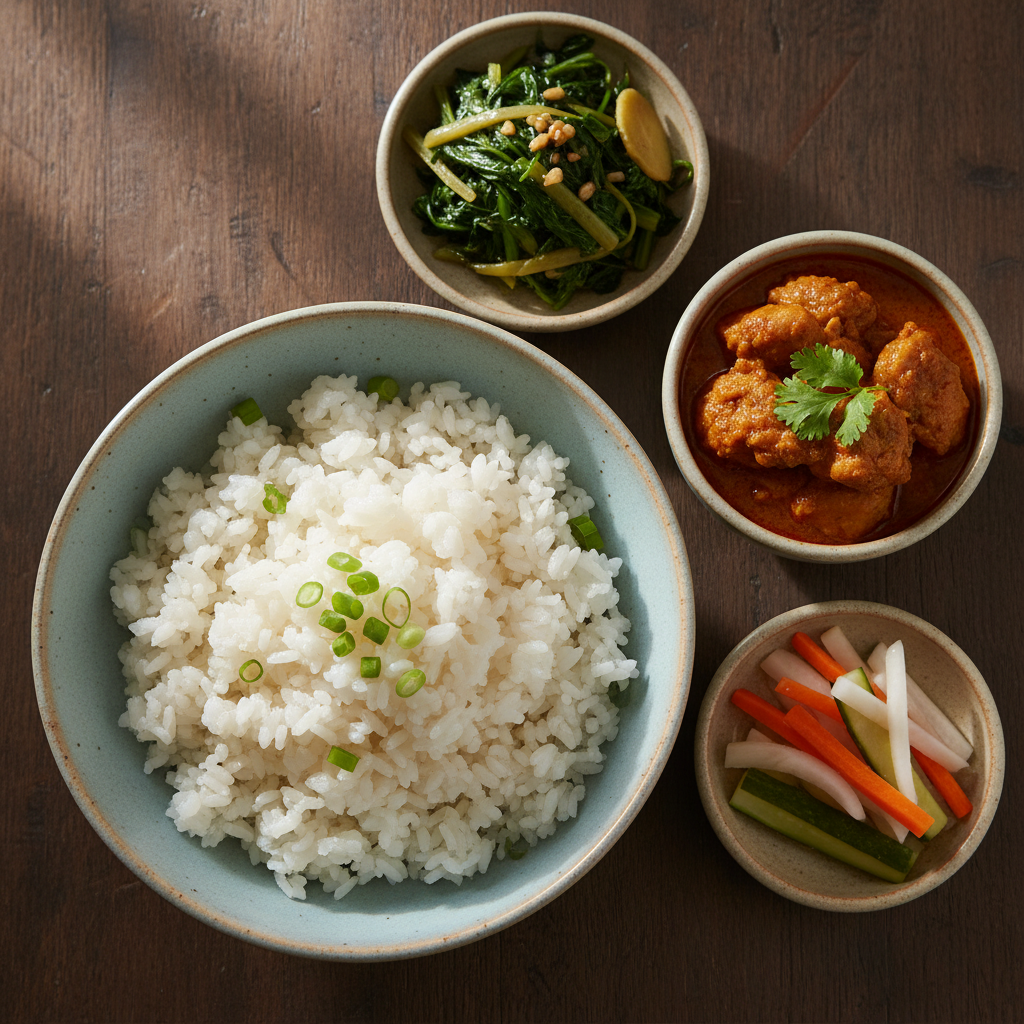
Boiled Rice
Instructions
- 1Place the meat pieces in a large pot and add all the water (approximately 4275 ml). Bring to a boil over medium-high heat, then reduce to a steady simmer. Cook the meat until it is just tender and cooked through — this will take roughly 40–50 minutes for lamb or goat. Once cooked, remove the meat pieces from the pot using a slotted spoon or tongs and set them aside. Reserve the cooking liquid carefully — this is your akhni water (spiced meat stock) and is essential for cooking the rice later. Do not discard it.
- 2Heat approximately 30 g of ghee (1 chhatak) in a wide frying pan or skillet over medium-high heat. Once the ghee is hot and shimmering, add the boiled meat pieces in a single layer — work in batches if needed to avoid crowding. Brown the meat on all sides until golden, approximately 3–4 minutes per side. This adds colour and deeper flavour to the meat. Remove from the pan and set aside. Keep the remaining ghee for later steps.
- 3Squeeze the juice from the lemon into a small bowl and discard the seeds. Add the peeled and roughly chopped ginger, coriander seeds, pepper, saffron, and salt. Using a mortar and pestle or a small food processor, grind and blend all of these together into a smooth, thick paste. The lemon juice acts as the liquid to help bind the paste. Set aside until needed.
- 4Use a large, heavy-bottomed pot with a tight-fitting lid — a Dutch oven or deep casserole works well. Heat a small amount of the remaining ghee in the pot over medium heat. Begin layering as follows: First, spread half the cassia leaves and half the black cumin seeds across the bottom of the pot. Next, lay half the browned meat pieces on top. Spoon half of the spice paste over the meat. Then spread half the rinsed rice evenly over the spice paste. Repeat the layers in the same order: the remaining cassia leaves and black cumin seeds, the remaining meat, the remaining spice paste, and finally the remaining rice as the top layer.
- 5Carefully pour all of the reserved akhni water over the topmost layer in the pot. The water should cover everything. Place the lid firmly on the pot. Set your stove to the lowest heat setting — you want a very gentle simmer, not a rolling boil. If your stove runs hot, use a heat diffuser between the pot and the burner. Cook gently for approximately 20–25 minutes, until the rice is about halfway cooked (the grains will have swelled but still have a firm, chalky centre when pressed between your fingers).
- 6While the rice is half-cooking, melt the remaining ghee in a small pan over medium heat. Add the whole cinnamon, whole cardamom pods, and whole cloves. Fry gently for 1–2 minutes until they begin to sizzle and release their aroma — do not let them burn. Remove the pan from heat. Now carefully lift the lid from the main pot and add all of the curd directly into the pot. Pour in the ghee with the fried whole spices over the top. Using a large spoon, gently stir the entire contents of the pot to distribute the curd, ghee, and spices throughout the layers. Work carefully to avoid breaking the rice grains excessively.
- 7Replace the lid on the pot as tightly as possible. If the lid is not very tight-fitting, you can place a sheet of aluminium foil over the pot before pressing the lid on top to create a better seal — this traps steam inside and mimics the traditional dum (slow steam) cooking method. Reduce the heat to the absolute lowest setting and allow the polao to simmer gently for a further 25–35 minutes. Do not lift the lid during this time. The dish is ready when the rice grains are fully cooked and fluffy and there is no remaining liquid or juice at the bottom of the pot. If you gently tilt the pot and see liquid pooling, continue cooking for another 5–10 minutes.
- 8Once the polao is fully cooked with no liquid remaining, remove the pot from the heat. Leave the lid on and allow the dish to rest for 5–10 minutes — this helps the rice settle and makes it easier to serve without breaking. When ready, gently fluff and scoop the polao onto a large serving platter or individual plates, ensuring each portion contains both rice and meat pieces. Serve hot.
You Might Also Like

Mutton or Chicken Pulao
This traditional Parsi-style Pulao combines tender, pre-cooked mutton or chicken with fragrant, long-grain rice for a rich and savory main course. The dish features caramelized onions and aromatic shah-jeera (black cumin), cooked together in the 'dum' style to infuse every grain with flavor. Optional saffron and a touch of sweetness can be added to transform this savory staple into a festive, aromatic delight perfect for special occasions.

Parsi Community Feast Rice
This traditional Parsi rice dish, known as 'Chaval Natna', is a staple at community feasts and weddings, celebrated for its distinctively separate, fluffy grains. The recipe combines aged rice with nutty split Bengal gram (chana dal) and is finished with a generous pour of ghee and crispy caramelized onions for a rich, aromatic flavor. Cooked using the 'dum' method, it offers a perfect texture that is neither mushy nor dry, making it an ideal accompaniment to rich curries or Dhansak.

Meat or Chicken Khichdi
A luxurious Parsi-style rice dish that elevates the humble khichdi into a festive meal by combining tender meat or chicken with lentils and aromatic spices. Enriched with creamy coconut milk and textured with crispy fried potatoes, sweet raisins, and crunchy almonds, this savory dish offers a complex and satisfying flavor profile. Traditionally served with a yogurt curry (kadhi) or egg sauce, it is a comforting yet elegant main course perfect for family gatherings.

Meat or Chicken with Potatoes
A traditional Parsi stew combining tender meat or chicken with separately braised potatoes for a rich, layered flavor profile. The meat is slow-cooked in a savory onion and ghee base infused with ginger and garlic—notably omitting cumin as per the specific historical method—while the potatoes are prepared in a separate glaze before being folded into the gravy. This technique ensures the potatoes maintain their texture while absorbing the succulent meat juices, creating a comforting and hearty main course.