
CHATNI of POTATOES
A tangy and lightly spiced Bengali-style potato chutney made with tamarind water, mustard oil, and panch-foron. Thinly sliced potatoes are fried until golden, then simmered in a sweet-sour tamarind sauce until thick.
Ingredients
- 58 g (1 chhatak, approximately) seedless ripe tamarind (Use soft, pliable tamarind pulp with no seeds. 1 chhatak is a traditional Bengali unit equal to approximately 58g or 2 oz.)
- 230 ml (1 powa, approximately) water (1 powa is a traditional Bengali unit equal to approximately 230ml or 1 cup. Used to soak and dissolve the tamarind.)
- 230 g (1 powa of sliced potatoes, approximately) potatoes (Any waxy or all-purpose potato works well. You will need enough potatoes to yield 1 powa (approximately 230g or 1 cup) of thin round slices after peeling and cutting.)
- 2 to 3 pieces broken dried red chillies (Break each dried red chilli into 2–3 pieces by hand. Adjust quantity to your heat preference.)
- 1 pinch (approximately ¼ teaspoon) mustard seeds (Brown or yellow mustard seeds both work. A pinch is roughly ¼ teaspoon.)
- 1 pinch (approximately ¼ teaspoon) panch-foron (Panch-foron is a Bengali whole spice blend of five seeds: fenugreek, nigella, cumin, black mustard, and fennel. It is available at Indian grocery stores. A pinch is roughly ¼ teaspoon.)
- 58 ml (1 chhatak, approximately) mustard oil (1 chhatak of oil is approximately 58ml or 4 tablespoons. Mustard oil has a pungent, sharp flavour traditional to Bengali cooking. If unavailable, a neutral oil can be used, but the flavour will differ.)
- 1 generous pinch (approximately ½ teaspoon) salt (A generous pinch is approximately ½ teaspoon. Adjust to taste.)
- 1 little (approximately 1 teaspoon) sugar (A little sugar balances the sourness of the tamarind. Start with 1 teaspoon and adjust to taste.)
More recipes using Potatoes

Potatoes sautées
A classic colonial-era pan-fried potato dish where boiled potato slices are tossed in butter until golden brown and finished with a dusting of salt. Simple and satisfying, this is distinctly different from potato chips — the slices are thicker and richly coated in browned butter.

Potato Burta
A traditional Indian mashed potato dish with onions, green chilies, and lime juice, seasoned with mustard oil. A flavorful side dish or accompaniment.
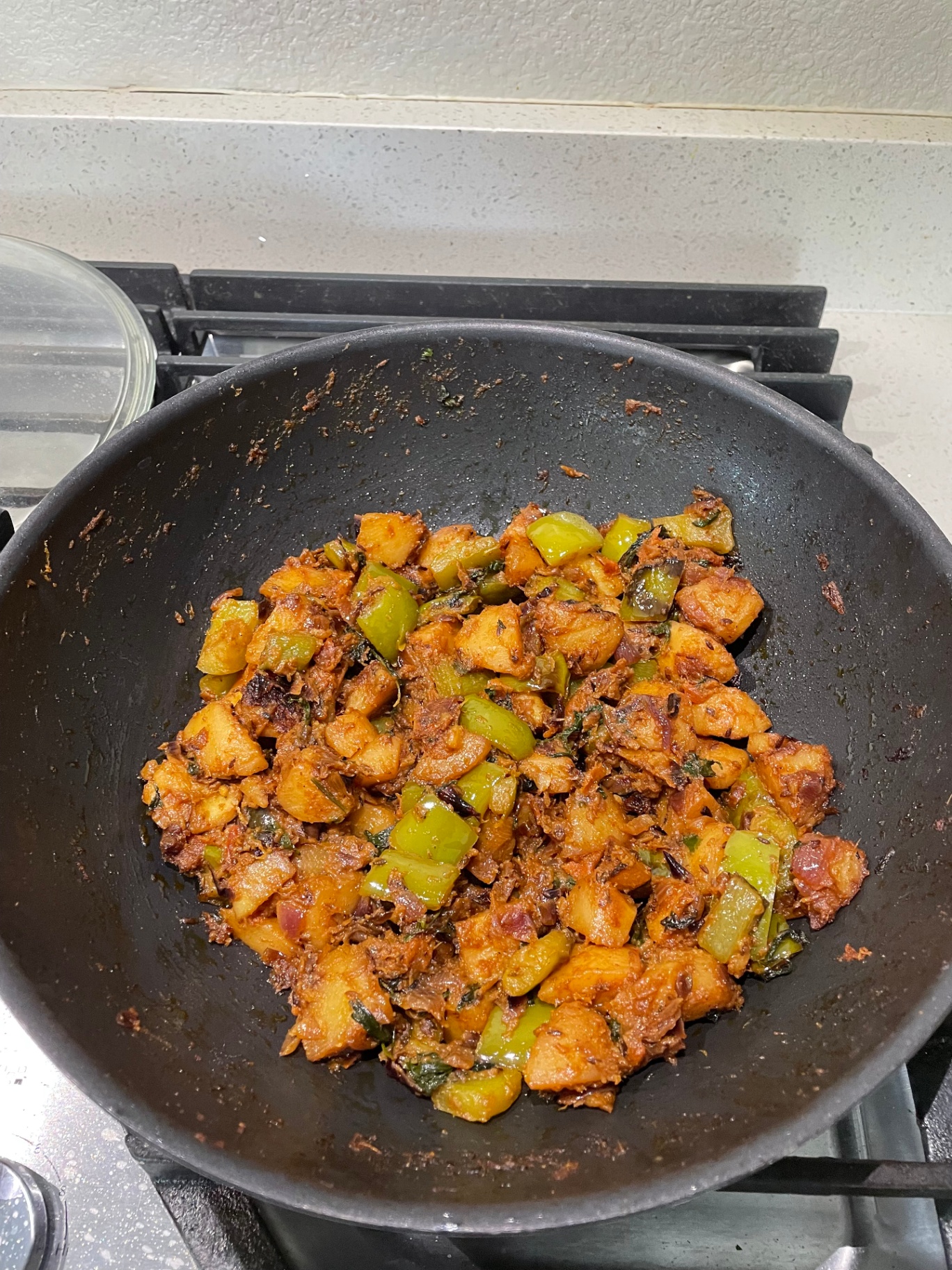
Aloo Shimla Mirch Sabzi
A flavorful North Indian side dish featuring potatoes and green bell peppers cooked with aromatic spices.

Potato Shapes (Filberts, Dominoes, Strips)
A classic technique of trimming potatoes into decorative shapes — such as filbert ovals, rectangular dominoes, and long narrow strips — before frying them as chips. Uniformity in size is essential for even, careful cooking.
Instructions
- 1Place 58g (1 chhatak) of seedless ripe tamarind into a bowl. Pour 230ml (1 powa) of water over it. Use your fingers to break up and squish the tamarind into the water, mixing thoroughly until the pulp is fully dissolved and the water is deeply coloured and slightly thick. Strain the liquid through a fine mesh sieve or muslin cloth into a clean bowl, pressing the pulp firmly to extract all the liquid. Discard the fibrous solids left behind in the sieve. Set the tamarind water aside.
- 2Peel the potatoes using a vegetable peeler. Slice them into round, thin discs — aim for about 3–4mm thickness, similar to a thin coin. Continue slicing until you have approximately 230g (1 powa) worth of slices. Try to keep the slices even in thickness so they cook at the same rate.
- 3Pour 58ml (1 chhatak) of mustard oil into a wide pan or wok and heat it over medium-high heat until the oil just begins to shimmer. If using mustard oil, allow it to reach its smoking point briefly and then reduce to medium heat — this removes the raw pungency. Add the 2 to 3 broken dried red chillies, the pinch of mustard seeds, and the pinch of panch-foron all at once. Stand back slightly as the seeds will pop and splutter. Stir and fry for about 30 seconds, or until the mustard seeds stop popping and the chillies deepen in colour. Do not let them burn.
- 4Add the 230g (1 powa) of potato slices to the pan with the tempered spices. Spread them out as evenly as possible in the pan. Fry over medium heat, turning occasionally with a spatula, until the slices are half-browned — they should be golden on some edges and sides but not fully cooked through. This typically takes 8 to 12 minutes depending on the thickness of your slices and the heat of your pan. The potatoes do not need to be fully cooked at this stage.
- 5Once the potato slices are half-browned, pour the strained tamarind water into the pan. Add a generous pinch of salt (approximately ½ teaspoon). Stir gently to coat all the potato slices in the liquid. Bring to a simmer over medium heat. The liquid will initially be quite thin — continue to cook, stirring occasionally, allowing the liquid to reduce and thicken into a sauce that clings to the potatoes.
- 6When the liquid has thickened to a glossy, syrupy consistency that coats the potato slices — similar to a thick chutney sauce — add a little sugar (approximately 1 teaspoon). Stir well to combine. Taste and adjust salt or sugar if needed. Remove the pan from the heat. Serve the chutney warm or at room temperature as a condiment alongside a main meal.
You Might Also Like

CHATNI of PAPAW
A tangy Bengali-style chutney made from green papaya simmered in tamarind water with raisins, aromatic spices, and a finishing touch of mango-scented ginger juice. Sweet, sour, and lightly spiced, this relish is a classic accompaniment to a traditional Indian meal.

CHATNI of PINE-APPLE
A sweet and tangy Bengali-style pineapple chutney made with raisins, aromatic panch phoron spices, and a hint of lemon juice. The pineapple pieces are soaked in lime water before cooking to firm them up, then simmered until the syrup thickens to a rich, jammy consistency.

CHATNI of GREEN MANGOES
A tangy-sweet Bengali-style chutney made from unpeeled green mango pieces simmered with raisins, sugar, and aromatic spices in oil. This preserve balances sour mango with sweetness and warmth, making it a classic accompaniment to Indian meals.

CHATNI of ALUBOKHARA
A sweet and tangy Bengali-style chutney made with dried plums (alubokhara), raisins, and dates, spiced with panch-foron and chillies. This fragrant, jammy condiment is gently simmered until it reaches a thick, glossy consistency.