
CHATNI of GREEN MANGOES
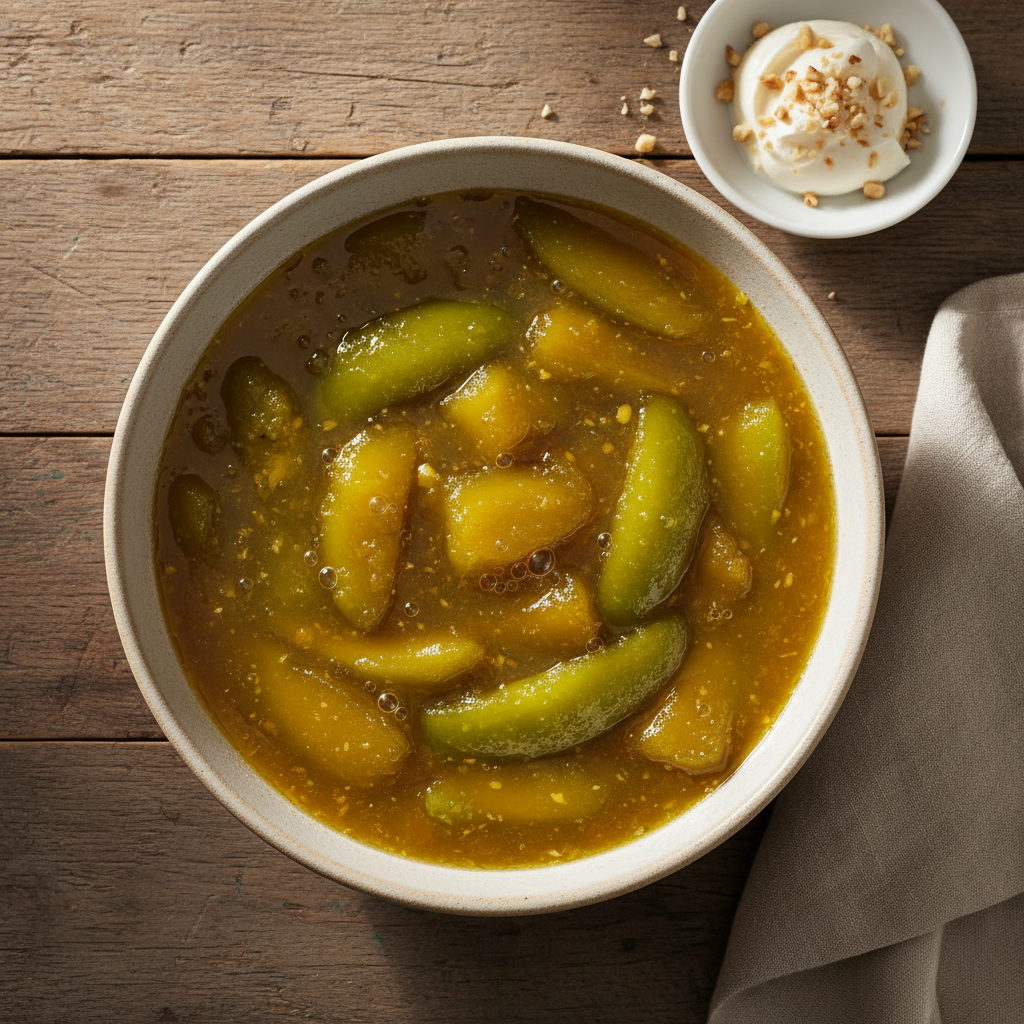
A tangy-sweet Bengali-style chutney made from unpeeled green mango pieces simmered with raisins, sugar, and aromatic spices in oil. This preserve balances sour mango with sweetness and warmth, making it a classic accompaniment to Indian meals.
Ingredients
- 4 whole (approximately enough to yield 1 seer / ~930 g of cut pieces) mature yet green mangoes (Choose mangoes that are fully grown but still green and firm. Do not peel them. You need enough to yield approximately 930 g of pieces after removing stems and seeds.)
- 1 teaspoon (approximate — original says 'some') mustard seeds (Yellow or black mustard seeds. The original quantity is unspecified; use to taste.)
- 1 teaspoon (approximate — original says 'some') panch-foron (Panch-foron is a Bengali five-spice blend of fenugreek, nigella, cumin, black mustard, and fennel seeds in equal parts. Use a pre-made blend or make your own by combining equal amounts of each. The original quantity is unspecified; use to taste.)
- 2 whole dried chillies, broken into pieces (approximate — original says 'some') broken dried chillies (Snap dried red chillies into 2–3 pieces each. The original quantity is unspecified; adjust to your preferred heat level.)
- 1 chhatak (approximately 60 ml / 4 tablespoons) oil (Mustard oil is traditional for this style of Bengali chutney, but any neutral cooking oil may be used.)
- 1.5 seer (approximately 1.4 litres / 6 cups) water (Used as the cooking liquid base.)
- 1 powa (approximately 233 g / 1½ cups) cleansed raisins ('Cleansed' means picked over to remove any stems or debris, then rinsed. Use standard seedless raisins.)
- 0.5 powa (approximately 117 g / just under ½ cup) salt (This is a preserving-style chutney so salt levels are higher than modern tastes may expect. Reduce to your preference, noting this affects preservation.)
- 1.5 powa (approximately 350 g / 1¾ cups) sugar (Plain white granulated sugar. Added near the end of cooking.)
More recipes using Green mangoes

Green Mango Chutney
A traditional sweet and tangy mango chutney made with green mangoes, spices, raisins, and vinegar. This preserve-style condiment pairs wonderfully with curries, grilled meats, and cheese.
Green Mango Preserve
A traditional preserved green mango recipe that creates a sweet, crystallized preserve that keeps for years. Unripe mangoes are peeled, pitted, and simmered in sugar syrup until preserved.

ACHAR of MANGOES
A traditional Indian mango pickle made with sun-dried green mangoes preserved in spiced mustard oil, or alternatively in a sweet treacle-based brine. This simple, beginner-friendly pickle develops deep flavour over several days of sun-curing.

Sweet Mango Chutney
A traditional sweet and tangy mango chutney made with green mangoes, tamarind, raisins, and aromatic spices. This preserve-style condiment requires a 36-hour salting process and yields a large batch suitable for bottling.
Instructions
- 1Take your mature yet green mangoes and twist or cut off the stems at the top of each fruit. Do not peel the mangoes — the skin stays on. Cut each mango into 2 or 4 large pieces lengthways through the fruit. As you cut, you will encounter the large flat seed in the centre — cut the flesh away from it and discard the seed. You should have roughly 930 g (1 seer) of unpeeled mango pieces ready to cook. Set these aside.
- 2Place the raisins in a bowl and pick through them by hand, removing any small stems, debris, or shrivelled pieces. Transfer to a sieve and rinse briefly under cold running water, then drain well. Set aside. These are now ready to add to the chutney later.
- 3Place a large, heavy-bottomed pot or deep saucepan over medium heat. Add the 60 ml (4 tablespoons) of oil and let it heat for about 1 minute until it shimmers. Add the mustard seeds and listen for them to begin popping — this tells you they are frying properly. Immediately add the panch-foron and broken dried chilli pieces. Stir everything gently with a wooden spoon for about 30 seconds to 1 minute. The spices will become fragrant and slightly darker. Be careful not to let them burn — if they darken too quickly, reduce the heat. This step releases the aromatic flavours into the oil and forms the flavour base of the chutney.
- 4Carefully pour the 1.4 litres (6 cups) of water into the pot with the fried spices. The oil may sputter slightly, so pour slowly and stand back. Stir to combine. Increase the heat to high and bring the water to a full rolling boil. You will see large bubbles breaking the surface — that is your signal to move to the next step.
- 5Once the water is boiling, add the prepared mango pieces, the cleaned raisins, and the salt. Stir everything together gently. Reduce the heat to medium so the liquid maintains a steady, active simmer — you want it bubbling but not furiously boiling. Cook uncovered, stirring occasionally, until the mango pieces are soft and can be pierced easily with a fork or the tip of a knife. This will take approximately 20 to 25 minutes. The mango skin will soften and the flesh will become tender.
- 6Once the mango pieces are well boiled and tender, add the 350 g (1¾ cups) of sugar to the pot. Stir well to dissolve the sugar completely into the liquid. Continue cooking over medium heat, stirring frequently, until the liquid reduces and thickens into a syrupy, jam-like consistency — what the original recipe calls a 'thick soup'. To test, drag a spoon across the bottom of the pot: the liquid should be slow to fill back in, and a small amount dropped onto a cold plate should hold its shape slightly rather than run freely. This will take approximately 10 to 15 minutes. Once thick, remove the pot from the heat. Allow to cool before serving or storing.
You Might Also Like
Green Mango Chutney
A traditional sweet and tangy mango chutney made with green mangoes, spices, raisins, and vinegar. This preserve-style condiment pairs wonderfully with curries, grilled meats, and cheese.

Hot Sweet Mango Chutney
A spicy-sweet Indian mango chutney made with green mangoes, tamarind, ginger, garlic, and chilies. This condiment is preserved in vinegar and sugar syrup, creating a complex flavor profile perfect for serving with curries, grilled meats, or cheese.

Salted Mangoes in Brine
Whole raw mangoes are preserved in a simple yet effective salt brine in this traditional Gujarati-Parsi pickle recipe known as 'Achar Panina'. By layering firm, tart mangoes with salt and allowing them to cure under weights, the fruit releases its own juices to create a natural preservative liquid without adding water. The result is a tender, salty, and tangy condiment that retains the essence of green mangoes, perfect for serving alongside curries or rice dishes.

Ambakaliye (Sweet Mango Preserve with Onions)
A unique Parsi-Gujarati preserve made from mature raw mangoes simmered in a rich jaggery syrup until translucent and candy-like. The mango slices are cured in lime water to retain a firm texture before being preserved in the dark, caramel-like sweetener. Uniquely, this sweet preserve is traditionally finished just before serving by heating it with caramelized onions and ghee, creating a complex sweet and savory side dish that pairs perfectly with simple salted meat or chicken.