
Prawn Butter
A richly flavoured prawn butter made by pounding boiled prawns into a smooth paste and blending it with butter, cayenne pepper, and powdered mace. Spread on bread or crackers, it makes an elegant and deeply savoury hors d'oeuvre.
Ingredients
- 0 as needed prawns (Fresh or pre-cooked whole prawns; quantity not specified in the original recipe. Use enough to form a substantial paste.)
- 0 a little butter (A small amount used to help bind and smooth the prawns while pounding them to a paste.)
- 0 some butter (Melted in the saucepan to cook and absorb the pounded prawn paste.)
- 0 a very little cayenne pepper (Only a very small pinch; the original text emphasises restraint with this spice.)
- 0 to taste powdered mace (Ground mace; adds warm, floral spice. Use sparingly.)
- 0 approximately half and half proportion to prawn paste iced butter (Very cold or chilled firm butter. The original recipe specifies mixing with the prawn paste in a half-and-half proportion.)
More recipes using Prawns

Potted prawns
A classic Madras-style potted prawn paste, seasoned with anchovy sauce, mixed spice, and butter, perfect spread on toast, served with cheese, or used as a sandwich filling. This historical recipe from colonial India is simple to prepare and delivers a rich, savoury flavour.

Prawn Powder
A traditional preserved prawn seasoning made by drying salted prawns and grinding them into a flavorful powder. This condiment can be used to add umami depth to curries, rice dishes, and vegetables.
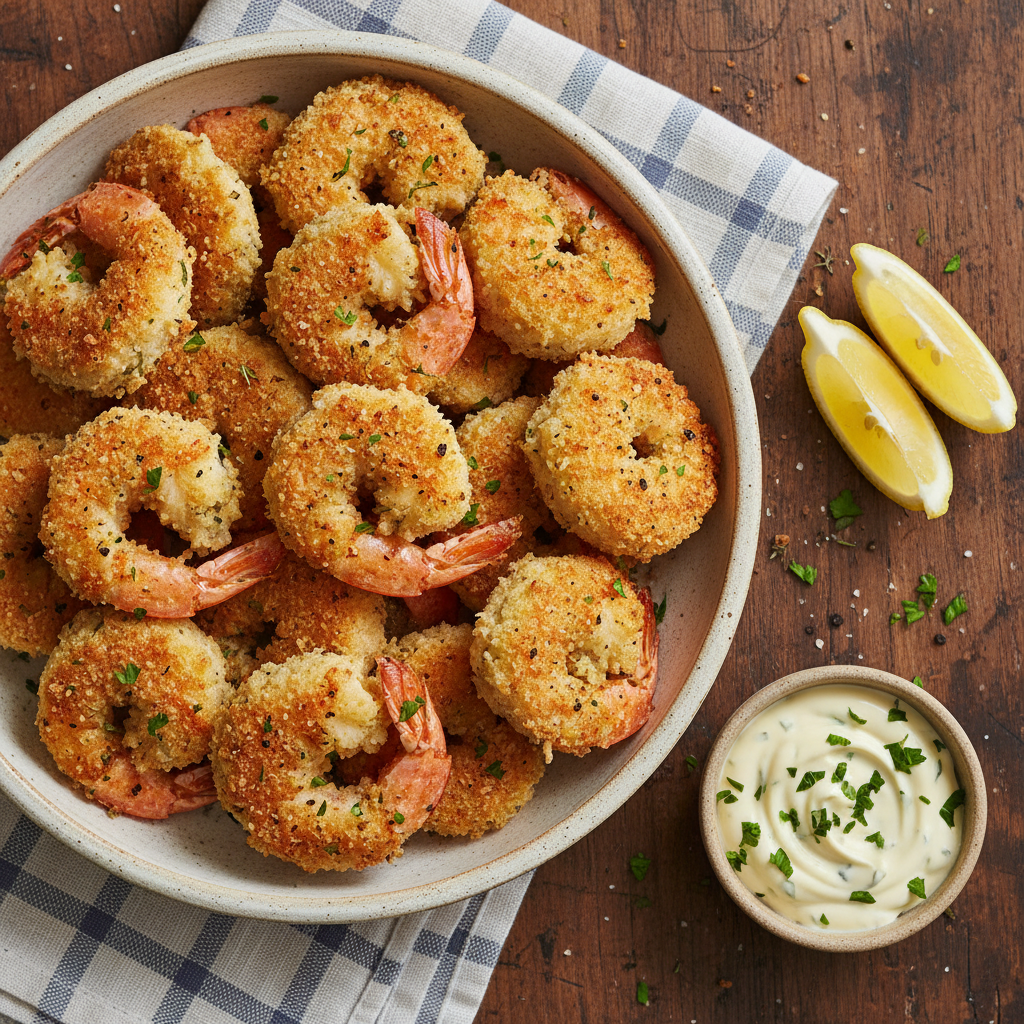
Prawn Cutlet
Butterflied prawns seasoned with herbs, coated in egg and flour, then pan-fried until golden. Served with fresh tomato gravy sauce and garnished with fried parsley.
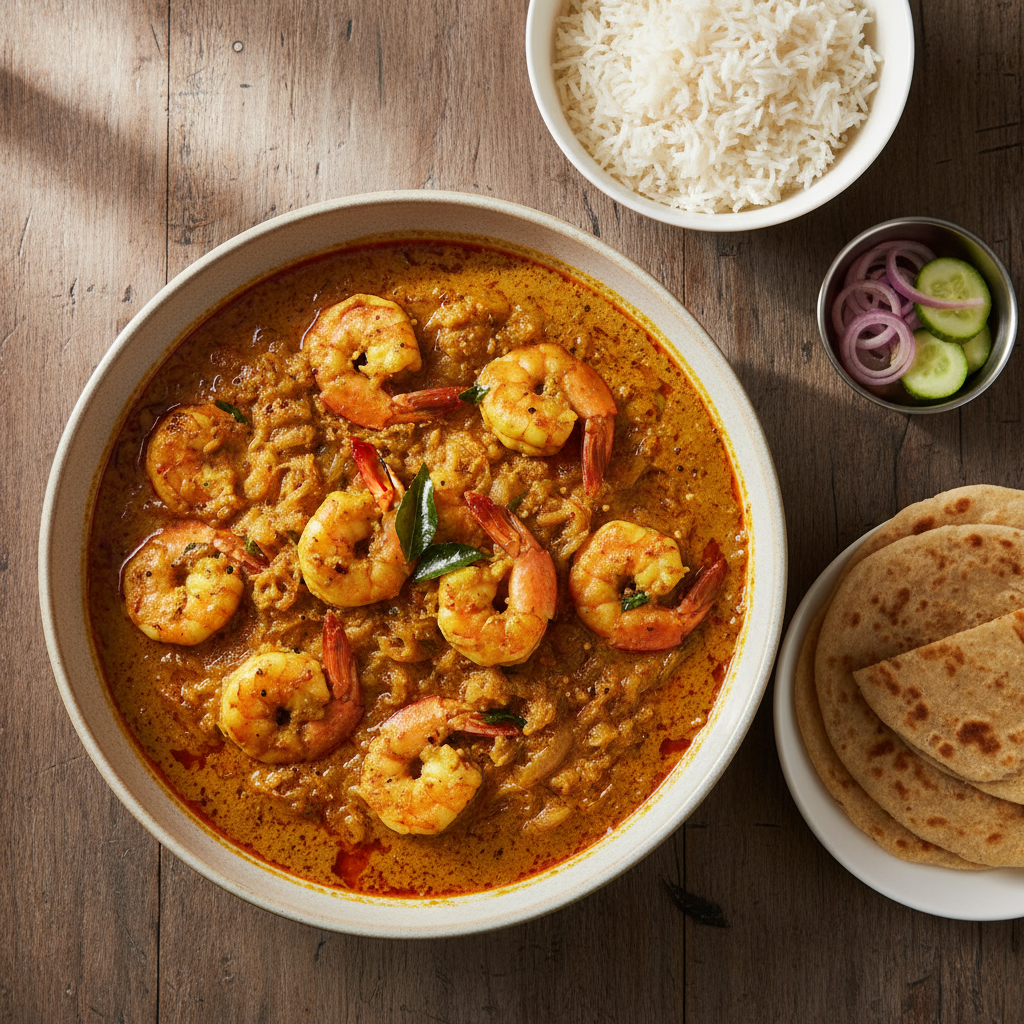
Prawn Malay Doopiaja
A Malay-style prawn curry featuring large prawns cooked in a rich onion-based sauce with coconut milk and aromatic spices. The doopiaja method involves frying onions twice - once sliced and fried, then chopped and simmered into the curry.
Instructions
- 1Place your prawns in a saucepan and cover with enough cold water to fully submerge them. Bring to the boil over medium-high heat. Once boiling, cook until the prawns are pink and opaque throughout — this typically takes 3 to 5 minutes depending on their size. Do not overcook, as they will become rubbery. Remove from the heat and drain.
- 2Allow the boiled prawns to cool enough to handle safely. Remove the heads, peel away the shells, and devein each prawn by running a small knife along the back and lifting out the dark vein. Be thorough — any shell fragments left in will create an unpleasant texture in the finished butter. Pat the cleaned prawn meat dry with a clean cloth or paper towel.
- 3Place the cleaned prawn meat into a heavy mortar. Begin pounding firmly and rhythmically with the pestle. After a minute or so, add a small knob of butter to help lubricate the mixture and assist in creating a smooth paste. Continue pounding with patience and persistence — the original recipe is emphatic that the pounding must be thorough. There should be absolutely no granulated or lumpy particles of prawn meat remaining; the paste must be completely smooth and uniform. This step may take 5 to 10 minutes of sustained effort.
- 4Place a saucepan over low to medium-low heat. Add a generous knob of butter and allow it to melt gently. Do not let it brown or bubble aggressively — you want a calm, liquid butter to cook the prawn paste in. Once fully melted, reduce the heat to low and keep it ready for the next step.
- 5Add the pounded prawn paste to the saucepan of melted butter over low heat. Stir continuously and thoroughly with a wooden spoon or spatula to fully combine the prawn paste with the butter. While stirring, add a very small pinch of cayenne pepper and a small amount of powdered mace. Stir well to distribute the spices evenly. Continue stirring until the prawn paste appears to have fully absorbed the butter — it should look like a unified, cohesive mixture with no separation. Remove from the heat immediately at this point.
- 6Remove the prawn and butter mixture from the heat and allow it to cool slightly — it should not be scalding hot when you mix it with the iced butter, or it will melt it completely rather than combine with it. Take your chilled, firm iced butter and mix it together with the cooked prawn mixture in a proportion of approximately half and half — that is, roughly equal amounts of the prawn mixture and the iced butter. Work the two together firmly and evenly until you have a smooth, cohesive, spreadable prawn butter. Press into a ramekin or pot, smooth the top, and refrigerate until firm before serving.
You Might Also Like
Potted prawns
A classic Madras-style potted prawn paste, seasoned with anchovy sauce, mixed spice, and butter, perfect spread on toast, served with cheese, or used as a sandwich filling. This historical recipe from colonial India is simple to prepare and delivers a rich, savoury flavour.

Potted Prawns
A classic colonial-era hors d'œuvre of seasoned prawns prepared in the style of prawn butter, but served without the final blending with butter. The result is a flavourful, textured potted prawn dish ideal as a starter or spread.
Prawn Powder
A savory spiced prawn powder made from dried prawns, perfect as a spread on bread and butter or as a seasoning. This traditional condiment combines crispy dried prawns with warming spices.

Lobster Butter
A classic colonial-era compound butter made from tinned lobster and butter, with the lobster carefully rinsed to remove any tinny or oily flavours before blending. Spread on bread or use as a savoury finishing butter for seafood dishes.