
Umbadiyu (Traditional Earthen Pot Roast)
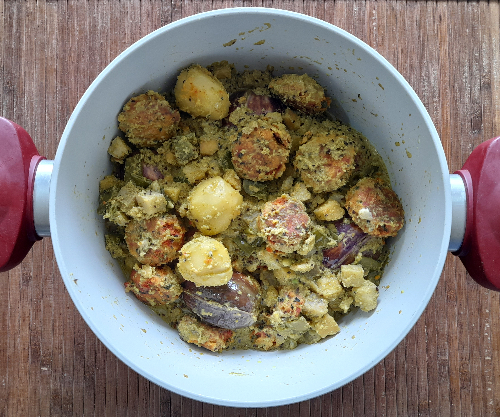
A rustic and celebratory Gujarati harvest dish featuring tender marinated meat, root vegetables, and fresh beans slow-cooked in a sealed earthen pot. This traditional 'Umbadiyu' technique involves inverting the pot over a fire, creating a unique smoky steam that infuses the ingredients with deep, earthy flavors. The result is a communal feast of spicy meatballs, succulent mutton or chicken, and perfectly roasted vegetables, best enjoyed outdoors during winter.
Ingredients
- 3 pounds Mutton (tender and fatty, cut into large pieces) (Can be substituted with 3 whole chickens cut into pieces.)
- 2 pounds Lean minced meat (Keema) (For the kebabs.)
- 6 pounds Surti Papdi or Val Papdi (Flat beans) (Originally '6 seers'. Use fresh beans with seeds.)
- 1 1/2 pounds Sweet potatoes (thick) (Originally '1.5 seers'.)
- 1 1/2 pounds Potatoes (medium size) (Originally '1.5 seers'.)
- 5 whole Small tender eggplants (brinjals)
- 2 cups Cilantro (Coriander leaves) (Chopped. Originally '12 bunches'.)
- 12 whole Large green chilies
- 1 bunch Green garlic (Large bunch.)
- 4 ounces Ginger (Originally '0.25 seer'.)
- 3 tablespoons Ajwain (Carom seeds) (Originally '2.5 tolas'.)
- 6 whole Garlic cloves (whole) (For the vegetable mix.)
- 1 tablespoon Garlic (dried) (Originally '1 tola'. For the paste.)
- 3 tablespoons Turmeric powder (Heaping spoons.)
- 3 tablespoons Black pepper powder (Heaping spoons.)
- 2 tablespoons Cumin seeds (Heaping spoons.)
- 1/2 cup Peanut or Sesame oil (Originally '1 navtank'.)
- 12 whole Fresh eggs
- 2 tablespoons Ghee (For greasing the pot.)
- 4 tablespoons Salt (Estimated total for marination and vegetables.)
- 10 whole Banana leaves (For lining and sealing the pot (Kelar).)
More recipes using Mutton or chicken

Mutton or Chicken with Root Vegetables (Dry Curry)
A hearty and rustic Parsi dish combining tender mutton or chicken with a choice of root vegetables like sweet potato, purple yam, or elephant foot yam. The meat is simmered until succulent, then finished with the vegetables which absorb the savory juices and ghee, creating a rich, semi-dry curry. This versatile recipe offers a unique textural experience, balancing the savory meat with the natural earthiness and slight sweetness of the tubers.

Mutton or Chicken with Papdi (Flat Beans) - Version 2
A rich and aromatic Parsi winter delicacy that transforms tender mutton or chicken and fresh flat beans (papdi) into a luscious, slow-cooked stew. This traditional recipe features a complex masala paste made from fresh green garlic, celery, and parsley, simmered alongside whole garlic bulbs and warming spices like star anise and mace. The dish is finished when the ghee separates from the thick, savory gravy, creating a melt-in-your-mouth texture that pairs perfectly with crusty bread or rice.

Mutton or Chicken with Potatoes
This traditional Parsi specialty transforms simple mutton or chicken into a hearty meal by simmering it with tender potatoes in a savory, aromatic gravy. The dish offers a delightful textural contrast between the succulent meat and soft potatoes, which can be cut into decorative shapes for an elegant presentation. Optional additions of fresh tomatoes and a pinch of sugar create a subtle sweet-and-sour profile, while a 'dry' version allows the rich flavors of ghee to shine through.

Traditional Slow-Cooked Meat or Chicken
This traditional Parsi technique from 1900 details the art of slow-cooking meat or chicken to achieve a perfectly tender texture without losing natural juices. The method utilizes a 'dum' style cooking process with water on the lid to maintain moisture, along with natural tenderizers like raw papaya for tougher cuts. The result is a succulent, flavorful base that can be served as a simple stew or transformed into a rich curry.
Instructions
- 1Clean the 6 whole garlic cloves and set them aside. Peel and crush the ginger and the remaining dry garlic. Wash and wipe the eggs clean. Wash the cilantro, green chilies, and green garlic, dry them thoroughly, and chop them finely. Grind the cumin seeds.
- 2Combine the crushed ginger, garlic, chopped cilantro, and chilies. Divide this mixture into three parts. Take two parts of this green mixture and combine it with all the ground cumin, 1.5 tolas (approx 1.5 tablespoons) of salt, and 2 heaping spoons each of turmeric and black pepper. Mix this thoroughly with the minced meat (keema). Pound the mixture in a wooden mortar for better texture. Let it marinate for one hour. After marinating, wet your hands with toddy or water and shape the mixture into large kebabs. Let them rest for another hour.
- 3Take the remaining portion of the green masala (cilantro, chilies, ginger, garlic) and mix it with the remaining turmeric, pepper, green garlic, and 1 tola (approx 1 tablespoon) of salt. Reserve one-fourth of this mixture for the vegetables. Mix the rest with the mutton pieces (do not wash the meat if it is already clean, just wipe it). Let the meat marinate for 2 to 3 hours.
- 4Wash and dry all vegetables. Slit the eggplants lengthwise into four sections (keeping the stem intact) and stuff them with the reserved one-fourth portion of the spice mixture. Do not cut or string the papdi (beans); simply wipe them clean. If using Vasai papdi, rub them vigorously with 12 tolas (approx 1/2 cup) of salt on a coarse cloth or in a tin tray. If using Surti papdi, rub gently with salt so the seeds do not pop out. Mix the prepared papdi with the 6 whole garlic cloves, ajwain, all the other vegetables (potatoes, sweet potatoes), the marinated meat, and the sweet oil.
- 5Take a clean earthen pot (ghariya/matla). Grease the bottom with a little ghee. Place a layer of banana leaves (kelar) at the bottom. Carefully pack in the vegetable and meat mixture, placing the kebabs and whole eggs in the center so they do not break. Press everything down gently to fill the pot. Seal the mouth of the pot tightly with more banana leaves.
- 6In an open space (garden or field), place 8-10 raw papdi beans on the ground. Invert the filled pot upside down over these beans. Arrange about 25 pieces of cow dung cakes (or appropriate fuel like charcoal/wood) around and on top of the pot carefully so they don't fall. Cover the fuel with dry grass and light it. Allow it to burn.
- 7After about 30-45 minutes, use a stick to move the fire aside slightly and check the raw papdi beans placed under the pot on the ground. If the seeds inside these beans are cooked, the Umbadiyu inside the pot is also done. Remove the fire and ash, keep the pot in place until ready to eat, then open and serve hot. Ensure the fire is distributed evenly around the pot during cooking for even roasting.
You Might Also Like

Umbariyu (Steamed Mixed Vegetables)
A rustic and earthy Gujarati winter classic, this Umbariyu recipe features a hearty medley of Surti papdi beans, baby eggplants, potatoes, and root vegetables slow-cooked in a heavy pot. The dish is defined by its vibrant green marinade made from fresh coriander, green garlic, and carom seeds, which infuses the vegetables with a bold, herbaceous flavor without heavy spices. Traditionally enjoyed during harvest season, this steamed vegetable casserole offers a tender, melt-in-your-mouth texture and a rich, savory taste that pairs perfectly with buttermilk or millet flatbreads.
Undhiyu
A traditional Gujarati dish made with a variety of vegetables and spices, cooked to perfection in a pressure cooker.
Mutton or Chicken with Root Vegetables (Dry Curry)
A hearty and rustic Parsi dish combining tender mutton or chicken with a choice of root vegetables like sweet potato, purple yam, or elephant foot yam. The meat is simmered until succulent, then finished with the vegetables which absorb the savory juices and ghee, creating a rich, semi-dry curry. This versatile recipe offers a unique textural experience, balancing the savory meat with the natural earthiness and slight sweetness of the tubers.
Mutton or Chicken with Papdi (Flat Beans) - Version 2
A rich and aromatic Parsi winter delicacy that transforms tender mutton or chicken and fresh flat beans (papdi) into a luscious, slow-cooked stew. This traditional recipe features a complex masala paste made from fresh green garlic, celery, and parsley, simmered alongside whole garlic bulbs and warming spices like star anise and mace. The dish is finished when the ghee separates from the thick, savory gravy, creating a melt-in-your-mouth texture that pairs perfectly with crusty bread or rice.