
Gooseberry Jam
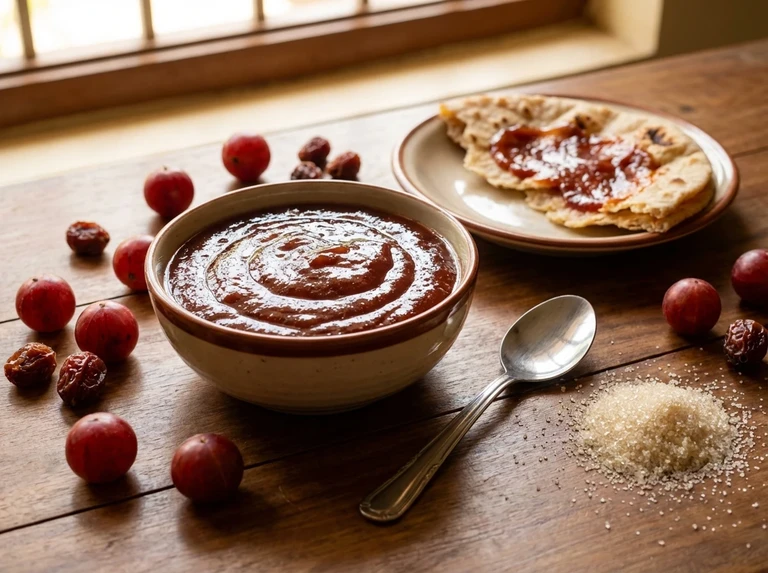
This traditional Gooseberry Jam captures the vibrant, tangy essence of ripe red gooseberries in a smooth, jewel-toned preserve. The method involves macerating the fruit with sugar to release its natural pectin and juices, followed by straining to remove seeds for a refined, velvety texture. The result is a perfectly balanced sweet-tart spread that shines on morning toast or as an elegant filling for sponge cakes.
Ingredients
- 2 pounds Ripe red gooseberries (Cleaned, topped, and tailed.)
- 2 pounds Granulated sugar (Use high-quality white sugar.)
More recipes using Gooseberries
Gooseberry Jam
A simple recipe for making gooseberry jam.
Gooseberry Jam
A classic gooseberry jam recipe.

Red Gooseberry Jelly
This vibrant preserve transforms ripe red gooseberries into a crystal-clear jelly with a perfect balance of tart and sweet flavors. The fruit is slowly simmered to release its natural pectin-rich juices, then boiled with sugar and a hint of lemon to achieve a firm, jewel-toned set. Ideally served on buttered toast or as a sophisticated accompaniment to roasted meats, this jelly offers a classic taste of historical home preserving.

Cream Gooseberry
A sophisticated molded dessert that transforms tart red gooseberries into a smooth, creamy delight. This traditional recipe combines a rich gooseberry purée—sweetened and brightened with lemon—with a milk-based gelatin mixture to create a firm yet tender set cream. Perfect for preparing a day ahead, it offers a refreshing balance of sweet, tangy, and creamy flavors.
Instructions
- 1Wash the gooseberries thoroughly and remove the stems and tails. Place them in a large non-reactive bowl (enamel or glass).
- 2Add the sugar to the gooseberries and mash the fruit well to release juices. Cover the bowl and let it stand for about 3 hours to allow the sugar to dissolve and the flavors to develop.
- 3To remove seeds and skins for a smoother jam, press the macerated mixture through a strong mesh sieve or cheesecloth tied over a clean vessel. Squeeze the cloth or press the pulp firmly to extract all the juice and fruit pulp, leaving only the dry seeds and tough skins behind.
- 4Transfer the strained fruit pulp and sugar mixture into a heavy-bottomed stainless steel pot (originally a tinned copper vessel). Place over medium heat. Stir occasionally with a wooden or stainless steel spoon.
- 5As the jam cooks, an orange-colored foam may rise to the surface; skim this off carefully to ensure a clear jam. Continue cooking until the mixture thickens slightly. Do not overcook, or the jam will become too hard when cooled. It should reach a setting consistency where it coats the back of a spoon.
- 6Remove from heat immediately once the desired consistency is reached. Allow it to cool completely before filling into sterilized glass jars.
You Might Also Like
Red Gooseberry Jelly
This vibrant preserve transforms ripe red gooseberries into a crystal-clear jelly with a perfect balance of tart and sweet flavors. The fruit is slowly simmered to release its natural pectin-rich juices, then boiled with sugar and a hint of lemon to achieve a firm, jewel-toned set. Ideally served on buttered toast or as a sophisticated accompaniment to roasted meats, this jelly offers a classic taste of historical home preserving.
Gooseberry Jam
A simple recipe for making gooseberry jam.
Gooseberry Jam
A classic gooseberry jam recipe.
Cream Gooseberry
A sophisticated molded dessert that transforms tart red gooseberries into a smooth, creamy delight. This traditional recipe combines a rich gooseberry purée—sweetened and brightened with lemon—with a milk-based gelatin mixture to create a firm yet tender set cream. Perfect for preparing a day ahead, it offers a refreshing balance of sweet, tangy, and creamy flavors.