
Currant Cake
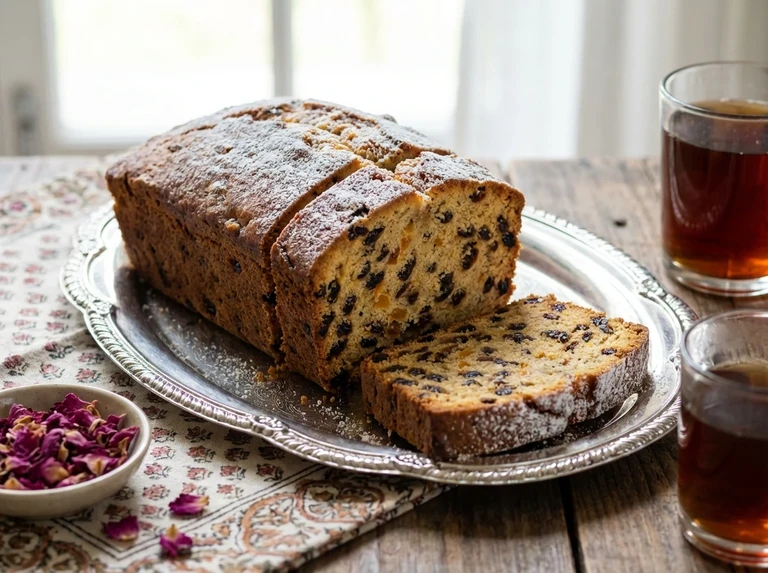
A rich and aromatic Parsi-style fruit cake loaded with dried currants, candied citrus peel, and warm spices like nutmeg and mace. This historical recipe uses a classic pound cake method, relying on fourteen eggs and vigorous beating to create a dense, buttery crumb perfumed with rose water and brandy. Perfect for tea time or special celebrations, it offers a delightful balance of sweet fruit and savory spice.
Ingredients
- 1 1/4 pounds Butter (Use pure, hard butter.)
- 1 1/4 pounds Wheat flour (Sifted and lightly roasted/dried to remove moisture.)
- 1 pound Powdered sugar
- 1 pound Dried currants (Cleaned.)
- 1/4 pound Candied orange peel or citron peel (Finely chopped.)
- 1 whole Lemon zest (Finely cut peel of 1 lemon.)
- 14 whole Eggs (Fresh.)
- 1 teaspoon Ground nutmeg (Originally 1/2 tola.)
- 1 teaspoon Ground mace (Originally 1/2 tola.)
- 4 tablespoons Sweet wine or Brandy (Originally 6 dessertspoons.)
- 4 teaspoons Rose water or Orange Flower Water (Use high quality.)
- 2 tablespoons Butter (for greasing) (Estimated quantity for greasing molds.)
More recipes using Currants
Currant Cake
A simple and classic currant cake, perfect for tea time. This recipe is modernized for ease of baking.

Currant Cake (English)
A classic English currant cake recipe from 1888.
Currant Cake
A classic currant cake recipe from 1888.

Currant Tart
Layers of sweet dried currants and sugar create a rich, jammy filling inside this traditional Parsi puff pastry tart. The golden crust is finished with a unique glaze of beaten egg white, powdered sugar, and nutty charoli seeds, adding a delightful crunch and sheen. A comforting dessert perfect for afternoon tea or festive gatherings.
Instructions
- 1Wash the currants thoroughly and dry them completely. Dust them with a small amount of the weighed flour to prevent them from sinking in the batter.
- 2Separate the egg yolks and whites. In a large dish, beat the egg yolks vigorously with a fork until they are very thick. In a separate bowl, beat the egg whites until they form stiff peaks (a stiff cuff).
- 3In a tinned vessel or large mixing bowl, cream the butter using a wooden stick or spoon until smooth. Gradually add the sugar in small amounts, mixing thoroughly after each addition.
- 4Add the beaten egg yolks, the remaining flour, chopped candied peels, lemon zest, nutmeg, mace, brandy (or wine), and rose water to the butter-sugar mixture. Mix everything thoroughly for about half an hour to ensure a uniform consistency.
- 5Gently fold in the stiff egg whites, followed by the prepared flour-dusted currants. Grease your cake molds or tins generously with butter. Fill the molds with the batter, leaving about one finger's width (approx. 3/4 inch) of space at the top for rising.
- 6Preheat oven to 350°F (175°C). Place the filled molds in the oven immediately. Bake until the cakes are a rich reddish-brown color and cooked through. If making one large cake, bake for approximately 1.5 hours; for smaller cakes, check after 25-30 minutes.
You Might Also Like
Currant Tart
Layers of sweet dried currants and sugar create a rich, jammy filling inside this traditional Parsi puff pastry tart. The golden crust is finished with a unique glaze of beaten egg white, powdered sugar, and nutty charoli seeds, adding a delightful crunch and sheen. A comforting dessert perfect for afternoon tea or festive gatherings.

Plum Cake
A rich and dense historical cake featuring a tender crumb loaded with sweet currants. This recipe utilizes a traditional mixing method where butter is incorporated directly into the flour, followed by the addition of eight eggs separated into yolks and stiffly beaten whites for lift. The result is a golden, buttery celebration cake perfect for slicing and serving with tea.

Currant Pudding
A rich and traditional Parsi-style pudding featuring a delightful blend of semolina, wheat flour, and sweet currants. This baked dessert combines the nutty texture of semolina with the warmth of cardamom and nutmeg, creating a golden, aromatic treat perfect for tea time. The mixture of butter, milk, and eggs results in a dense, satisfying texture similar to a heavy cake or baked custard.
Currant Cake (English)
A classic English currant cake recipe from 1888.