
Bàmiya-Bàsstissi
A hearty Ottoman braised mutton and okra stew, layered with golden fried onions and finished with a bright squeeze of lemon and a dusting of pepper and cinnamon. This classic dish from Turabi Effendi's 1864 Turkish Cookery Book is slow-cooked until the meat is tender and a rich, natural gravy forms at the bottom of the pan.
Ingredients
- 3.5 pounds mutton (Use 3 to 4 pounds. Cut into walnut-sized pieces, about 1.5 inches. Bone-in shoulder or leg works well.)
- 1 to taste salt (Used at multiple stages — for boiling the meat and adjusting the braise. Use approximately 1–2 teaspoons total, adjusting as you go.)
- 1 to cover water (Enough to fully submerge the mutton pieces in the saucepan. Approximately 4–6 cups.)
- 5.5 medium onions onions (Use 5 to 6 onions. Peel and slice into thin half-moons.)
- 2 tablespoons fresh butter (Unsalted butter preferred. Used for frying the onions.)
- 150 whole pods okras (Use 100 to 200 pods — approximately 600g to 900g. Choose small, firm pods for best texture. Stalky tops peeled and ends trimmed.)
- 1 cup (if needed) plain meat broth (Only add if the reserved meat cooking liquid is insufficient to cover the layers. A simple unseasoned meat or chicken stock is a good modern substitute for Broth No. 1.)
- 1.5 lemons lemon juice (Use juice of 1 to 2 lemons. Added in the final 5 minutes of cooking.)
- 1 to taste pepper (A light sprinkle over the finished dish before serving. Black pepper is recommended.)
- 1 to taste cinnamon (A light sprinkle over the finished dish before serving. Ground cinnamon is recommended.)
More recipes using Mutton
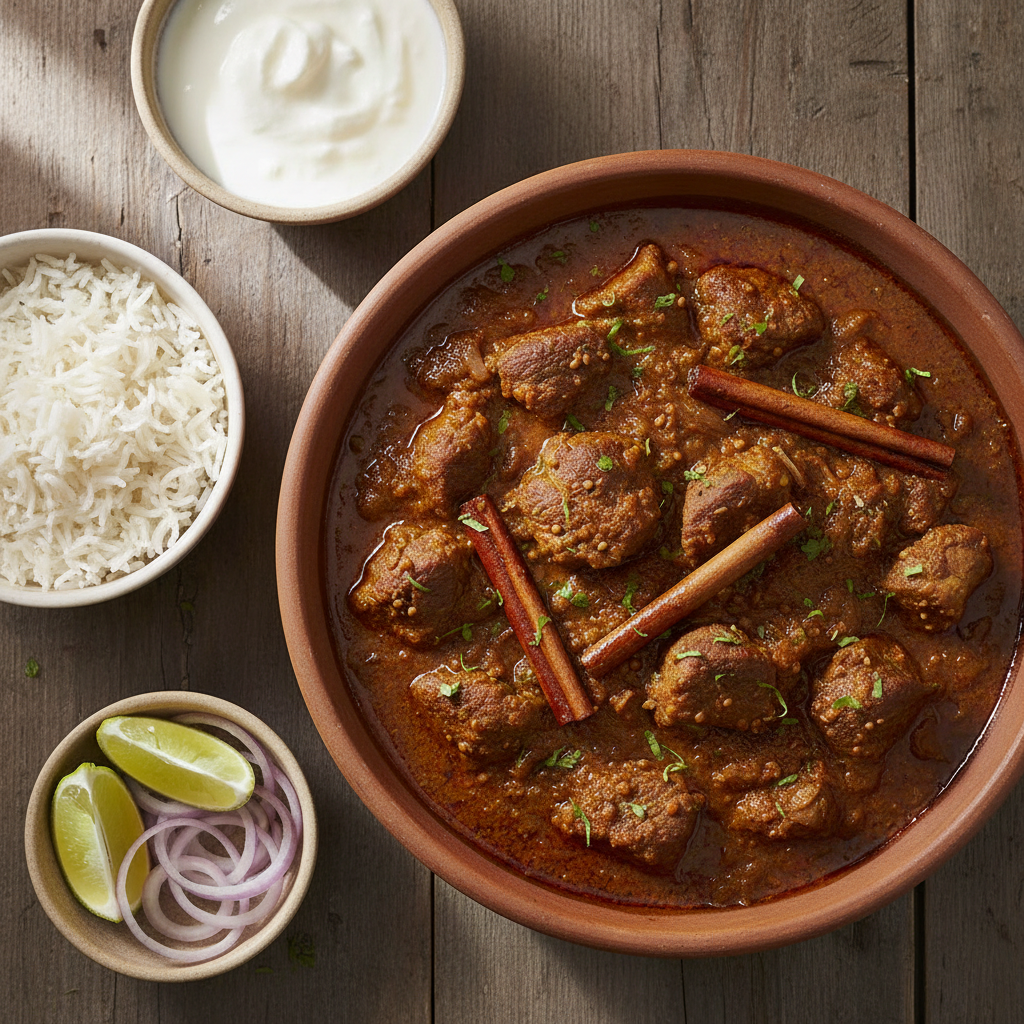
Quorema Curry, Plain
A rich and aromatic Mughlai-style mutton curry with yogurt, almonds, and fragrant spices. This korma features tender mutton in a creamy sauce with fried onions and warming spices.
Mutton Biryani
Aromatic rice cooked along with mutton khurma.
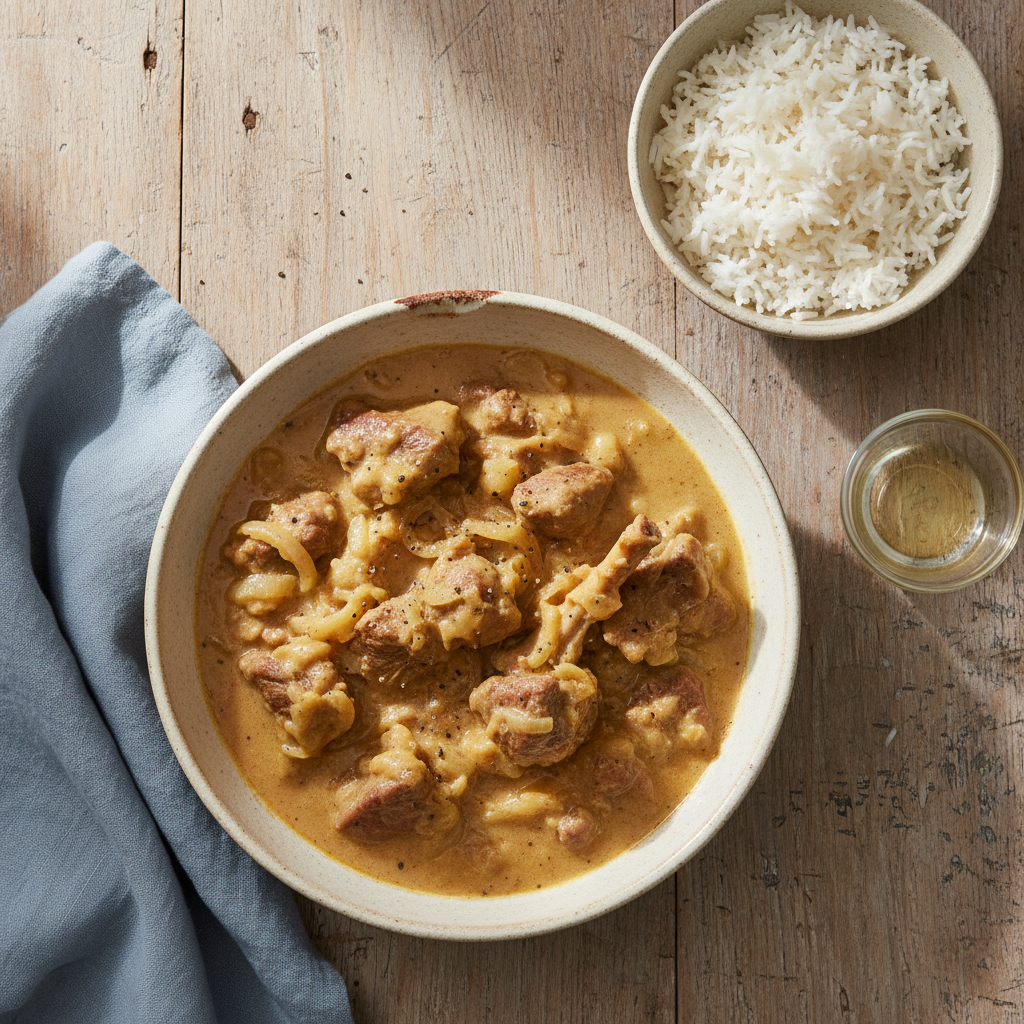
Mutton Trambland
A Victorian-era Anglo-Indian dish featuring boiled mutton covered in a tangy butter-flour sauce with vinegar, topped with minced pickles and hard-boiled eggs. This recipe adapts the traditional beef trambland preparation for mutton.

Mutton cutlets à la Maintenon
A classic colonial-era braised mutton dish in which trimmed chops are slowly stewed with bacon scraps, onion, carrot, and dried herbs until tender and fragrant. Simple and satisfying, this recipe reflects the French-influenced cooking popular in colonial India.
Instructions
- 1Using a sharp knife and a sturdy chopping board, cut 3 to 4 pounds of mutton into walnut-sized pieces — roughly 1.5 inches across. Place all the pieces into a colander and rinse thoroughly under cold running water. This removes blood and bone fragments, which helps produce a cleaner-tasting broth.
- 2Transfer the washed mutton pieces to a large, heavy-bottomed saucepan. Add a good pinch of salt — approximately 1 teaspoon to start. Pour in enough cold water to fully cover the meat (around 4–6 cups). Place the saucepan on the hob over medium-high heat.
- 3Bring the water to a full boil over medium-high heat. As it heats, a grey-brown foam (impurities and blood proteins) will rise to the surface. Use a large spoon or ladle to skim this foam away and discard it — this step keeps the broth clear and the dish tasting clean. Once skimmed, reduce the heat to low, partially cover the pan, and simmer until the mutton is about half cooked — the meat should be firm but no longer raw at the centre. This will take approximately 30–40 minutes. Do not discard the cooking liquid; you will need it later.
- 4While the mutton simmers, peel and thinly slice 5 to 6 onions into half-moon shapes. Place a frying pan over medium heat and melt 2 tablespoons of fresh butter. Add the sliced onions and cook, stirring occasionally, until they are lightly golden brown — not fully caramelised, just partly coloured. This should take about 10–12 minutes. Once done, remove from the heat and set aside.
- 5Take 100 to 200 okra pods (approximately 600g–900g). For each pod, use a small knife to peel away the tough, fibrous outer layer around the conical stalk at the top — do not cut the stalk off completely, just peel the stringy skin from it. Then trim a thin slice from the very tip (the pointed end) at the bottom. This preparation keeps the okra intact so it does not become slimy during cooking. Set aside.
- 6Once the mutton is half cooked, use a slotted spoon to transfer the meat pieces from the saucepan into a clean, wide, heavy-bottomed pot or deep casserole dish. Reserve all the cooking liquid — do not discard it. Now layer the ingredients: add a layer of meat, followed by a layer of okras, then a layer of the fried onions. Repeat the layers until all ingredients are used up, finishing with a layer of okras or onions on top.
- 7Pour the reserved meat cooking liquid over the layered ingredients in the pot. The liquid should just about reach the top of the layers without fully submerging them. If there is not enough liquid, top it up with plain meat broth (a simple unseasoned stock — see Broth No. 1 note) and add a small pinch of extra salt to taste. Do not stir the layers.
- 8Place a tight-fitting lid on the pot. Cook over a low, gentle heat — on a modern hob, use the lowest setting, or place the pot in an oven preheated to 160°C (320°F). Cook for approximately 40–55 minutes, or until both the mutton and the okras are completely tender. To check for the gravy, carefully tilt the pot to one side — you should see a rich, dark liquid pooled at the bottom. This means the dish is ready. Avoid lifting the lid repeatedly, as the steam helps the cooking.
- 9With approximately 5 minutes of cooking time remaining, squeeze the juice of 1 to 2 lemons directly over the top of the dish. Replace the lid and allow it to continue cooking for the final 5 minutes. The lemon juice brightens the flavour and balances the richness of the meat and butter.
- 10Remove the pot from the heat. Carefully transfer the stew to a large serving dish, keeping the layers as intact as possible. Finish by lightly sprinkling a small amount of ground black pepper and ground cinnamon over the top. Serve immediately while hot, with the gravy spooned over.
You Might Also Like

Mutton or Chicken with Okra
This traditional Parsi dish pairs tender mutton or chicken with fresh okra (bhindi) in a rich, onion-based gravy. The unique cooking method involves steaming the okra on the pot's lid while the meat simmers below, ensuring the vegetable remains vibrant and intact without becoming slimy. Finished by gently tossing the pot to coat the okra in the separated ghee, this dish offers a delightful texture and savory depth perfect for a main course.

Parsi Mutton or Chicken Stew
A rich and aromatic Parsi stew that combines tender mutton or chicken with a bountiful harvest of root vegetables and beans. This historical recipe features a slow-cooked medley of red pumpkin, green peas, lima beans, and pearl onions, simmered in a savory ghee base. The dish is finished with a traditional sweet and sour balance of vinegar, sugar, and lemon juice, creating a complex and comforting flavor profile typical of Parsi cuisine.

Mutton or Chicken Stew No. 2
This rich and aromatic Parsi-style stew combines tender mutton or chicken with a medley of fresh greens, root vegetables, and creamy coconut. The dish features a unique blend of five greens (pachrasi bhaji) and is slow-cooked until the meat is succulent and the gravy thickens with ghee. Finished with an optional touch of vinegar and sugar, it offers a delightful balance of savory, spicy, and sweet-sour flavors typical of traditional Parsi cuisine.

Delicious Mutton Curry
A rich and unique Parsi-style mutton curry that balances savory, sweet, and tangy flavors with a medley of root vegetables. Tender goat meat is simmered with beetroot, carrots, and turnips, then finished in a thick, aromatic gravy spiced with mace, cardamom, and cloves. The addition of fresh lemon juice and sugar creates a delightful sweet and sour profile characteristic of traditional Parsi cuisine, perfect for serving with rice or crusty bread.