
Natural Food Coloring for Jellies, Creams, Ices, and Cakes
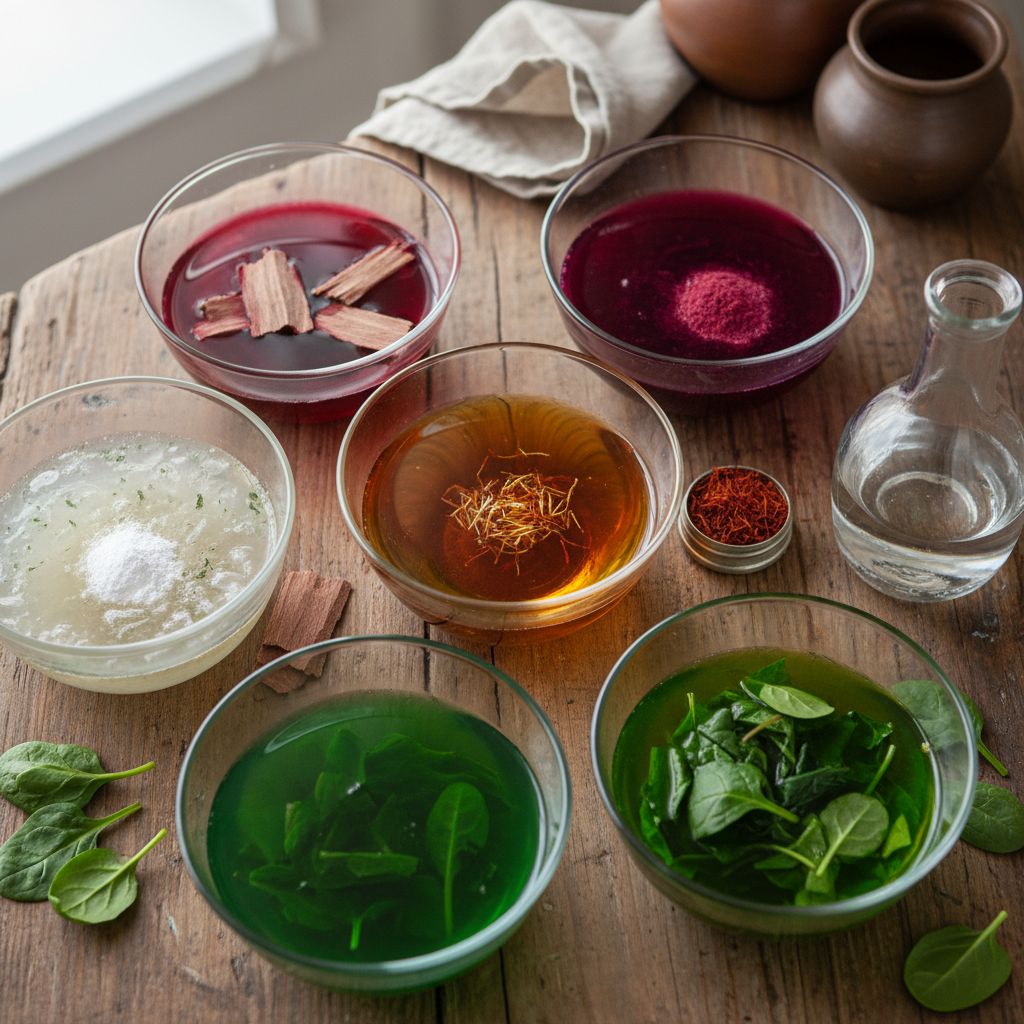
Three natural food colorings made from cochineal (red/pink), saffron (yellow), and spinach (green). These traditional colorings can be used to tint desserts, frostings, and other confections.
Ingredients
- 0.5 cup Water (For red coloring (1 gill = approximately 1/2 cup))
- 20 grains Cochineal (Approximately 1.3 grams or 1/4 teaspoon; available at specialty baking stores)
- 20 grains Alum, finely pounded (Approximately 1.3 grams or 1/4 teaspoon; food-grade alum)
- 20 grains Cream of tartar, finely pounded (Approximately 1.3 grams or 1/4 teaspoon)
- 0.25 teaspoon Saffron threads (For yellow coloring; steep in 2 tablespoons hot water)
- 2 tablespoons Hot water (For steeping saffron)
- 1 cup Fresh spinach leaves, washed and torn (For green coloring; packed measurement)
- 0.25 cup Water (For boiling spinach)
Instructions
- 1Finely pound the cochineal, alum, and cream of tartar together until they form a fine powder.
- 2Combine the pounded ingredients with 1/2 cup water in a small saucepan. Bring to a boil, then reduce heat to very low and simmer slowly until the liquid is reduced by half (to about 1/4 cup).
- 3Strain the reduced liquid through a fine-mesh strainer or cheesecloth into a small glass bottle or vial. Let cool completely before sealing. Store in a cool, dark place.
- 4Place saffron threads in a small bowl and pour hot water over them. Let steep for 10-15 minutes until the water turns a deep golden yellow. Strain if desired and store in a small glass bottle.
- 5Wash spinach leaves thoroughly and tear into small pieces. Place in a small saucepan with 1/4 cup water, cover tightly with a lid, and bring to a boil. Boil for 3-5 minutes until leaves are very soft and water is bright green.
- 6Remove from heat and let cool slightly. Press the spinach leaves through a fine-mesh strainer or squeeze through cheesecloth to extract all the green juice. Discard the solids. Store the green liquid in a small glass bottle in the refrigerator and use within 2-3 days.
Nutrition Facts
You Might Also Like
Colouring Mixtures for Liqueurs and Beverages
Four natural food colorings made with alcohol extraction for tinting liqueurs, wines, lemonades, and essences. These include yellow from saffron, red from sandalwood, pink from cochineal, and green from vine leaves or spinach.

Spinach Extract (Natural Green Food Coloring)
A traditional method for making natural green food coloring from fresh spinach. Essential for giving soups and curries a vibrant green color without artificial additives. This extract concentrates the chlorophyll from the leaves into a thick, potent paste that can be stored for later use.

Coloured Royal Icing
A guide to creating naturally and artificially colored royal icing for decorating cakes and pastries, using traditional coloring agents.

Colored Sugar
Transform simple granulated sugar into a vibrant, decorative topping with this traditional technique for making custom colored sugar. By rubbing food coloring, saffron, or cocoa powder into coarse sugar crystals, you can create sparkling garnishes in pink, yellow, blue, or brown hues. This versatile decoration adds a festive visual appeal and a delightful crunch to Indian sweets (mithai), cakes, and confections.