
Brown and White Thickening (Roux)
A fundamental preparation of flour and clarified butter used to thicken sauces, gravies, and curries. This recipe creates a batch of both white roux (for light sauces) and brown roux (for rich, dark gravies) that can be stored for weeks.
Ingredients
- 250 grams Unsalted butter (Original recipe calls for 1 lb (450g). Scaled down for modern home use.)
- 250 grams All-purpose flour (Original recipe calls for 1 lb (450g). Ensure it is dry and sifted.)
- 1 slice Onion slice (Optional, used to check temperature and arrest cooking.)
More recipes using Butter
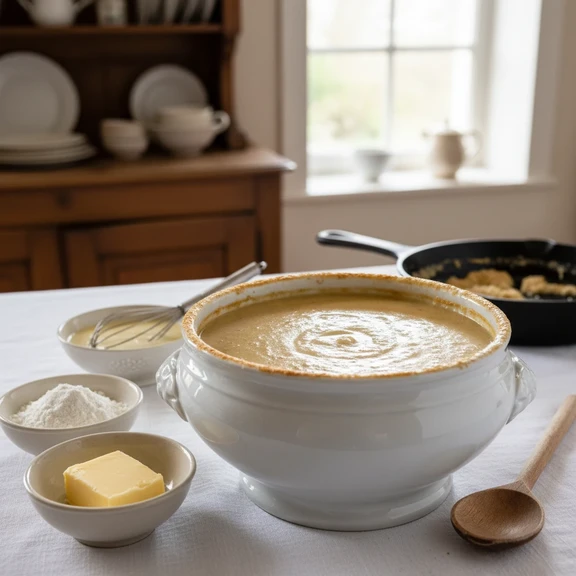
How to Bind Soups
A classic technique to prevent separation in cream soups and purees by creating a roux.
Butter Sauce (English Melted Butter)
A classic English 'Melted Butter' sauce, essential for fish and vegetables. This recipe creates a stable, rich emulsion by thickening water with a white roux before mounting it with a generous amount of fresh butter, finished with a hint of nutmeg and lemon.

White Sauce (Four portions)
This classic white sauce recipe, adapted from a 1900 cookbook, is a versatile base for many dishes. It's a simple combination of butter, flour, milk, and seasonings, creating a creamy and comforting sauce. This easy-to-make sauce is perfect for coating vegetables, enriching casseroles, or as a base for other sauces.

Butter, Black, or Beurre Noir
A classic brown butter sauce enriched with vinegar, capers, and savory condiments. This rich, nutty sauce is traditionally served with fish, fried eggs, or boiled vegetables like Jerusalem artichokes.
Instructions
- 1Ensure the flour is thoroughly dry. Sift the flour into a bowl to remove any lumps and aerate it.
- 2Place the butter in an enamelled stew-pan or heavy-bottomed saucepan. Melt over gentle heat until it turns to oil. Skim off the white froth that rises to the top until the scum ceases to rise. Carefully pour the clear, golden oil into a separate basin, leaving the milky dregs at the bottom of the pan. Discard the dregs.
- 3Clean the stew-pan if necessary. Mix the sifted flour with the clarified butter (oiled butter) in the pan. Place over a moderate fire, ensuring it is not too fierce to prevent burning.
- 4Stir the mixture constantly with a wooden spoon, scraping the bottom and edges of the pan. Continue until the mixture just begins to turn color (a pale sandy hue). Remove approximately half of this mixture and transfer it to a heat-proof basin. This is your White Roux.
- 5Keep the remaining mixture in the pan over the fire. Continue stirring constantly as it gets gradually darker. Cook until it reaches the color of light chocolate (referring to the interior color of broken chocolate). Be careful not to let it burn.
- 6Remove the pan from the heat immediately. Continue stirring and scraping for a few minutes as the retained heat in the pan can cause burning. Optionally, throw in a slice of onion to help slacken the heat. Pour the brown roux into a separate basin. Allow both roux to cool completely before storing.
You Might Also Like
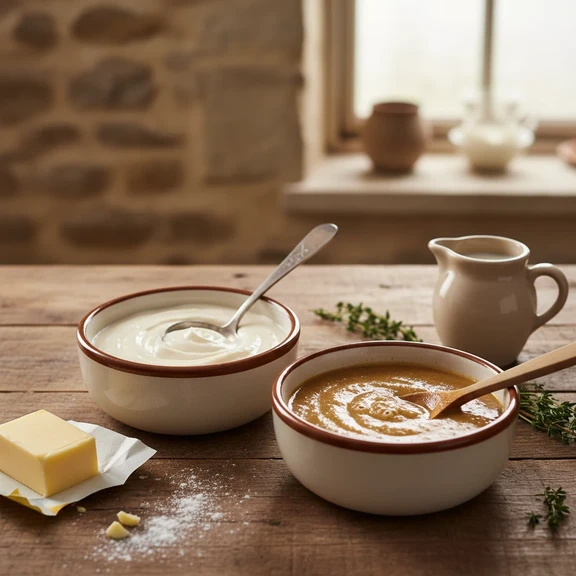
Basic Roux for Sauces
A foundational recipe for creating a roux, the base for many classic sauces. Learn how to make both white and brown roux.
How to Bind Soups
A classic technique to prevent separation in cream soups and purees by creating a roux.

BROWN SAUCE
This classic brown sauce recipe from the early 1900s provides a versatile base for many other sauces. It starts with a simple roux of onions, flour, and fat, then builds flavor with soup stock and a touch of lemon juice. This savory sauce is a foundation for mushroom, olive, and wine sauces, making it a great addition to any cook's repertoire. The rich, umami flavor of the brown sauce elevates any dish.

Onion Sauce, Brown
A rich, savory Anglo-Indian onion sauce. Onions are caramelized, chopped, and simmered in stock before being thickened with a brown roux. Excellent served with roasted meats or cutlets.