
Andá (or Egg) Kārhī, with Chaná-Ka-Dál
A traditional Indian kārhī made with parboiled chana dal (split chickpea lentils) simmered in aromatic curry spices, finished with eggs poached gently into the dal as it becomes soft and tender. A simple, satisfying one-pot dish drawing on classic Dopiyáza-style curry flavours.
Ingredients
- 0.5 cup Chana dal (split chickpea lentils) (Also labelled 'dal or lentil' in the original; chana dal is the traditional choice for this dish. Rinse well before use.)
- 4 whole Eggs (Added toward the end of cooking; they will gently poach in the simmering curry.)
- 2 medium Onions (Core ingredient of Dopiyáza-style curry; slice thinly.)
- 2 tablespoons Ghee or cooking oil (Used for frying the onions and curry base, as in Dopiyáza.)
- 4 cloves Garlic (Crush or finely mince. Standard Dopiyáza curry ingredient.)
- 1 inch piece Fresh ginger (Peel and finely grate or mince. Standard Dopiyáza curry ingredient.)
- 0.5 teaspoon Turmeric (Ground. Standard Dopiyáza curry spice.)
- 1 teaspoon Ground coriander (Standard Dopiyáza curry spice.)
- 1 teaspoon Ground cumin (Standard Dopiyáza curry spice.)
- 0.5 teaspoon Chilli powder (Adjust to taste. Standard Dopiyáza curry spice.)
- 1 teaspoon Salt (Season to taste throughout cooking.)
- 3 cups Water (Used across parboiling and simmering stages.)
Instructions
- 1Place the half cup of chana dal in a sieve and rinse thoroughly under cold running water until the water runs clear. Transfer to a medium saucepan and add 2 cups of water. Bring to a boil over high heat, then reduce the heat to medium and cook for 15 minutes. The dal should be partially cooked — softened on the outside but still holding its shape with a slightly firm centre. It will not be fully cooked at this stage; that is correct. Drain and set aside.
- 2While the dal is parboiling, prepare your curry ingredients. Peel and thinly slice the onions, peel and mince the garlic, and peel and finely grate the ginger. Measure out the turmeric, ground coriander, ground cumin, and chilli powder and set them nearby — this makes the next step much easier. Heat the ghee or oil in a large, deep pan or pot over medium heat. Add the sliced onions and cook, stirring occasionally, for 8–10 minutes until they turn a deep golden brown. Do not rush this step; well-browned onions are the flavour foundation of this dish. Add the garlic and ginger and cook for a further 1–2 minutes, stirring constantly, until fragrant. Add the turmeric, ground coriander, ground cumin, and chilli powder. Stir continuously for 1 minute to toast the spices in the oil. If the mixture sticks to the pan, add a small splash of water (1–2 tablespoons) and continue stirring.
- 3Add the parboiled dal to the pan with the curry base. Stir well to coat the dal evenly with the spiced onion mixture. Pour in 1 cup of water and add the salt. Stir to combine. Bring the mixture to a gentle simmer over medium-low heat, then cover the pan with a lid and cook for 10–12 minutes, stirring occasionally. The dal should be absorbing the flavours and continuing to soften. After 10 minutes, test a few grains of dal by pressing them between your fingers — they should offer only slight resistance. The dal is 'nearly cooked' when it is almost fully tender but not yet completely soft. This is the moment to move to the next step.
- 4Once the dal is nearly cooked (almost tender), gently crack the eggs one at a time directly onto the surface of the simmering curry, spacing them evenly apart. Do not stir after adding the eggs. Replace the lid and continue to simmer over low heat for 5–7 minutes, until the egg whites are fully set and opaque but the yolks remain slightly soft, or cook to your preferred doneness. Watch carefully — as soon as the dal is fully soft and tender, remove the pan from heat immediately. Overcooking will cause the dal to become mushy and the eggs to harden. Taste and adjust salt if needed. Serve straight from the pan.
You Might Also Like

Andá (or Egg) Kārhī
A quick and fragrant Indian egg curry in which hard-boiled eggs are simmered in ghee with browned spices and fried onions. This historical dish comes together in under ten minutes once the eggs are prepared, making it a simple yet flavourful meal.

Eggs on Chana Dal
This traditional Parsi dish features savory split chickpeas (chana dal) cooked until tender yet distinct, then topped with steamed eggs. The dal is seasoned with ghee and spices, creating a rich, nutty base that contrasts beautifully with the soft, set eggs. It is a comforting, protein-packed meal often enjoyed for breakfast or a light lunch, best served with crusty bread or rotis.
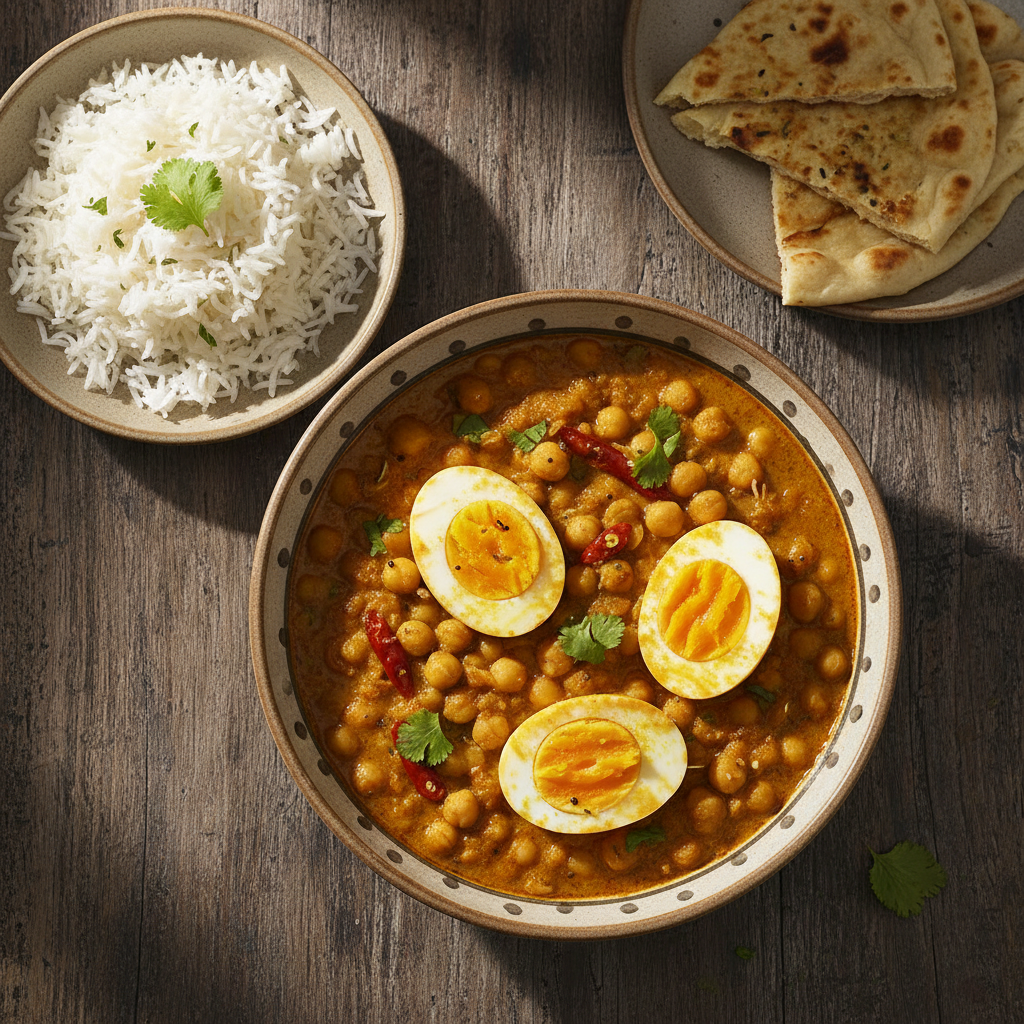
Egg Curry with Chana Dal
A flavorful egg curry made with chana dal (split chickpeas), where the dal is curried first and hard-boiled eggs are added near the end of cooking for a hearty, protein-rich dish.
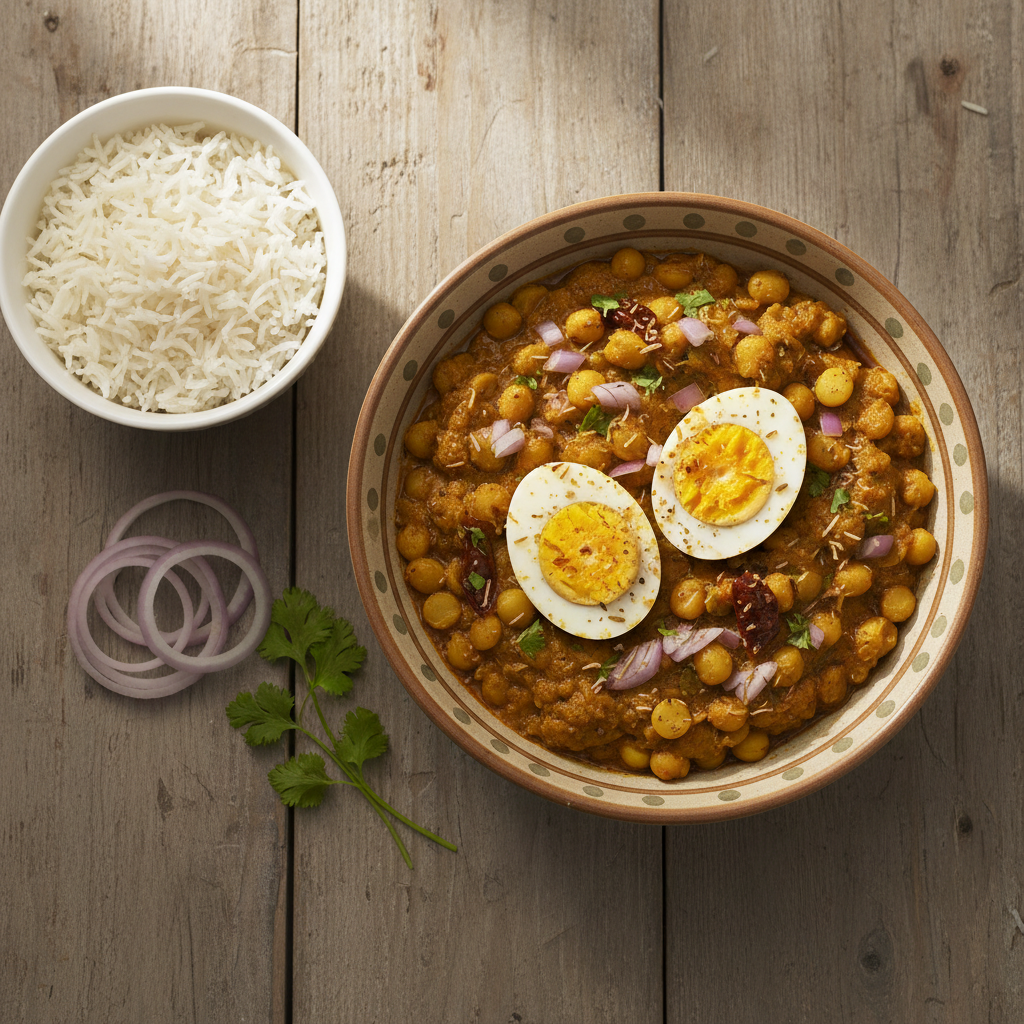
Egg Curry with Chunna Ka Dal (Chana Dal)
A traditional Indian egg curry made with chana dal (split chickpeas), featuring hard-boiled eggs in a spiced gravy with lentils. This variation adds protein-rich dal to the classic egg curry.