
BARA with FISHES
A traditional Indian fish cake made by boiling and deboning large fish, mixing with chickpea or rice flour and spices, then frying in oil or ghee until golden-brown. These crispy patties make a flavourful snack or side dish.
Ingredients
- 500 grams hilsa, chitol or any other large fish (bone-in pieces) (Hilsa and chitol are traditional choices; any large, meaty fish works well. Ask your fishmonger to cut into large chunks.)
- 500 ml water (Enough to submerge the fish pieces for boiling.)
- 0.25 teaspoon powdered turmeric (Added to the boiling water to help season the fish and reduce any fishy aroma.)
- 4 tablespoons besam (chickpea flour) or rice flour (Besam (also known as besan or gram flour) gives a nuttier flavour; rice flour produces a lighter, crispier cake. Use whichever is available.)
- 0.25 teaspoon powdered turmeric (Added to the fish mixture for colour and flavour.)
- 2 whole red chillies (Dried or fresh red chillies. Remove seeds for less heat. Crush or finely chop before adding.)
- 1 teaspoon ginger (Fresh ginger, peeled and grated or finely minced.)
- 0.5 teaspoon salt (Adjust to taste.)
- 1 small onion minced onions (Optional. Peel and finely mince before adding. Adds sweetness and texture to the cakes.)
- 500 ml oil or ghee (Use a neutral cooking oil or ghee for deep frying. Ghee adds a richer, more traditional flavour.)
More recipes using Fish

Gravy Fish Curry
A traditional Bengali-style fish curry made with mustard oil and a simple spice blend, creating a flavorful gravy without ginger or ghee. The key to success is thoroughly cleaning the fish before cooking.
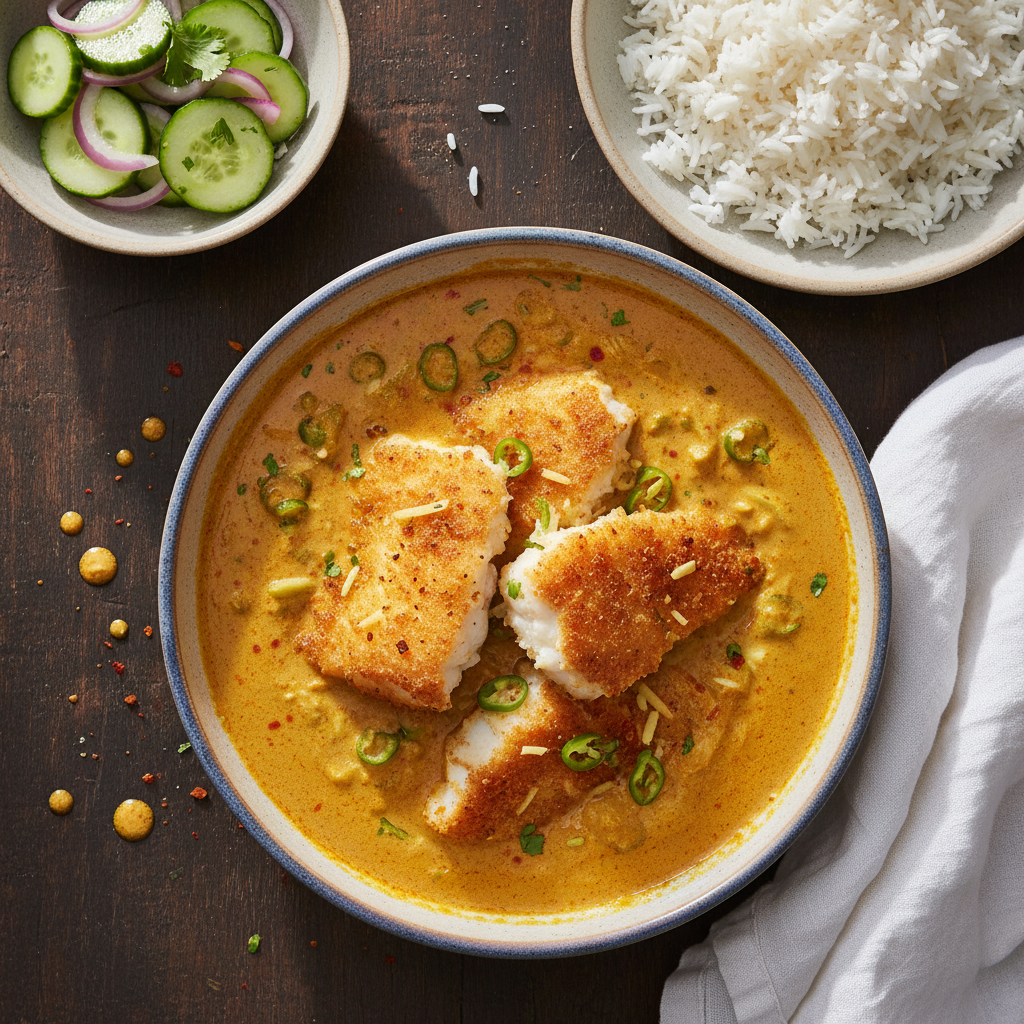
Fried Fish in Coconut Curry
Crispy fried fish pieces simmered in a spiced coconut milk curry with fresh ginger and green chilies, creating a rich and flavorful dish.
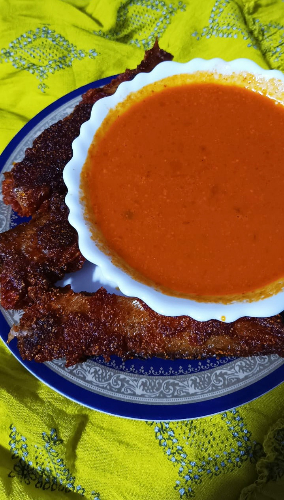
Aprosa Looqa (Fish Curry with Coconut Milk)
Fish curry with a rich creamy texture. Spicy and coconuty curry.

Spiced Coconut Sauce for Fish
A fragrant coconut milk sauce infused with chilies, garlic, ginger, and spices, poured hot over cold fried or boiled fish. This traditional sauce adds rich flavor and moisture to prepared fish.
Instructions
- 1Place the fish pieces into a medium saucepan or pot. Pour in the water — enough to fully submerge the fish. Add the first 0.25 teaspoon of powdered turmeric and stir briefly. Bring to a boil over medium-high heat, then reduce to a steady simmer. Cook for 15–20 minutes, or until the fish is fully cooked through and the flesh flakes easily. Remove the pot from the heat and allow the fish to cool until it is safe to handle with your hands, about 10–15 minutes.
- 2Once the fish is cool enough to handle, carefully pick it out of the water. Using your fingers, gently break apart the flesh and remove all bones — including small pin bones. Large fish like hilsa have many small bones, so take your time and be thorough. Place the cleaned fish flesh into a large mixing bowl. Discard the bones and the poaching water.
- 3To the deboned fish in the mixing bowl, add the besam or rice flour, the second 0.25 teaspoon of powdered turmeric, the crushed or finely chopped red chillies, the grated ginger, and the salt. If using, add the finely minced onion as well. Using your hands or a sturdy spoon, beat and mix everything together thoroughly until you have a uniform, cohesive mixture that holds its shape when pressed. If the mixture feels too wet and loose, add a little more flour, one teaspoon at a time, until it is firm enough to shape.
- 4Divide the fish mixture into equal portions — roughly 8–10 portions. Roll each portion into a ball and then flatten gently between your palms to form a small round cake about 1–1.5 cm thick. Place the shaped cakes on a plate or clean surface while you prepare the oil for frying.
- 5Pour the oil or ghee into a deep heavy-bottomed pan or wok to a depth of at least 5 cm. Heat over medium-high heat. The oil is ready when initial vigorous bubbling subsides and you see a gentle shimmer or faint haze of vapour rising from the surface — this is the moment described in the original recipe as 'after the bubbles die out and the vapour arises.' You can test readiness by dropping a small pinch of the fish mixture into the oil; it should sizzle steadily and rise to the surface within a few seconds.
- 6Carefully lower the shaped fish cakes into the hot oil one at a time, using a spoon or slotted spatula. Do not overcrowd the pan — fry in batches of 3–4 at a time, leaving space between each cake. Fry for 3–4 minutes on each side, turning gently once, until each cake is deep golden-brown and crisp on the outside. Remove the cooked cakes with a slotted spoon and place them on a plate lined with paper towels to drain any excess oil. Repeat with the remaining cakes. Serve hot.
You Might Also Like

Fish Kebabs
These traditional Parsi fish kebabs combine tender, marinated fish with aromatic spices and roasted gram flour for a unique, savory texture. The method features a distinctive dual-process technique where the majority of the fish is cooked with onions and spices, then bound together with a reserve of raw fish and egg white before frying. The result is a rich, golden-brown cutlet that is crispy on the outside and succulent on the inside, perfect for a sophisticated appetizer or main course.

Fresh Fish Cutlets
Succulent fillets of fresh, firm white fish are marinated in a bold, aromatic green masala paste and coated with semolina for a delightful textural contrast. This traditional Parsi preparation features a golden, lacy egg coating that seals in moisture, resulting in a tender interior and a crispy, savory exterior. Best served hot with a squeeze of fresh lemon or alongside a mild lentil dish for a complete meal.

Fresh and Dried Varabh (Fried and Roasted)
This traditional Parsi recipe showcases the versatility of Varabh fish, offering methods for both fresh and dried preparations. The fresh fillets are treated to a simple salt cure before being pan-fried in ghee to achieve a crisp exterior, while the dried variety can be roasted over open coals for a smoky, intense flavor profile. Whether served simply salted or spiced with a rustic masala, this dish makes an excellent accompaniment to a classic meal of rice and lentils.

Fish Umbariyu
A rustic and aromatic Parsi fish dish where marinated fish is wrapped in banana leaves and slow-cooked to retain maximum moisture and flavor. Originally prepared by encasing the leaf-wrapped fish in clay and roasting it in embers, this modern adaptation uses the oven to achieve the same tender, steamed texture. The result is a succulent, flaky fish infused with the herbal scent of banana leaves and a rich, spicy marinade.