
Jerusalem Artichoke au Gratin
A rich and elegant gratin made from silky Jerusalem artichoke purée generously loosened with cream, gently seasoned with pepper, salt, and nutmeg, then finished with a golden crust of mild grated cheese. Simple yet refined, this colonial-era dish is worthy of any gourmet's table.
Ingredients
- 900 grams Jerusalem artichokes, plain boiled (Boiled until completely tender and soft enough to mash smoothly into a purée. Peel before boiling — scrub well, peel with a vegetable peeler, and cut into even chunks to ensure uniform cooking.)
- 240 millilitres cream (Use generously — the purée should be loose, smooth, and very creamy. The original text emphasises using a bountiful amount of cream for best results.)
- 1 pinch pepper (Season lightly — the original calls for only slight seasoning.)
- 1 pinch salt (Season lightly — the original calls for only slight seasoning.)
- 1 pinch nutmeg, freshly grated (Use a fine grater or microplane to grate whole nutmeg directly. Season lightly.)
- 60 grams mild cheese, finely grated (Use a mild, meltable cheese such as a mild Cheddar, Gruyère, or similar. Grate finely so it dusts evenly over the surface.)
- 1 tablespoon butter, for greasing the pie-dish (Use to generously butter the inside of the pie-dish before adding the purée, to prevent sticking and add richness.)
Instructions
- 1Peel the Jerusalem artichokes — scrub them clean under cold water, then use a vegetable peeler to remove the skin. Cut them into roughly equal chunks (about 3–4 cm) so they cook evenly. Place the chunks into a saucepan, cover generously with cold water, and bring to the boil over medium-high heat. Reduce to a steady simmer and cook for 15–20 minutes, or until completely tender when pierced with a knife — they should offer no resistance at all. Drain well in a colander and allow any excess steam to escape for a minute or two before mashing.
- 2Transfer the drained, still-hot artichoke chunks into a large bowl or return them to the dry saucepan. Mash them thoroughly with a potato masher or pass them through a fine sieve or food mill for an ultra-smooth result. The purée should be completely lump-free. This is your base purée.
- 3Pour the cream into the warm artichoke purée gradually, stirring continuously as you go. Use a generous hand — the original recipe specifically calls for the cream to be added bountifully. Stir until the purée is silky, loose, and pourable but still holds some body, like a thick soup or soft mash. If it seems too thick, add a little more cream.
- 4Add a small pinch of pepper, a small pinch of salt, and a small pinch of freshly grated nutmeg to the creamed purée. Stir well to combine. The seasoning should be light — the original recipe specifically says 'slightly seasoned'. Taste the mixture and adjust only if needed, keeping the flavours delicate rather than assertive.
- 5Preheat your oven to 200°C (180°C fan / Gas Mark 6). While the oven heats, take a medium-sized pie-dish or shallow baking dish and rub the inside surfaces generously with the tablespoon of butter — cover the base and sides thoroughly so the purée will not stick.
- 6Pour and scrape the seasoned, creamed artichoke purée into the well-buttered pie-dish. Use a spatula or spoon to spread it out into an even layer, filling the dish. Smooth the top surface flat so the cheese will dust evenly and the top will colour uniformly in the oven.
- 7Take the finely grated mild cheese and scatter it evenly over the entire surface of the purée in the dish. Use your fingers or a spoon to dust it lightly and uniformly — it should form a thin, even coating over the top, not a thick layer. This thin dusting is what will form the golden, coloured crust during baking.
- 8Place the dish in the preheated oven and bake for 20–25 minutes, or until the cheese on top has melted and turned a golden, appetising colour. You are looking for the surface to 'take colour' — a light golden-brown crust. The purée underneath will be bubbling gently at the edges when it is ready. Remove from the oven and serve hot, directly from the dish.
You Might Also Like

Jerusalem Artichoke in Cream Sauce
This classic recipe transforms the humble Jerusalem artichoke into a creamy and comforting dish, perfect for a fall or spring meal. The artichokes are cooked in milk with a touch of onion, then finished with a simple butter and flour sauce. The result is a rich, savory, and satisfying side dish that highlights the unique flavor of this often-overlooked vegetable.
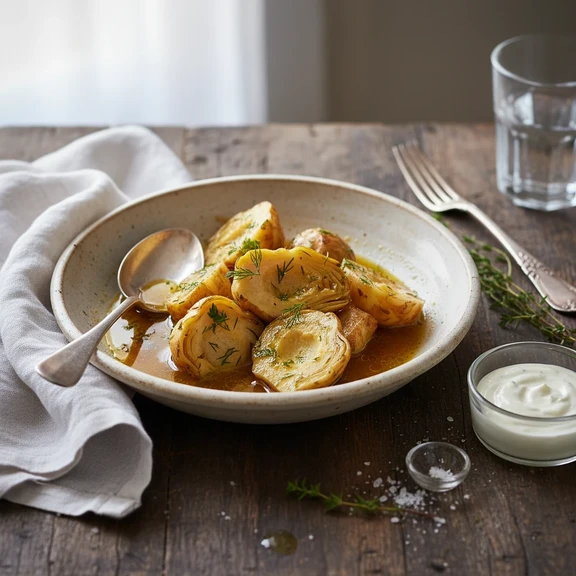
Boiled Jerusalem Artichokes
Simple boiled Jerusalem artichokes, served with a sauce of your choice. Preparation is similar to potatoes.
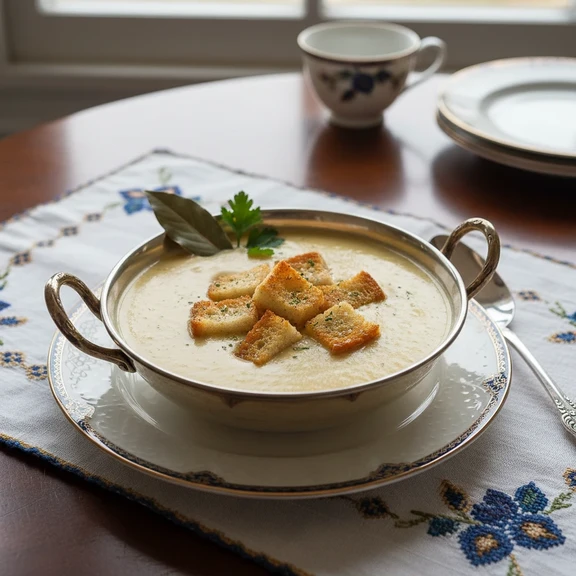
Artichoke Soup
A delicate and creamy soup made from Jerusalem artichokes, simmered until tender and pureed into a rich milk base. This recipe includes a traditional liaison of egg yolks or cream for a velvety finish, served with crisp fried bread.
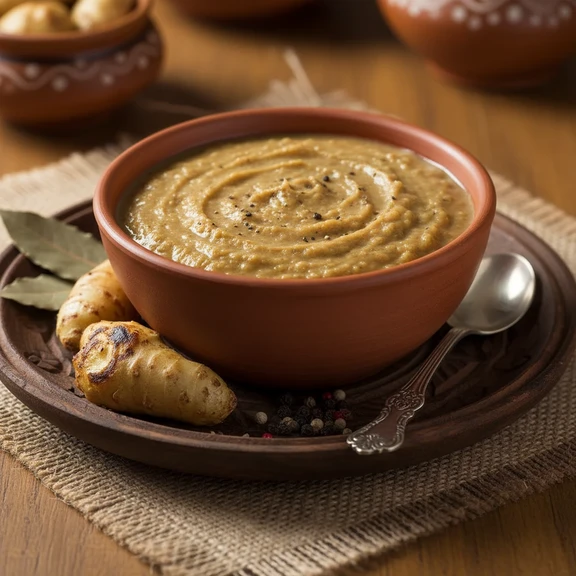
Artichoke Sauce
A simple, earthy sauce made from pureed Jerusalem artichokes, boiled down to a pulp and seasoned with salt and pepper. This recipe offers a thicker consistency than artichoke soup, making it an excellent accompaniment for meats.