
Boudins de pigeon aux olives
A classic French-influenced colonial dish of roasted pigeon meat prepared with a rich, slow-simmered bone gravy flavoured with bacon, aromatic vegetables, and sweet herbs. The recipe as preserved is incomplete, capturing the initial roasting and stock-making stages of what would have been an elegant pigeon boudin with olives.
Ingredients
- 6 whole whole pigeons (To be roasted whole; bones reserved after picking meat)
- 6 whole pigeon livers (Reserved from the pigeons after roasting; set aside separately)
- 1 several rashers lean bacon (Added to the stock pan with the bones to contribute smoky depth)
- 1 enough to half-fill the saucepan stock (Use whatever stock you have available — chicken or beef both work well)
- 1 small handful whole black peppercorns (Added whole to the stock; will be strained out later)
- 1 pinch spice (The original text simply calls for 'spice'; a pinch of ground allspice or mace is a period-appropriate interpretation, but use what you have)
- 1 medium carrot (Peeled and sliced into rounds)
- 1 bunch fresh parsley (Added as a whole bunch; will be strained out after simmering)
- 1 clove garlic (Added whole and unpeeled is fine; will be strained out)
- 1 muslin bag (bouquet garni) mixed sweet herbs (Tied in a small square of muslin cloth so they can be easily removed; period sweet herbs typically include thyme, marjoram, and bay leaf)
- 1 whatever you have any scraps of meat (Any leftover raw or cooked meat scraps add body to the gravy; optional if you have none)
More recipes using Pigeon

Instructions
- 1Preheat your oven to 200°C (180°C fan / Gas Mark 6). Place all six pigeons in a roasting tin and roast them for approximately 40–50 minutes, or until the skin is golden and the juices run clear when you pierce the thigh with a skewer. It is best to do this early in the day so the birds have time to cool before you handle them.
- 2Once the pigeons are cool enough to handle, use your fingers or a small knife to pull all the meat away from the bones. Place the picked meat in a bowl and cover it — you will use this later. Locate the livers inside the cavity of each bird and set them aside in a separate small bowl. Keep all the bones — you will need them for the next step.
- 3Place all the reserved pigeon bones into a small saucepan. Add the lean bacon, then pour in enough stock to half-fill the pan. Add the whole peppercorns, spice, sliced carrot, whole bunch of parsley, the garlic clove, the muslin bag of mixed sweet herbs, and any meat scraps you have available. Give everything a gentle stir to combine.
- 4Place the saucepan over a low heat and bring it slowly to a gentle simmer. Do not boil it hard — a slow, lazy simmer is what extracts the most flavour and body. Leave it to simmer uncovered for approximately 1 to 1.5 hours, or until the liquid has reduced by almost half. You will know it is ready when the stock looks dark, glossy, and smells deeply savoury. Keep an eye on it and adjust the heat as needed to maintain a gentle simmer rather than a rolling boil.
- 5Once the gravy has reduced by almost half and is rich and deep in colour, remove the saucepan from the heat. Set a fine-mesh sieve or a colander lined with muslin over a clean bowl or jug. Carefully pour the contents of the pan through the sieve, pressing gently on the solids to extract as much liquid as possible. Discard the bones, vegetables, bacon, herbs, and any solids. You should be left with a clear, strong, flavoursome gravy. Note: the original recipe text is incomplete at this point — the remaining steps, which would have involved combining this gravy with the reserved pigeon meat, livers, and olives, have been lost.
You Might Also Like

Pigeons Cooked in Claret
Whole or quartered pigeons are slow-braised in a luxurious bath of claret wine and ghee until fall-apart tender. This historical Parsi recipe uses a unique technique of adding a pinch of baking soda to the wine reduction, helping to tenderize the meat while balancing the acidity of the rich sauce. The result is a succulent, dark, and savory dish best served with crusty bread or rice to soak up the flavorful gravy.

Pigeons in Savoury Jelly
Elegant Victorian-era dish of roasted stuffed pigeons set in a savory aspic jelly, perfect for a cold buffet or special occasion presentation.
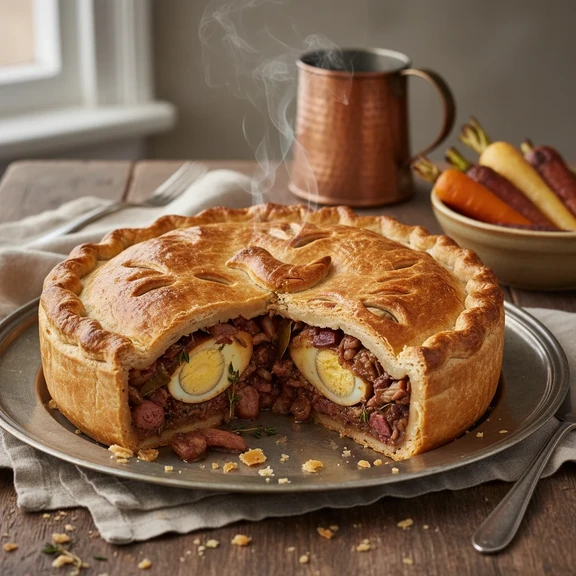
Pigeon Pie
A savory pie featuring pigeon, eggs, and giblets.
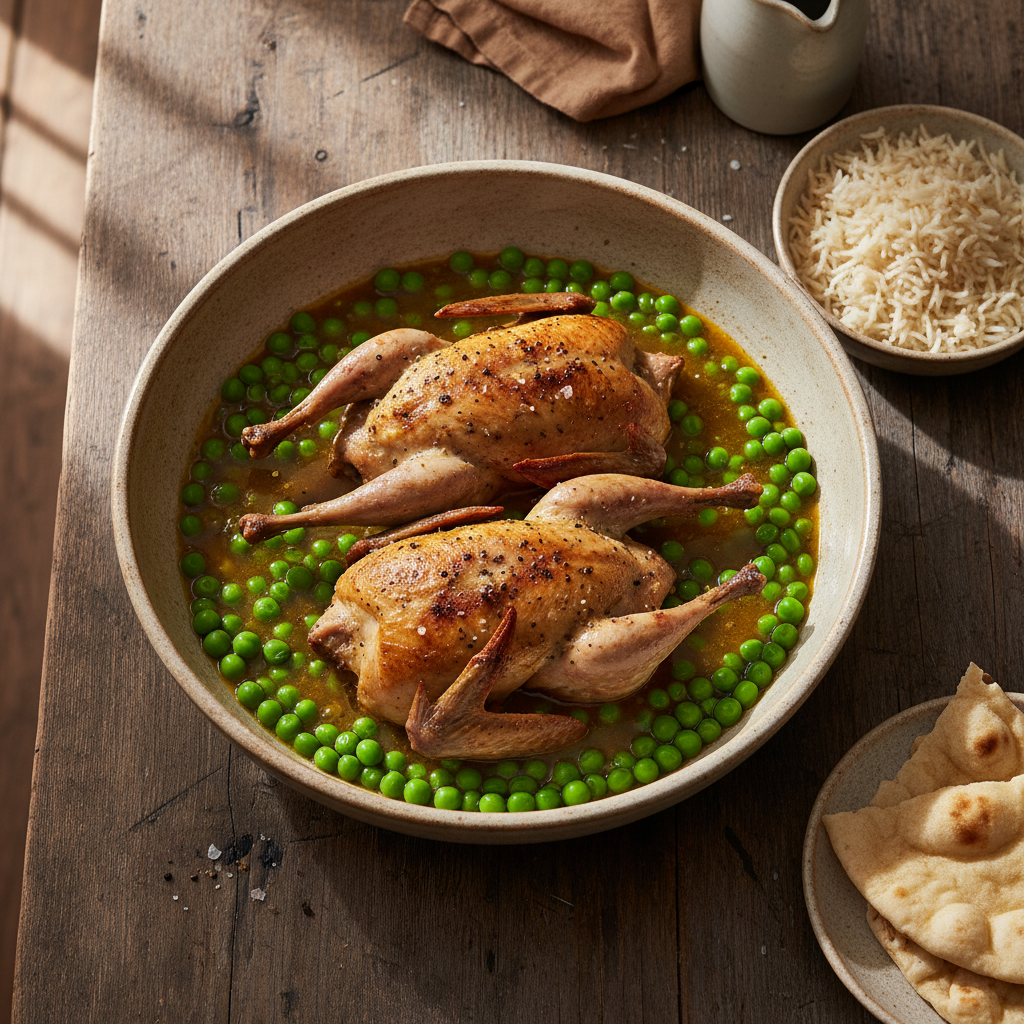
Pigeons with Petit Pois
Young pigeons braised until tender and served with sweet petit pois in a rich gravy. A classic preparation that combines game bird with garden peas.